🌿 Cow parsley (wild chervil)
Anthriscus sylvestris · Apiaceae
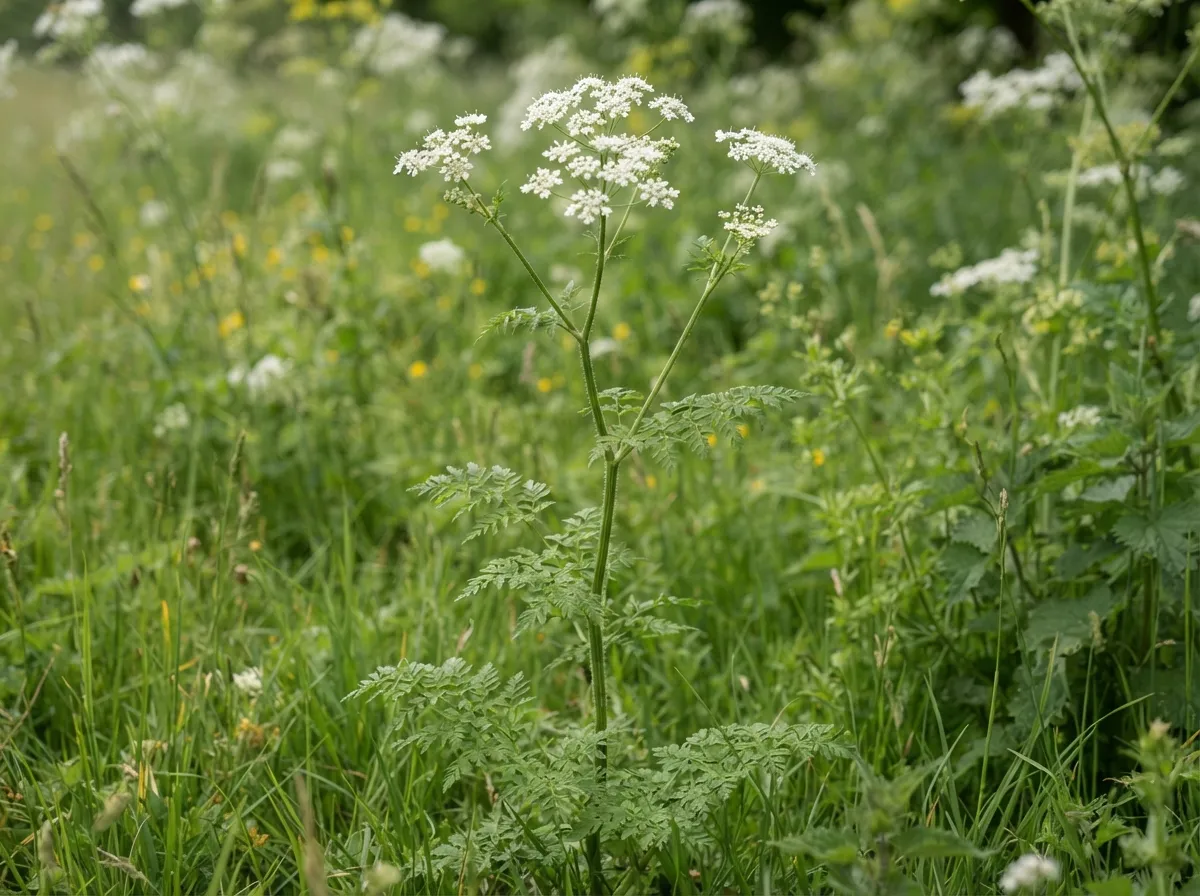
🔍 Identify it without mistakes
One of the first Apiaceae to bloom in spring on embankments and roadsides, forming large, feathery white umbels. It is also one of the most dangerous plants to learn to identify WITH ABSOLUTE CERTAINTY, as it grows in the exact same spots as deadly hemlock and fool's parsley, looking striking similar at first glance — only forage it after a 100% positive identification, or not at all.
- hollow, grooved stem, hairy at the base and smooth at the top, NEVER with purple spots (if spotted: danger, refrain)
- leaves 2-3 times divided, fine and soft to the touch, pleasant aromatic smell when crushed
- large compound white umbel, blooms early (April-May), before most other Apiaceae
- no unpleasant mousy or musty odor when crushed (unlike fool's parsley)
- grows in large populations on grassy banks, roadsides, and meadows
⚠️ Not to be confused with
To tell them apart: poison hemlock has a completely GLABROUS (hairless) stem marked with irregular purple spots and an unpleasant odor when crushed; cow parsley is hairy at the base, completely unspotted, and smells good
To tell them apart: fool's parsley has long, clearly visible hanging bracts under each small umbel and an unpleasant musty or urine-like smell when crushed, both absent in cow parsley
To tell them apart: presence of purple spots on the stem: immediate exclusion criterion, absent in cow parsley
🍽️ Eating it
Preparation : FOR CONFIRMED EXPERTS ONLY: young leaves raw or cooked, aniseed flavor close to cultivated chervil; golden rule of the Apiaceae family: if you have the slightest doubt about identification (presence of spots, suspicious smell, hairless stem), NEVER CONSUME IT — the resemblance to deadly species is too great for a beginner
Sources (2)
No entry replaces a certain identification in the field, or medical advice. When in doubt: don't eat it. If ingestion is suspected: poison control or 112/911.