🍒 Chokecherry
Prunus virginiana · Rosaceae
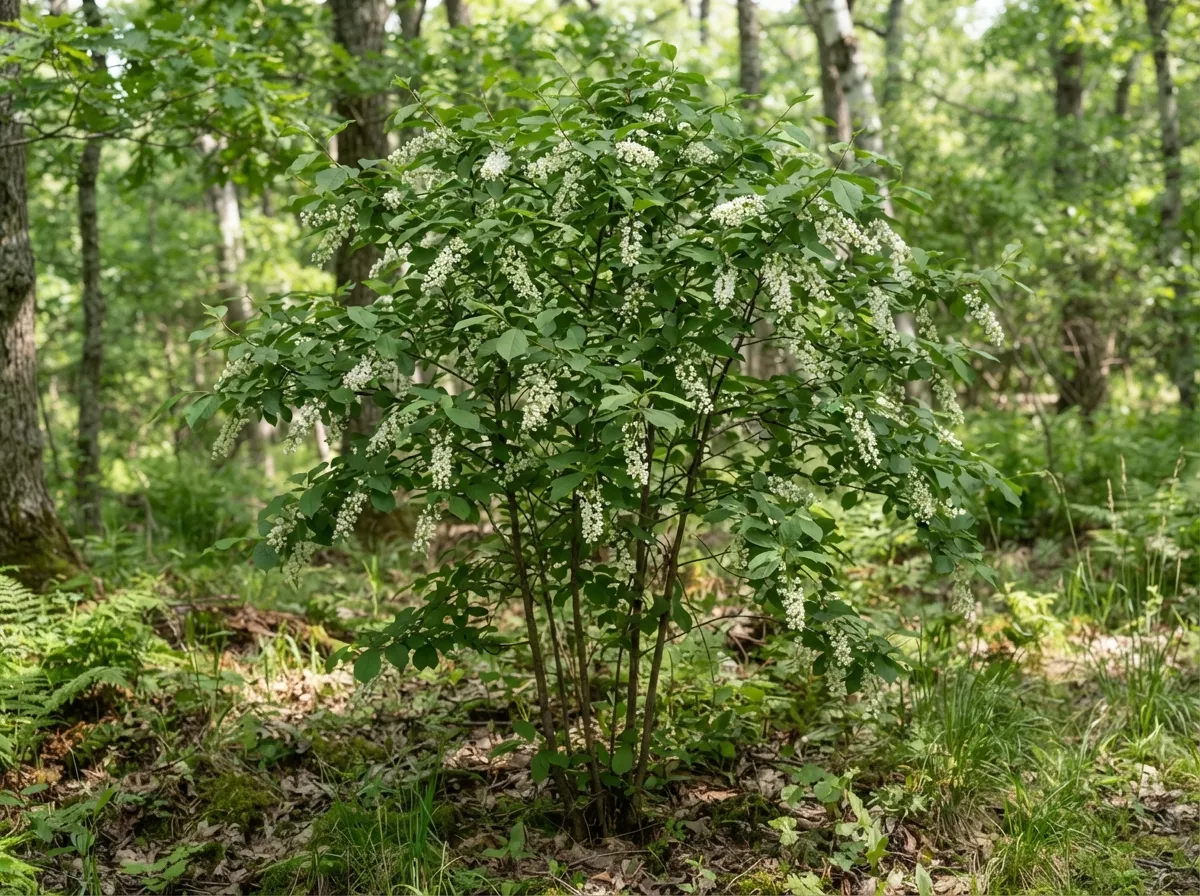
🔍 Identify it without mistakes
Small tree or large shrub often forming thickets, with smooth gray bark marked by horizontal lenticels. Oval leaves with fine teeth, releasing a bitter almond smell when crushed (a sign of cyanogenic compounds, normal for the whole Prunus genus). Hanging clusters of small dark red to black drupes at maturity, extremely astringent when raw.
- bitter almond smell when crushing the leaves
- elongated, hanging clusters of small red to black drupes
- gray bark with horizontal lenticels
- fruit very astringent raw, a single large pit per fruit
⚠️ Not to be confused with
To tell them apart: chokecherry bears an elongated cylindrical cluster of drupes with a single large pit each, on a shrub/small tree with lenticellate bark smelling of bitter almond; elderberry bears broad flat or drooping umbels of numerous tiny berries with several miniature seeds, on stems with spongy white pith, without any almond smell
🍽️ Eating it
Preparation : the pulp can be turned into jelly, syrup, or wine after cooking, which partly neutralizes the astringency; NEVER chew or crush the pits — traditional pemmican preparation involved sun-drying the whole fruits for several days before pounding them, a process that reduces cyanogenic compound levels in the crushed pits
💊 Healing with it
inner bark in decoction traditionally used for coughs and colds; dried fruits used as a tonic
Level of evidence : traditional use — ASPCA — Choke Cherry toxicity ; USDA NRCS Plant Guide Chokecherry
⚠️ leaves, bark, stems, and especially pits contain cyanogenic glycosides (prunasin in vegetative tissues, amygdalin in the pit) that release toxic hydrocyanic acid if chewed or crushed; only the flesh of the ripe fruit, without the pit, is safe for common use; livestock (horses, cattle) are regularly poisoned by wilted foliage, which is richer in cyanide than fresh foliage
🪓 Other bushcraft uses
- essential ingredient in traditional Plains pemmican (whole dried fruits pounded with dried meat and fat) — the Algonquian name "pak-sa-war" (Cree) or its equivalent is at the origin of the word pemmican itself
- wood used for small tools and arrows
Sources (3)
No entry replaces a certain identification in the field, or medical advice. When in doubt: don't eat it. If ingestion is suspected: poison control or 112/911.