🌸 Spear Thistle (Bull Thistle)
Cirsium vulgare · Asteraceae
🔍 Identify it without mistakes
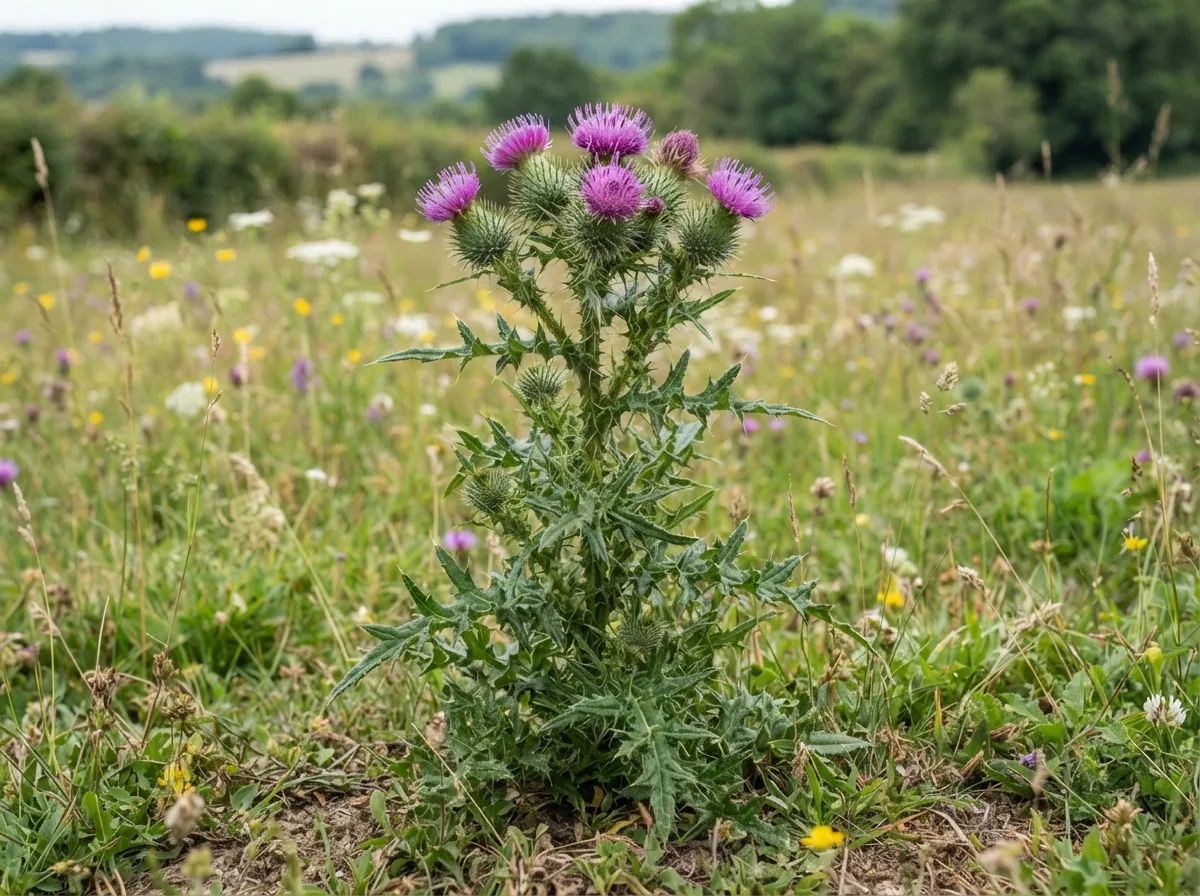
The quintessential thistle of wasteland and grazed pastures, bristling with formidable spines all the way down the wings running along the stem — but under this armor lies a tender edible heart, just like its close cousin, the artichoke. A large, solitary purple flower head caps each stem, heavily visited by bumblebees and butterflies.
- winged stem, with the wings themselves bristling with spines along their entire length
- deeply lobed leaves, each lobe ending in a long, stiff yellowish spine
- large, solitary purple flower head (3-5 cm), surrounded by spiny bracts
- underside of leaves cottony-whitish in some varieties
- biennial: rosette in the 1st year, flowering stem in the 2nd
⚠️ Not to be confused with
To tell them apart: the winged stem bristling with spines along its entire length and the large solitary purple flower head distinguish spear thistle from any toxic wasteland plant; all thistles of the genus Cirsium are edible using the same preparation
🍽️ Eating it
Preparation : peel the stem completely to remove the spiny outer rind and eat the tender core raw or cooked; the receptacle of the unopened flower head is prepared like a mini artichoke, boiled in water; strip the spines from young leaves with a knife before cooking
🪓 Other bushcraft uses
- flower heads are extremely rich in nectar, among the favorite plants of bumblebees and many meadow butterflies in late summer, making it a great biodiversity indicator in wasteland areas
No entry replaces a certain identification in the field, or medical advice. When in doubt: don't eat it. If ingestion is suspected: poison control or 112/911.