🌰 Sweet Chestnut
Castanea sativa · Fagacées
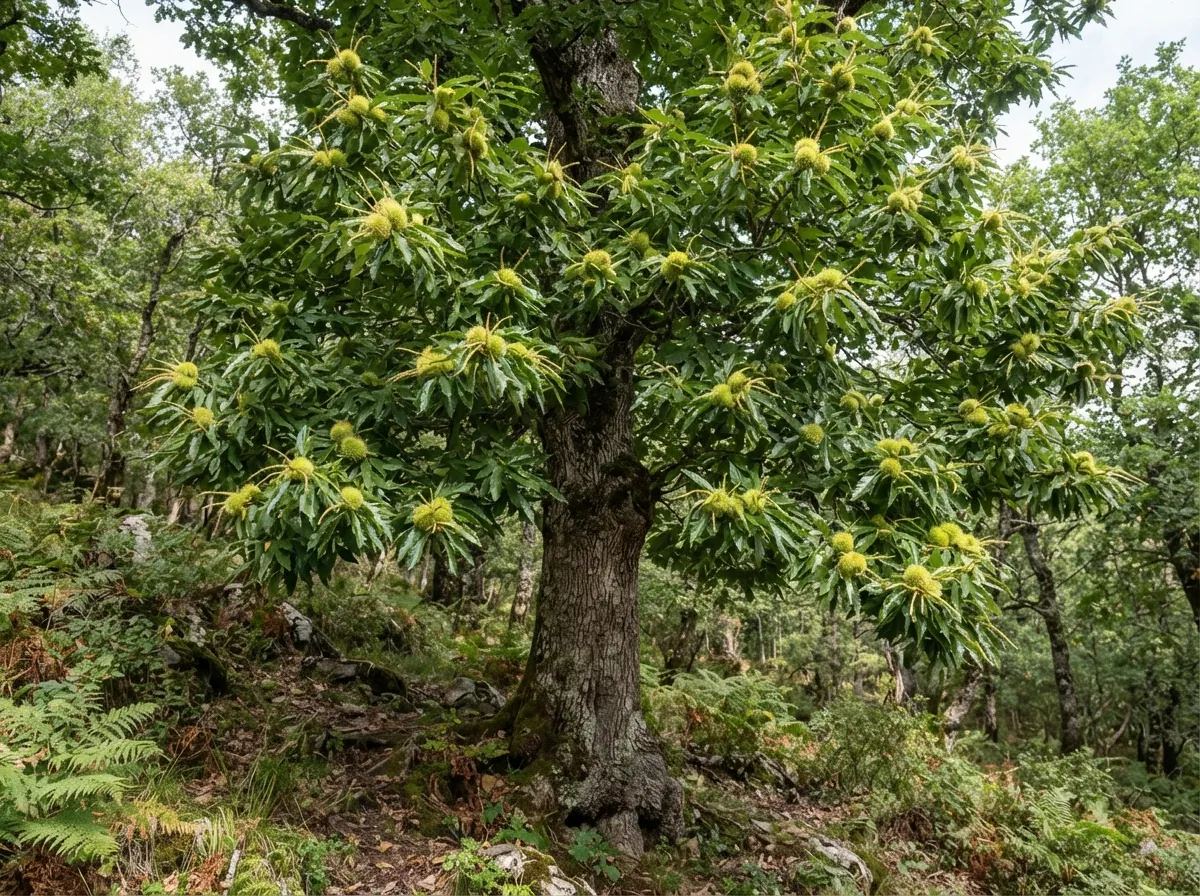
🔍 Identify it without mistakes
Large tree with long, lanceolate leaves (10-25 cm) with regularly saw-toothed margins and sharp teeth — very different from oak. The fruit (the chestnut) is enclosed 1 to 3 at a time in a green burr covered with long, soft spines, which splits into 4 valves when ripe to release the shiny brown nuts.
- long leaves with regular, sharp saw-teeth
- very spiky green burr with branched, soft spines
- 1 to 3 chestnuts per burr, with a characteristic flat base on the attachment side
- adult bark with a characteristic spiral fissuring
- yellowish erect catkins in summer (June-July), distinct from oak
⚠️ Not to be confused with
To tell them apart: the horse chestnut husk has thick, widely spaced spikes (compared to the fine, dense spikes of the sweet chestnut) and contains only a single large, rounded fruit with a light scar and no point; horse chestnut leaves are palmately compound, unlike the simple toothed leaf of the sweet chestnut
To tell them apart: leaves and fruits are very similar; planted European sweet chestnuts generally resist blight better and reach adult size, unlike wild sprouts of Castanea dentata which almost always die beforehand
🍽️ Eating it
Preparation : roasted, boiled, or dried and then ground into flour (a historic staple in many mountain regions, known as 'chestnut country')
USDA FoodData Central, roasted European chestnut, per 100 g
💊 Healing with it
leaves traditionally used in herbal teas for coughs and respiratory ailments (astringent properties)
Level of evidence : traditional use — ethnobotanical compilations (Fournier, PFAF)
⚠️ no major known contraindications at food doses
🪓 Other bushcraft uses
- rot-resistant wood highly sought after for timber framing, coopering, and fence posts
- chestnut flour was a historical staple food in Corsica, the Cévennes, and Ardèche until the 19th century (the 'bread tree')
No entry replaces a certain identification in the field, or medical advice. When in doubt: don't eat it. If ingestion is suspected: poison control or 112/911.