🌰 White oak
Quercus alba · Fagaceae
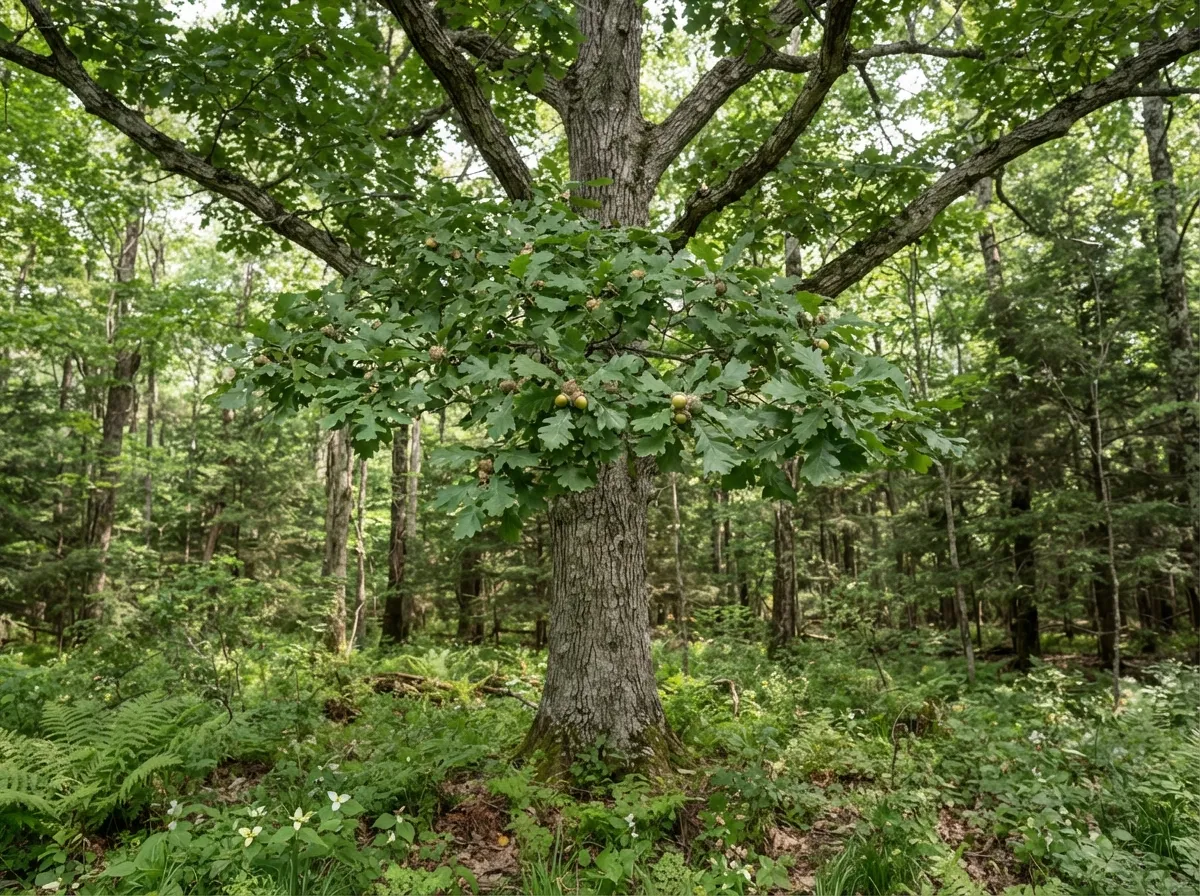
🔍 Identify it without mistakes
Large hardwood tree with scaly light gray bark and lobed leaves with rounded lobes (never pointed, unlike the red oak group). The acorns, borne singly or in pairs on a short stalk, mature in a single season and are barely bitter. Distinctive light bark that gives the species its name.
- leaves with rounded lobes without prickly tips
- acorn with a shallow cup covering about 1/4 of the fruit
- light gray bark in plates
- acorn matures in one year
⚠️ Not to be confused with
To tell them apart: leaves with pointed, bristle-tipped lobes in red oak versus rounded lobes in white oak; red oak group acorn is bitter, takes two years to mature, and has a thinner cup
🍽️ Eating it
Preparation : shell then soak the crushed nuts in several changes of water (leaching) until the tannin bitterness is gone — white oak naturally has low tannin levels and often requires fewer rinses than red oak; dry then grind into flour for flatbread, porridge, or as a partial wheat flour substitute; can also be roasted as a coffee substitute
💊 Healing with it
inner bark in astringent decoction for diarrhea and as a mouthwash/gargle (tannins); external use for washing wounds
Level of evidence : traditional use — Native American Ethnobotany Database (Moerman, University of Michigan)
⚠️ unleached bark and acorns are high in tannins, which can irritate the stomach and kidneys in large amounts over prolonged periods; not recommended for extended internal use
🪓 Other bushcraft uses
- construction timber and cooperage (watertight thanks to tyloses plugging the xylem vessels)
- bark used for tanning leather
- wood ash rich in potash used in leaching solution for other acorns
Sources (4)
No entry replaces a certain identification in the field, or medical advice. When in doubt: don't eat it. If ingestion is suspected: poison control or 112/911.