🌳 Cork Oak
Quercus suber · Fagaceae
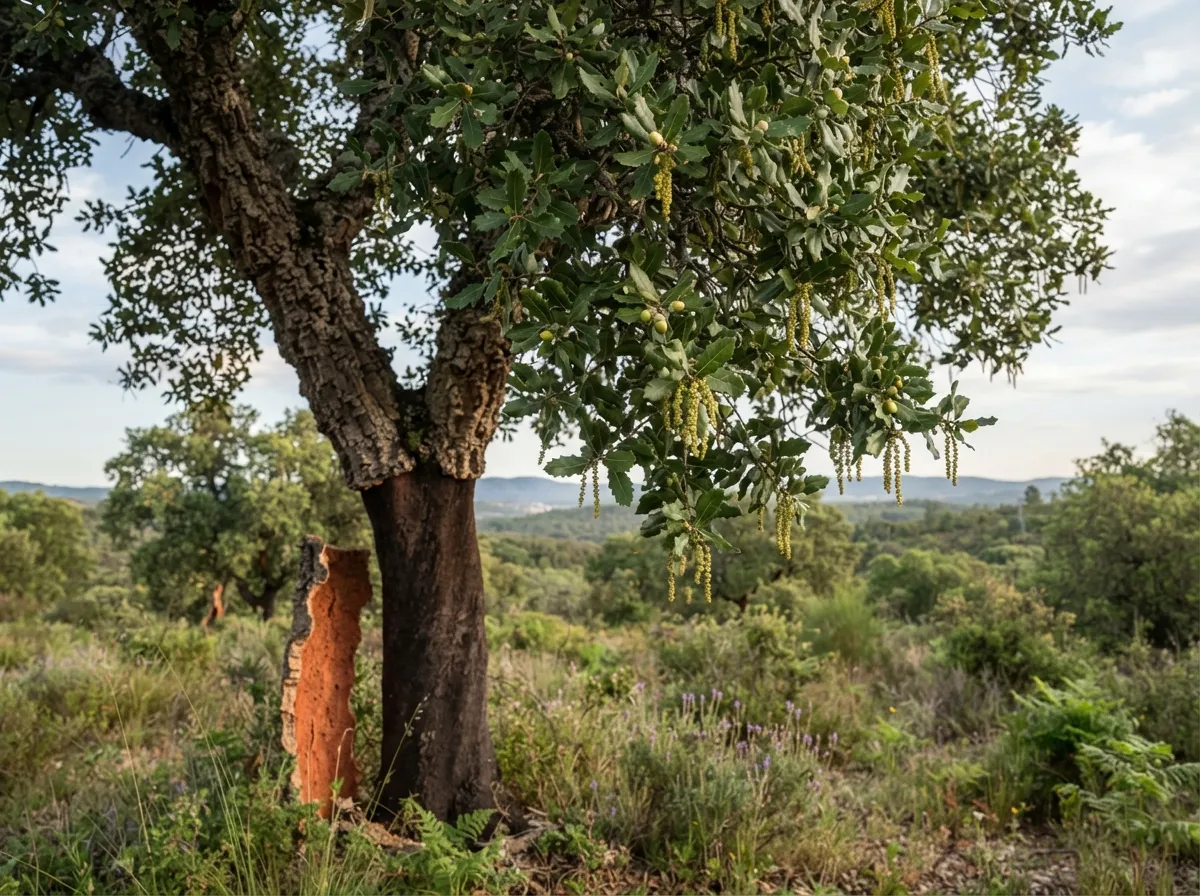
🔍 Identify it without mistakes
Evergreen Mediterranean oak, tough dark shiny green leaves above, felted greyish-white underneath, with spiny-toothed edges resembling holly. Its most recognizable feature: very thick, spongy, and deeply furrowed bark—the famous cork—which, once harvested, leaves a exposed, bright orange-red trunk.
- evergreen, tough leaves, dark glossy green above, felted grey-white below, spiny-toothed margins
- very thick, spongy, deeply furrowed bark—the cork
- after harvest, exposed bright orange-red trunk, instantly recognizable
- acorns held in a cupule with protruding scales
⚠️ Not to be confused with
To tell them apart: the bark of the cork oak is thick, spongy, highly furrowed (cork); that of the holm oak remains thin, grey, and smooth to cracked
🍽️ Eating it
Preparation : like all oak acorns, rich in bitter tannins that are slightly irritating when raw: soak/boil in several successive changes of water to leach out the tannins before grinding into flour or roasting
💊 Healing with it
bark rich in tannins, traditional astringent decoction against diarrhea, just like other oaks
Level of evidence : traditional use — general knowledge of Quercus tannins
⚠️ occasional use, excessive tannins irritate the digestive tract
🪓 Other bushcraft uses
- cork: spongy, waterproof, light, and insulating bark, harvested every 9 to 12 years without killing the tree—the only European bark renewable in this way, historic raw material for stoppers, floats, and insulation
- fishing floats: a simple piece of raw cork makes an instant float, a practice documented since Antiquity
- fire starter: dry cork, being highly porous, catches fire easily and burns slowly into embers—a good supplemental tinder
- shelter insulation: cork sheets gathered from the ground make excellent insulation against cold and dampness when bivouacking
- fire resistance: the thick corky bark protects the trunk from recurring Mediterranean undergrowth fires, allowing the tree to survive where other species perish
- acorn flour: as with the common oak, a major caloric resource in autumn after leaching tannins, historically a famine flour in southern Europe
- charcoal: hardwood underneath the cork, used in timber framing and for high-quality charcoal once the bark is removed
No entry replaces a certain identification in the field, or medical advice. When in doubt: don't eat it. If ingestion is suspected: poison control or 112/911.