🍂 Northern red oak
Quercus rubra · Fagacées
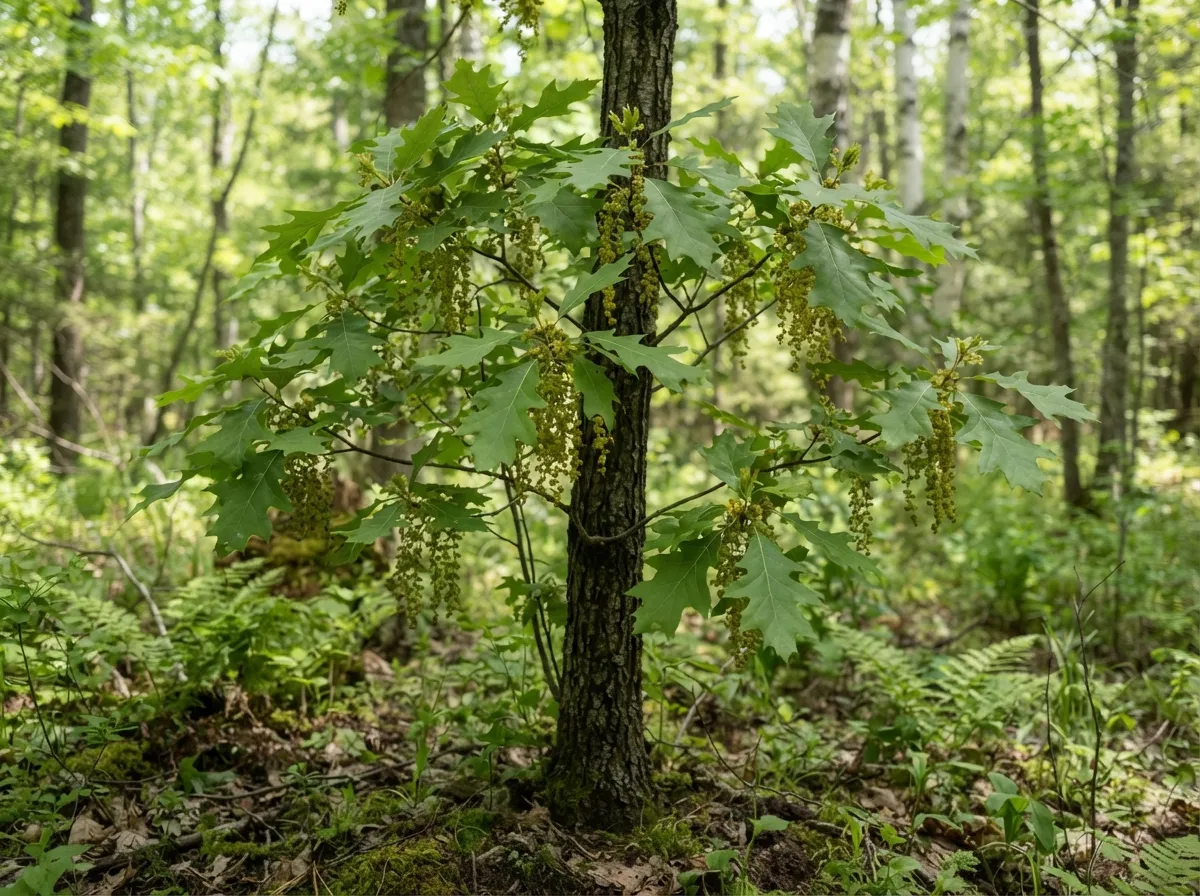
🔍 Identify it without mistakes
Large hardwood tree with gray bark featuring characteristic long, shiny, smooth vertical strips ("ski tracks"). Leaves have pointed lobes ending in a tiny bristle, unlike the white oak group. Acorns take two years to mature, are bitter, and sit in a shallow saucer-shaped cup.
- leaves with bristle-tipped pointed lobes
- gray bark with shiny smooth vertical strips
- very bitter acorn with a flat, saucer-like cup
- acorns maturing over two seasons
⚠️ Not to be confused with
To tell them apart: rounded leaf lobes and sweet one-year acorns on white oak, vs pointed lobes and bitter two-year acorns on red oak
🍽️ Eating it
Preparation : crush the nutmeat and cold-leach in multiple water baths (prolonged soaking, or 3-5 boiling water changes) until the bitter tannin taste is completely gone — significantly longer process than for white oak; dry, grind into flour for porridge or flatbreads, or roast as a coffee substitute
💊 Healing with it
inner bark decoction used as an astringent for diarrhea, hemorrhoids, and gargles for sore throat
Level of evidence : traditional use — Native American Ethnobotany Database (Moerman, University of Michigan)
⚠️ tannins can irritate the digestive tract during prolonged or concentrated internal use; unleached acorns have caused poisoning (colic, vomiting) in livestock and occasionally in humans
🪓 Other bushcraft uses
- highly prized firewood and timber (hard, porous)
- bark rich in tannins used for leather tanning
- oak galls used to make ink (iron gall ink)
Sources (4)
No entry replaces a certain identification in the field, or medical advice. When in doubt: don't eat it. If ingestion is suspected: poison control or 112/911.