🌳 Oak (pedunculate and sessile)
Quercus robur / Quercus petraea · Fagaceae
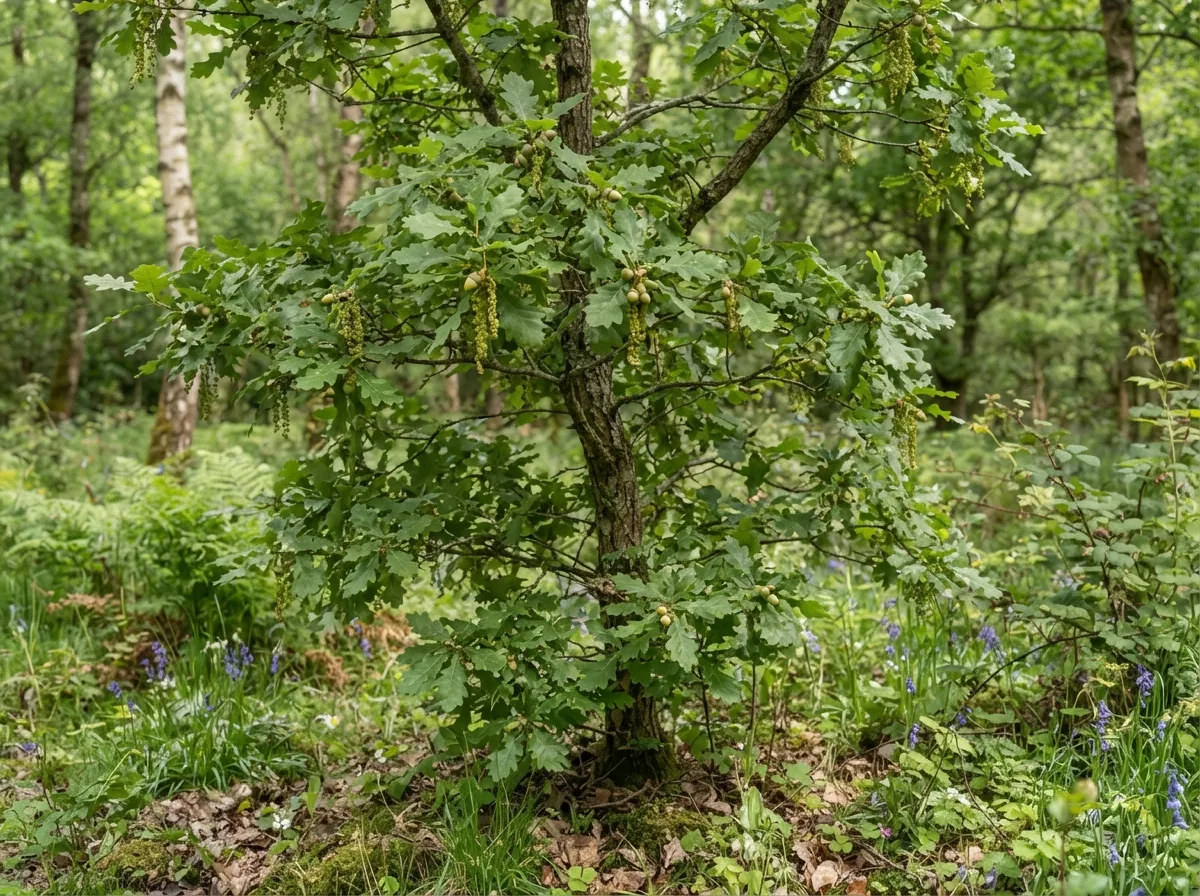
🔍 Identify it without mistakes
Large tree with characteristic lobed leaves (rounded lobes, no sharp teeth), bearing famous acorns, oval fruits in a scaly cupule. The pedunculate oak bears its acorns on a long stalk and has leaves with almost no petiole; the sessile oak bears its acorns attached directly to the twigs and has leaves on a long petiole — the two often hybridize.
- leaves with regular rounded lobes, without sharp teeth
- acorns in a characteristic scaly cupule
- thick grey bark, deeply furrowed lengthwise on old specimens
- buds clustered in bunches at the ends of twigs
- majestic silhouette, broad and powerful crown
⚠️ Not to be confused with
To tell them apart: the scaly cupule and the shape of the acorn are unique among European fruits
🍽️ Eating it
Preparation : shelled, crushed, then leached acorns (bitter and slightly toxic tannins in high doses) by successive soakings in frequently changed water for 24 to 48 hours or by repeated boilings, until the water is no longer brown; dried then ground into flour, used mixed with cereal flour for bread and porridge
approx, dried/leached acorn, USDA North American compilations on Quercus spp.
💊 Healing with it
traditionally astringent bark, used as a gargle for throat inflammation and in baths for mild skin conditions, due to its high tannin content
Level of evidence : tradition (recognized by EMA/HMPC for traditional use) — EMA/HMPC, community monograph Quercus cortex
⚠️ prolonged internal use not recommended (tannins irritate the digestive mucosa in high doses); never consume raw, unleached acorns in quantity, as tannins can cause digestive and kidney issues in both animals and humans
🪓 Other bushcraft uses
- tannin-rich bark historically used for leather tanning
- timber and firewood among the most sought after in Europe (framing, barrel making)
- cupules and galls used as dye and ink (historical iron gall ink)
Sources (3)
No entry replaces a certain identification in the field, or medical advice. When in doubt: don't eat it. If ingestion is suspected: poison control or 112/911.