🌱 Fat-hen
Chenopodium album · Amaranthaceae (formerly Chenopodiaceae)
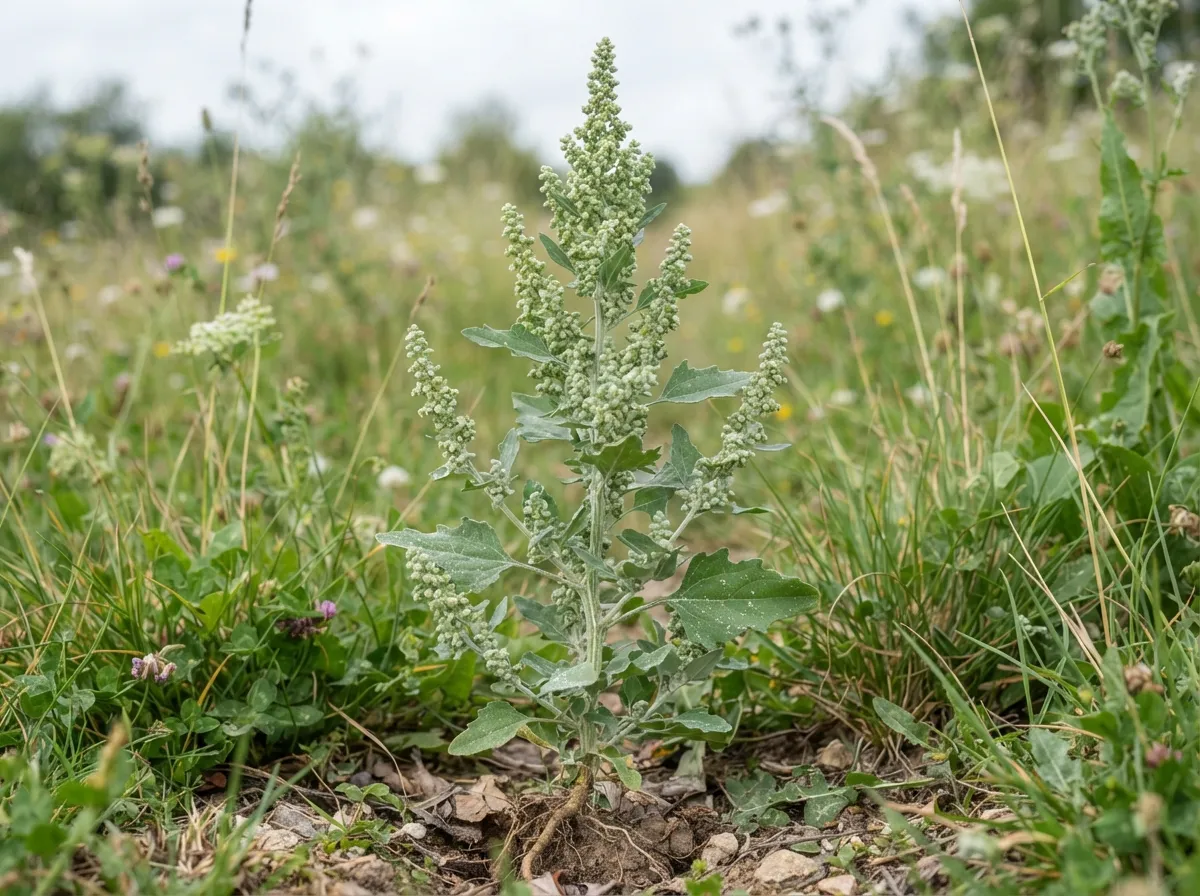
🔍 Identify it without mistakes
Erect annual plant, extremely common in gardens and cultivated land, recognizable by the whitish mealy powder covering the underside of young leaves and stems — hence the names 'lambsquarters' or 'goosefoot'. Alternate, diamond-shaped leaves with coarsely toothed edges. Small, petal-less greenish flowers in dense clusters.
- waxy white flour-like coating on young shoots and leaf undersides
- alternate, irregular diamond-shaped leaves
- stem often streaked with red-purple at the base
- tiny green flowers in dense spikes
- subtle, pleasant scent
⚠️ Not to be confused with
To tell them apart: the entire genus is edible; just watch out for the neighboring redroot pigweed, which is also edible but lacks the characteristic white mealy powder
🍽️ Eating it
Preparation : leaves cooked like spinach (they reduce a lot) or young and raw in salads; tiny seeds are tough to separate from the pericarp's saponins, so rinse them thoroughly before cooking into porridge
USDA, raw leaves, per 100 g
💊 Healing with it
traditional use as a food remedy for minor digestive issues, sparsely documented in modern herbal medicine
Level of evidence : traditional use — ethnobotanical compilations (Couplan, PFAF)
⚠️ leaves are rich in oxalates and nitrates: cooking is recommended, and moderate consumption if you are prone to kidney stones
🪓 Other bushcraft uses
- seeds archaeologically proven to be a staple pseudo-cereal in prehistoric Europe (notably at the Hallstatt site)
Sources (3)
No entry replaces a certain identification in the field, or medical advice. When in doubt: don't eat it. If ingestion is suspected: poison control or 112/911.