🩵 Chicory
Cichorium intybus · Asteraceae
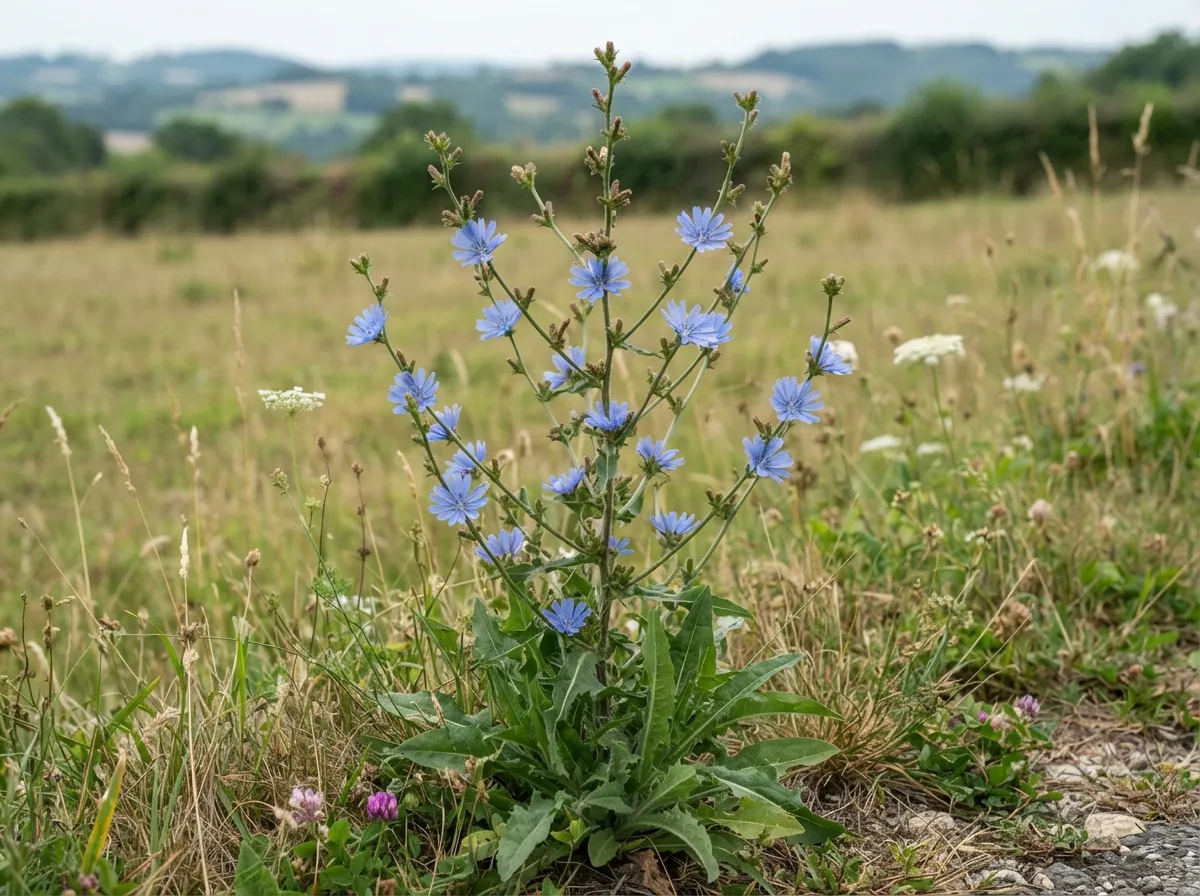
🔍 Identify it without mistakes
Rigid plant, branched at right angles, famous for its large sky-blue flowers that only open in the morning and close around noon — a trait so reliable that Linnaeus used it in his floral clock. Its long, bitter taproot is roasted to make chicory coffee substitute.
- sky-blue flowers (rarely white or pink) 3-4 cm wide, open in the morning only
- tough, angular stems, branching almost at right angles
- basal rosette leaves cut like dandelion leaves, stem leaves reduced and clasping
- flower heads sitting directly on the stem, without visible stalk
- white taproot, very bitter, oozing a milky latex
⚠️ Not to be confused with
To tell them apart: cornflower grows in cereal crops, has a greyish downy stem and narrow entire leaves; chicory has a rigid angular stem and deeply lobed leaves in a basal rosette
🍽️ Eating it
Preparation : bitter young leaves in salads or blanched to reduce bitterness (same technique used for Belgian endive/witloof, which is the same species grown in the dark); root dried, then roasted and ground as a caffeine-free coffee substitute
💊 Healing with it
traditionally digestive and choleretic (stimulates bile secretion), thanks to the inulin and sesquiterpene lactones in the root
Level of evidence : traditional use — ethnobotanical compilations (Fournier, PFAF)
⚠️ avoid if you have a bile duct obstruction; possible cross-allergy with other Asteraceae
🪓 Other bushcraft uses
- roasted root used as a caffeine-free coffee substitute since Napoleon's Continental Blockade (1806), when real coffee was scarce in Europe
No entry replaces a certain identification in the field, or medical advice. When in doubt: don't eat it. If ingestion is suspected: poison control or 112/911.