🟠 Cloudberry (bakeapple, knotberry)
Rubus chamaemorus · Rosaceae
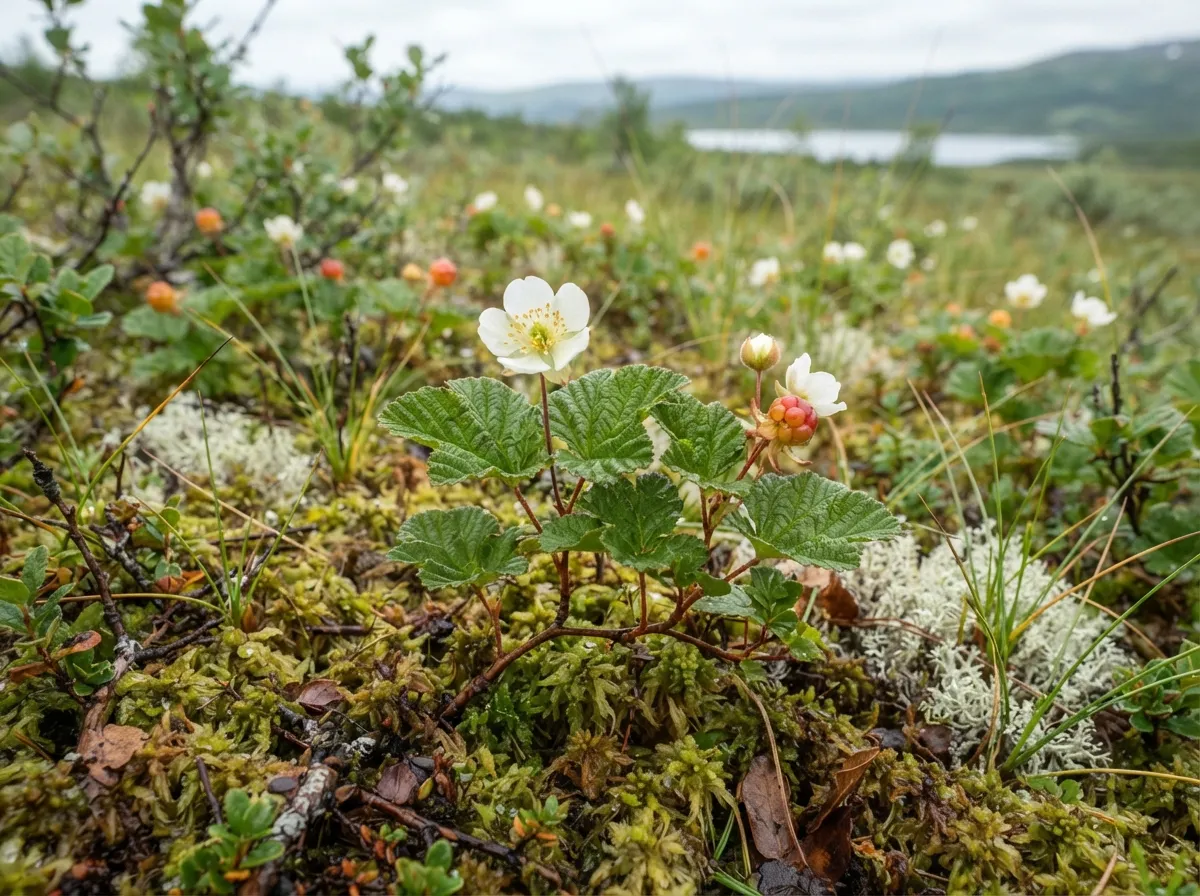
🔍 Identify it without mistakes
Small herbaceous perennial plant (not woody, unlike other Rubus), 10 to 25 cm, with a thornless stem bearing only 1 to 3 rounded, slightly lobed currant-like leaves. A single terminal white flower per stem (separate male and female plants), producing a raspberry-like aggregate fruit, initially red, then turning translucent amber-gold at full maturity.
- low herbaceous plant WITHOUT thorns, unlike other brambles
- a single flower and a single fruit per stem
- translucent amber-gold fruit when ripe (red when still immature)
- grows in bogs and sphagnum moss beds of the far North
⚠️ Not to be confused with
To tell them apart: a single lobed currant-like leaf and a single fruit per thornless herbaceous stem, in sphagnum bogs, are not found in any other toxic plant of the same environment
🍽️ Eating it
Preparation : raw once fully ripe (amber and slightly translucent), as jam (“hilla” in Finnish, “moltebær” in Norwegian), traditional liqueur
Nordic literature (Arktiset Aromit, Phyto Canada): about 75 g of cloudberries cover the recommended daily intake of vitamin C for an adult, an exceptionally high content among wild berries
🪓 Other bushcraft uses
- luxury export fruit in Scandinavia (Lakka liqueur in Finland), highly sought-after and expensive due to its exclusively wild harvest
Sources (3)
No entry replaces a certain identification in the field, or medical advice. When in doubt: don't eat it. If ingestion is suspected: poison control or 112/911.