🌵 Jumping cholla
Cylindropuntia fulgida · Cactacées
🔍 Identify it without mistakes
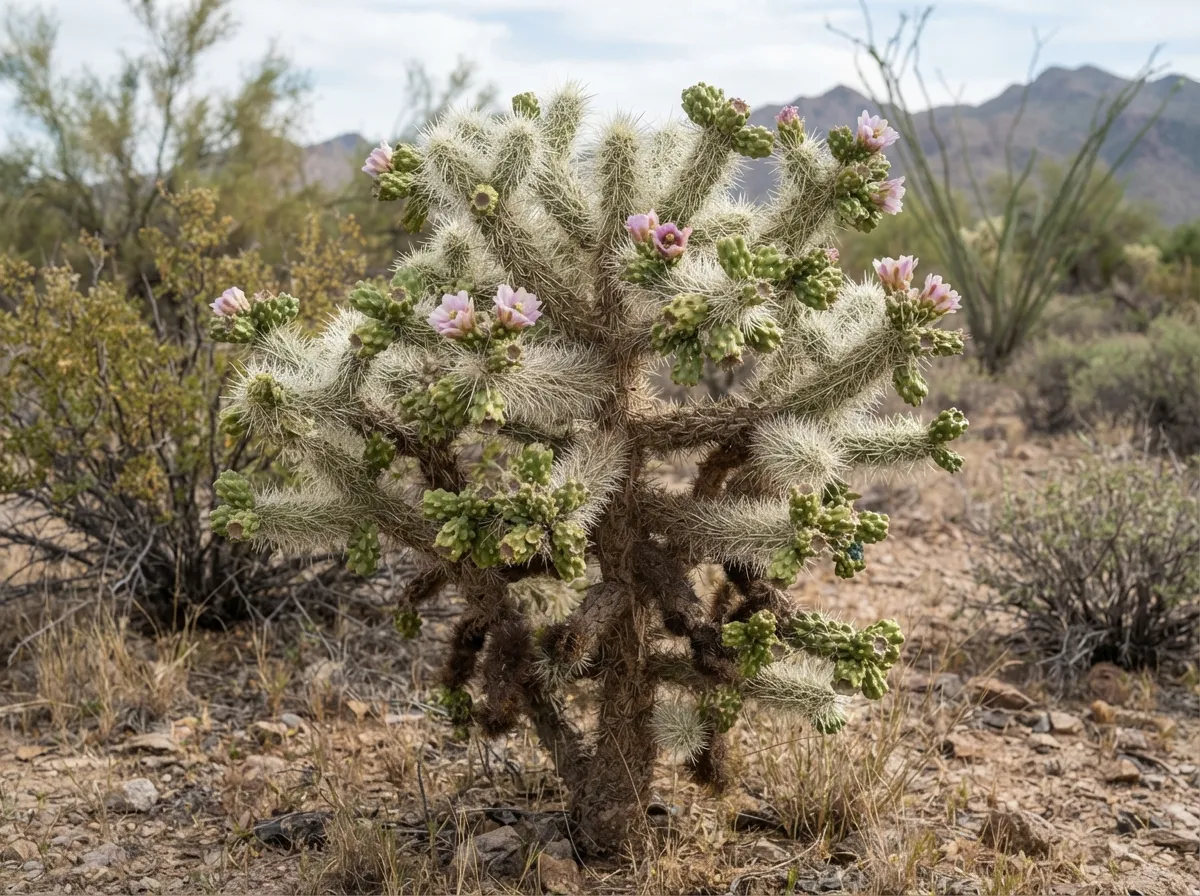
Tree-like cactus up to about 4 m with drooping branches formed of jointed cylindrical segments covered in small warty tubercles. Young shoots bear silvery-gold spines of 2.5 to 4 cm that darken with age. The segments detach at the slightest contact and instantly cling to skin or clothing — hence the nickname "jumping cholla", although it obviously doesn't actually jump.
- jointed cylindrical segments (unlike the flattened pads of Opuntia), detaching very easily upon contact
- silvery-gold spines of 2.5-4 cm with micro-barbs making removal difficult
- white-pink flowers striped with lavender, opening around 3:00 PM solar time in midsummer
- pendant fruits hanging in long chains ("hanging chain cholla")
⚠️ Not to be confused with
To tell them apart: the cholla has cylindrical, jointed segments that detach at the slightest contact, unlike the flat and more firmly attached pads of the Opuntia; the cholla's micro-barbed spines are much harder to pull out of the skin and pose a significantly higher physical hazard than Opuntia glochids
🍽️ Eating it
Preparation : you must remove all spines before handling (rub in sand or pass over a flame); flower buds are steamed or roasted on embers, an important traditional food for many indigenous peoples of the American Southwest and northern Mexico
💊 Healing with it
no major traditional medicinal use documented in consulted sources
Level of evidence : traditional use — Wikipedia — Cylindropuntia fulgida
⚠️ handle only with tongs or thick gloves; detached segments cling instantly to skin and barbed spines cause deep, painful wounds, much more serious than those from Opuntia
🪓 Other bushcraft uses
- fruits consumed by desert wildlife (bighorn sheep, mule deer) during drought periods, for their water as much as for food
Sources (1)
No entry replaces a certain identification in the field, or medical advice. When in doubt: don't eat it. If ingestion is suspected: poison control or 112/911.