🌴 Juçara palm (heart of palm)
Euterpe edulis · Arecaceae (Palms)
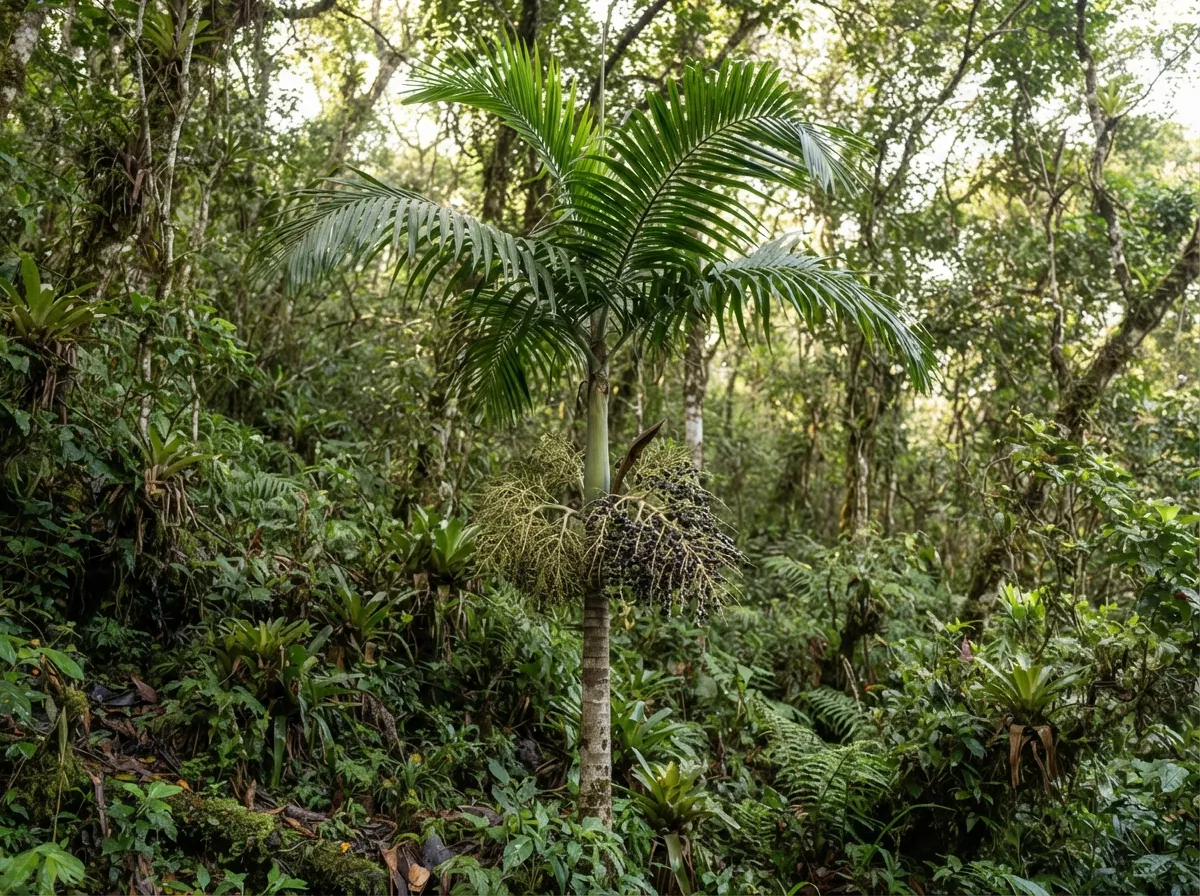
🔍 Identify it without mistakes
Slender, single-trunked palm (unlike its cousin the açaí, which grows in clumps) native to the Brazilian Atlantic Forest. It is now rare in the wild after decades of overexploitation for its tender heart, the famous "heart of palm". Harvesting the heart kills the tree: it's a last-resort survival resource, never a casual choice.
- single, smooth, gray-brown trunk ringed with leaf scars
- crown of large, arching pinnate fronds at the top
- round, purple-black fruits hanging in clusters, looking very similar to açaí berries
- the tender heart (terminal meristem) is enclosed at the top of the stem, beneath the youngest leaf bases
⚠️ Not to be confused with
To tell them apart: the juçara palm grows as a single trunk, whereas açaí grows in clumps of multiple stems from the same rootstock; never cut a single-trunked palm for its heart without absolute survival necessity
🍽️ Eating it
Preparation : strictly as a last resort for survival: fell the tree, peel away the hard outer leaf bases down to the soft white heart at the center of the stem top, eat raw thinly sliced or cooked as a vegetable; this kills the tree, so save it for situations where your survival takes precedence over everything else
💊 Healing with it
the fruit (juçara berry) is being studied for its antioxidant properties, comparable to those of açaí
Level of evidence : limited studies — PMC — Towards chemical characterization and possible applications of juçara fruit
⚠️ no known toxicity
🪓 Other bushcraft uses
- juçara berries harvested sustainably (without cutting the tree) to make a pulp similar to açaí, used locally in community conservation projects
Sources (2)
No entry replaces a certain identification in the field, or medical advice. When in doubt: don't eat it. If ingestion is suspected: poison control or 112/911.