☠️ Water hemlock
Cicuta maculata · Apiaceae
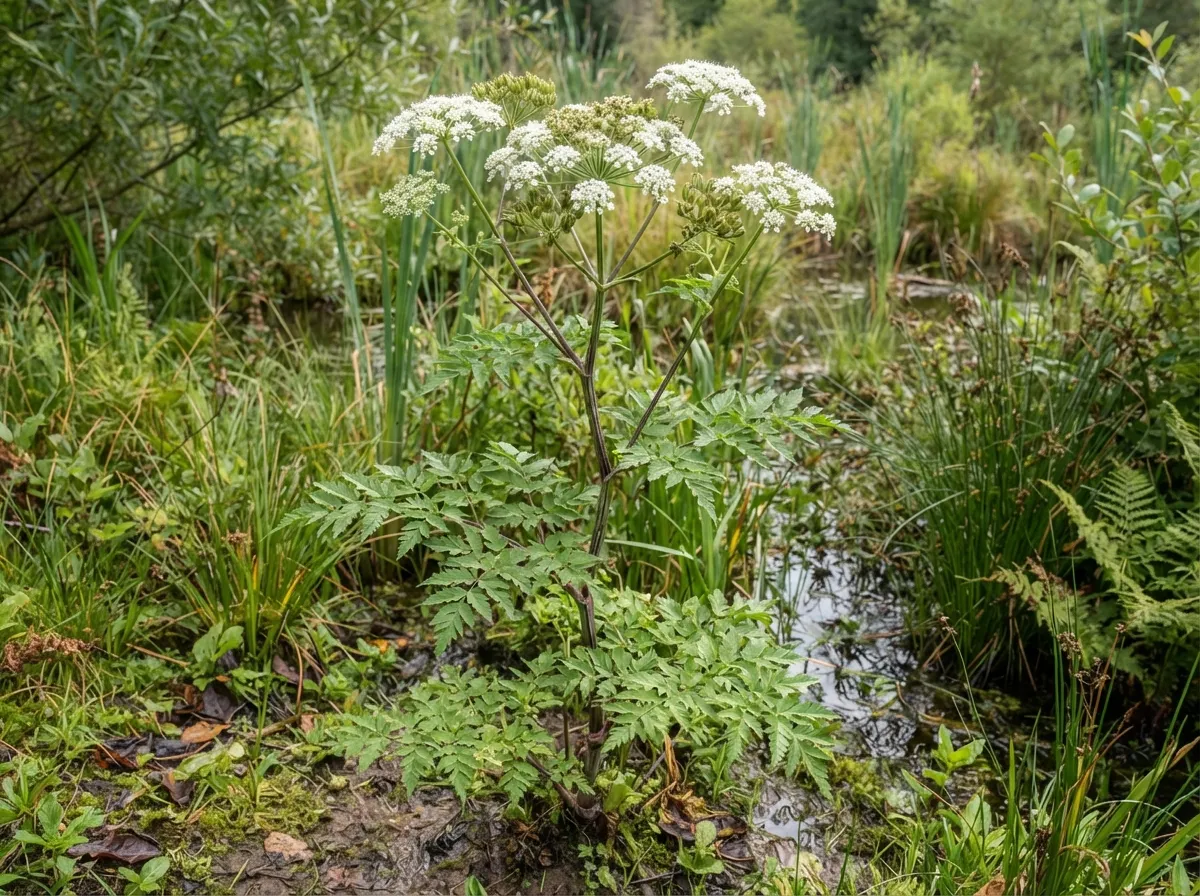
🔍 Identify it without mistakes
Wetland plant from the wild carrot family, featuring stems often mottled or streaked with purple, twice or thrice compound leaves with serrated leaflets, and large, flat white umbels typical of the Apiaceae family. Described by the USDA as 'the most violently toxic plant that grows in North America'. Slicing open the tuberous root releases a characteristic parsnip- or celery-like smell that is deceptively appealing.
- stem often mottled/streaked with purple
- tuberous rootstock in a chain, sectioned to reveal yellowish chambered cavities exuding an oily liquid
- flat white umbel typical of Apiaceae
- almost always grows with its feet in the water or in waterlogged soil
⚠️ Not to be confused with
To tell them apart: NEVER forage any white-umbelled Apiaceae without 100% positive identification by an expert — the family contains edible wild carrots, parsnips, and parsley, BUT ALSO the two most deadly plants in North America's flora (water hemlock and poison hemlock); when in doubt, never eat it
Sources (4)
No entry replaces a certain identification in the field, or medical advice. When in doubt: don't eat it. If ingestion is suspected: poison control or 112/911.