☠️ Cowbane / Water hemlock
Cicuta virosa · Apiaceae
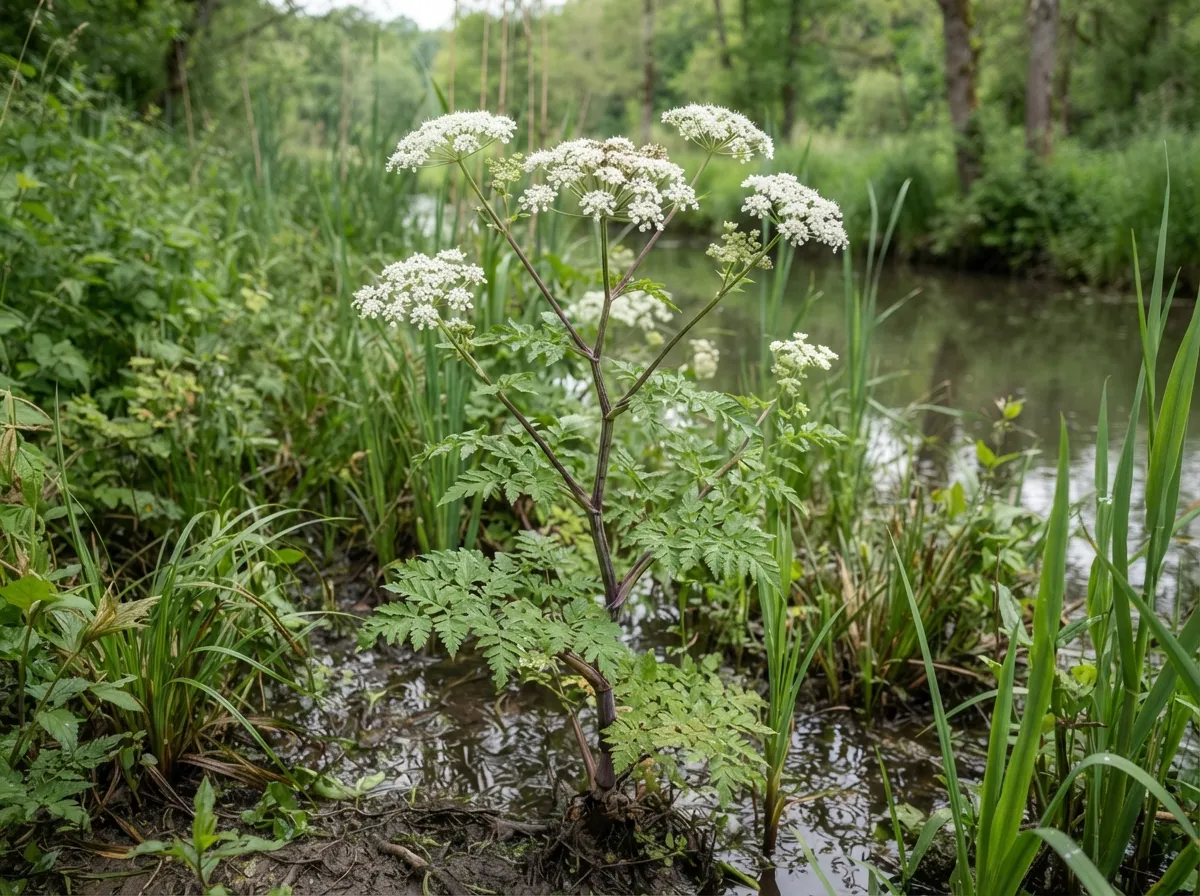
🔍 Identify it without mistakes
Often cited as North America's most toxic plant (its close North American relative, Cicuta maculata, shares the exact same danger level), it grows in wetlands and when sliced, reveals characteristic hollow chambers in its swollen rootstock—the dead giveaway. Its sweet-tasting root, reminiscent of parsnip or celery, is responsible for most fatal poisonings.
- swollen rootstock at the base, hollowed out with crosswise chambers visible when cut open (like a honeycomb grid)
- hollow stem, often purple-tinged at the base
- toothed leaflets, with side veins ending in the notches between teeth (not at the tips, unlike many edible umbellifers)
- white umbels typical of the Apiaceae family
⚠️ Not to be confused with
To tell them apart: cutting the water hemlock rootstock reveals a series of hollow chambers, absent in the solid taproots of parsnips and carrots
To tell them apart: no safe distinction without confirmed botanical expertise; absolute rule: never taste an umbellifer root in wetland areas
☠️ What kills
First steps : Call emergency services immediately: seizures can start in under 30 minutes and are instantly life-threatening. Do not induce vomiting or give anything to swallow. Keep a piece of the cut root (the hollow chambers will help confirm the diagnosis).
Sources (3)
No entry replaces a certain identification in the field, or medical advice. When in doubt: don't eat it. If ingestion is suspected: poison control or 112/911.