🥗 Miner's lettuce
Claytonia perfoliata · Portulacaceae
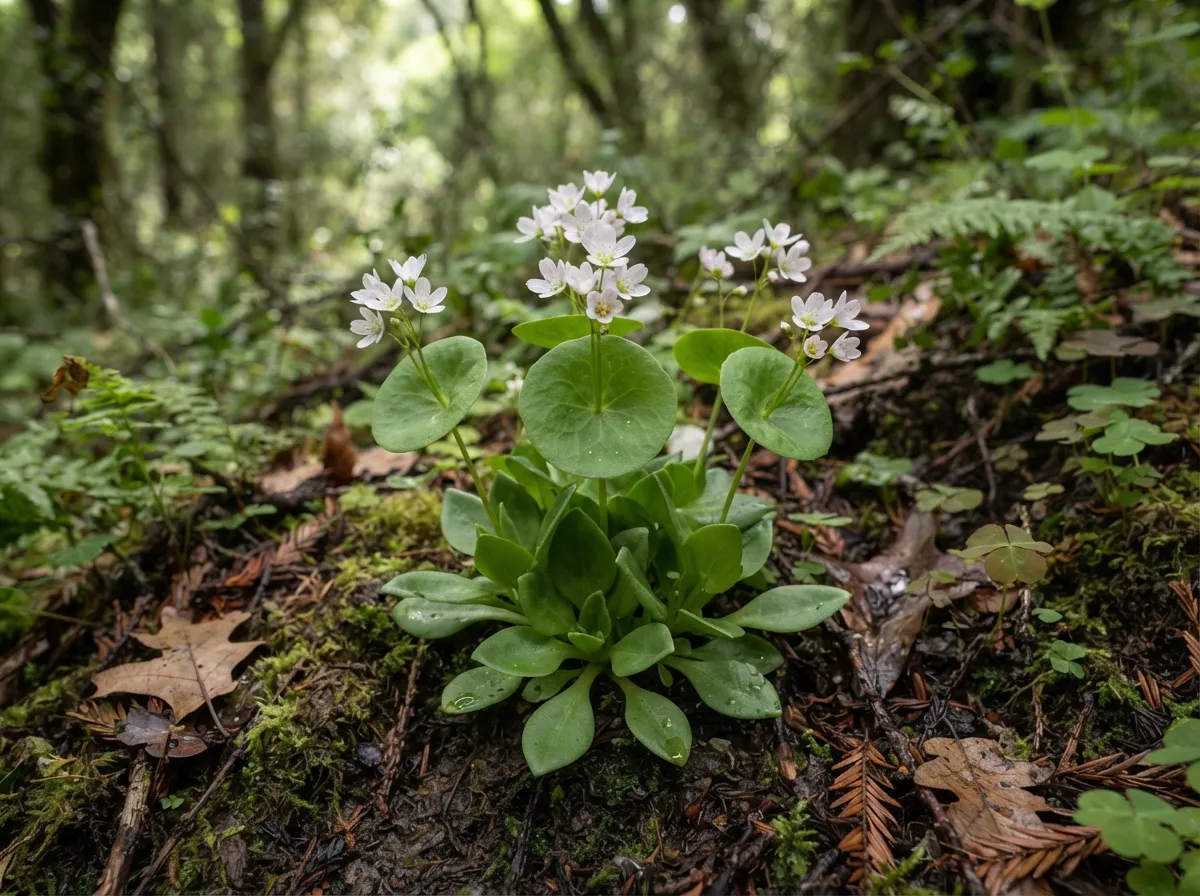
🔍 Identify it without mistakes
A highly recognizable small annual plant: the upper stem leaves form a perfectly fused circular disk around the stem (perfoliate leaf), which appears to pierce the disk like a tiny umbrella. Heart- or diamond-shaped basal leaves on long petioles. Tiny white to pink flowers borne just above the leaf disk.
- fused circular leaf disk, stem seemingly piercing the center
- heart/diamond-shaped basal leaves on long petioles
- tiny white to pink 5-petaled flowers right above the disk
- low-growing, tender, juicy annual plant
⚠️ Not to be confused with
To tell them apart: the fused circular leaf disk that the flowering stem appears to pierce through (perfoliate leaf) is a unique structure that no other common plant, toxic or not, possesses
🍽️ Eating it
Preparation : the entire aerial plant (except the root) can be eaten raw in salads or lightly cooked like spinach; its juicy, crunchy texture makes it an excellent staple wild salad leaf
💊 Healing with it
consumed fresh in abundance by 19th-century California gold prospectors to prevent scurvy, hence its common English name "miner's lettuce", although this name was only attested in print starting in 1921 despite documented use as early as 1849
Level of evidence : traditional use — Wikipedia (Claytonia perfoliata); historical literature on the California Gold Rush
⚠️ like spinach, miner's lettuce can accumulate sodium oxalate in sometimes notable amounts depending on soil conditions — consume in moderation if you suffer from calcium oxalate kidney stones or known sensitivity to oxalates
Sources (2)
No entry replaces a certain identification in the field, or medical advice. When in doubt: don't eat it. If ingestion is suspected: poison control or 112/911.