🥥 Coconut palm
Cocos nucifera · Arecaceae
🔍 Identify it without mistakes
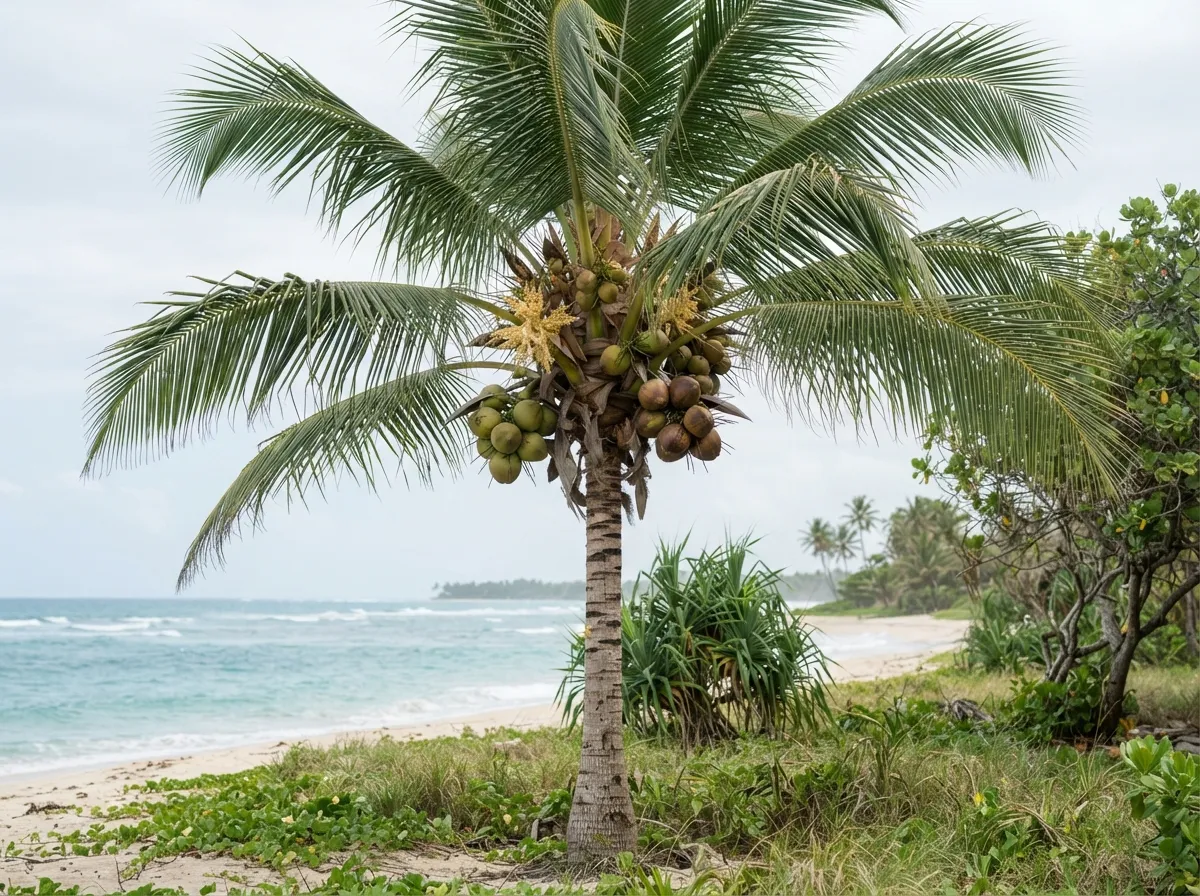
Slender palm tree with a curved, smooth trunk marked with rings (leaf scars), crowned with a tuft of long pinnate fronds. The nuts, grouped in clusters of 5 to 10, hang beneath the crown, encased in a fibrous green to brown husk.
- single trunk leaning toward the light
- 4-6 m pinnate fronds
- fibrous nuts with three germination pores at the base
⚠️ Not to be confused with
To tell them apart: the single ringed curved trunk and the fibrous nuts with three germination pores at the base are unique to the coconut palm; no other tropical coastal palm or tree produces a fruit of this shape
🍽️ Eating it
Preparation : young nut (green): pierce the 3 soft pores at the base to drink the water directly; mature nut: crack open at the base or on a hard point, grate the white flesh; the heart (terminal bud) can be eaten raw in salads, but harvesting it kills the tree — use as a last resort
USDA FoodData Central, coconut water, per 100 g; raw mature flesh: 354 kcal, 33.5 g fat, 15.2 g carbs per 100 g
💊 Healing with it
the water serves as an improvised rehydration fluid (electrolyte content close to an oral rehydration solution); the oil is used as a skin-softening ointment
Level of evidence : limited studies — Wikipedia (nutritional literature synthesis), cross-check with a clinical source before actual medical use
⚠️ coconut water does not equal a medical oral rehydration solution in cases of severe diarrhea (lower sodium content)
🪓 Other bushcraft uses
- coconut husk (coir) for cordage and tinder
- hard shell as a container or charcoal
- fronds for thatched roofing
- trunk for building material
- fermented sap as a drink (toddy)
Sources (3)
No entry replaces a certain identification in the field, or medical advice. When in doubt: don't eat it. If ingestion is suspected: poison control or 112/911.