🟢 Codium (dead man's fingers)
Codium fragile · Codiacées
🔍 Identify it without mistakes
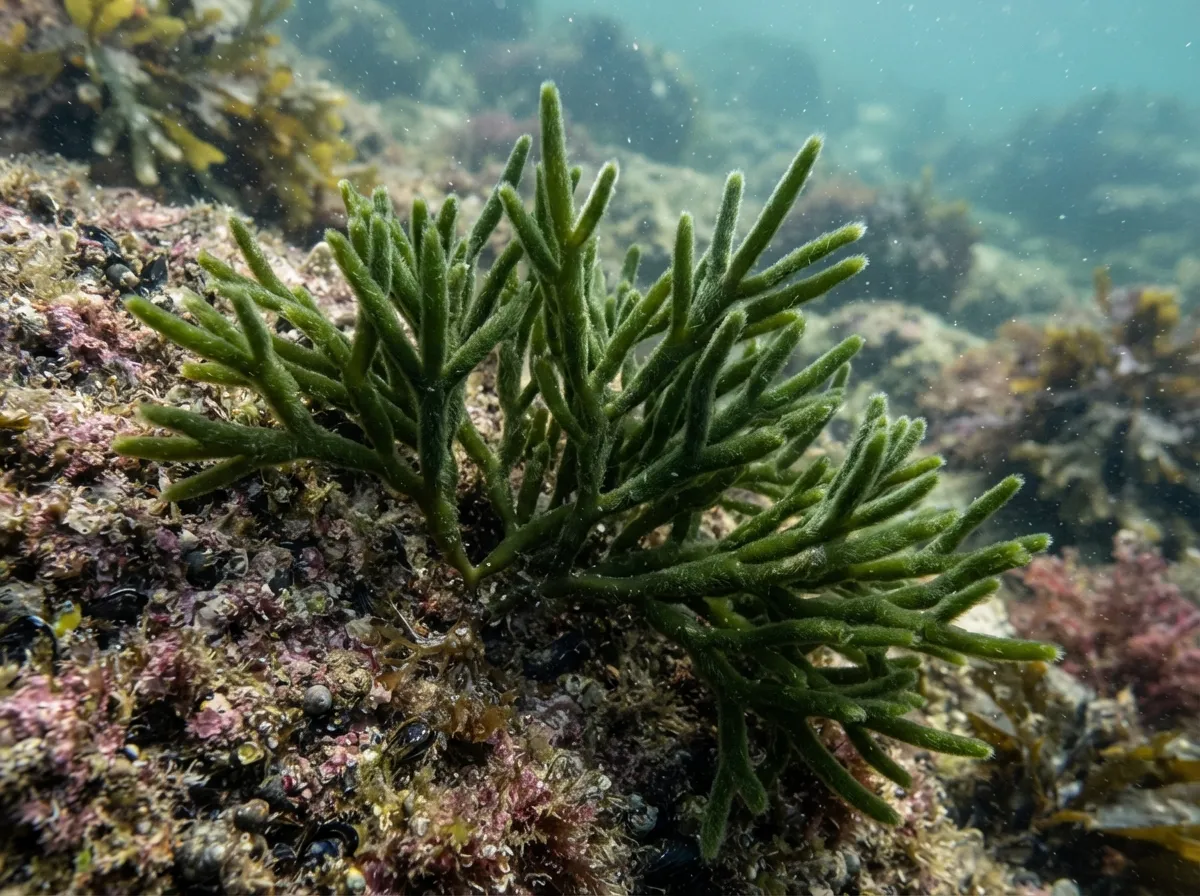
Perennial green alga forming clumps of cylindrical dichotomous branches (always dividing in two), spongy and fuzzy to the touch, often compared to black fingers or dark green cauliflower. Native to the Pacific, widely naturalized and sometimes invasive in Europe and North America.
- dark green, cylindrical, spongy branches, always dividing in two (regular dichotomy)
- fuzzy and elastic texture to the touch, like thick velvet
- attached by a basal disc to rocks or shells, in the lower intertidal and subtidal zones
⚠️ Not to be confused with
To tell them apart: the unique spongy and fuzzy texture, dark green color, and systematic branching into two equal branches are not found in any toxic coastal seaweed
🍽️ Eating it
Preparation : rarely used fresh as is in Europe (the spongy texture is not widely appreciated raw), rather dried and added in small pieces to soups and broths, or used in Asian cuisine where it goes into certain seaweed salads after a brief blanching
💊 Healing with it
studied for its potential antibacterial and antibiotic properties derived from its bioactive compounds
Level of evidence : limited studies — DORIS (FFESSM) — Codium fragile
⚠️ as with any seaweed, avoid harvesting in port or polluted areas
Sources (2)
No entry replaces a certain identification in the field, or medical advice. When in doubt: don't eat it. If ingestion is suspected: poison control or 112/911.