🌸 Autumn crocus
Colchicum autumnale · Colchicaceae
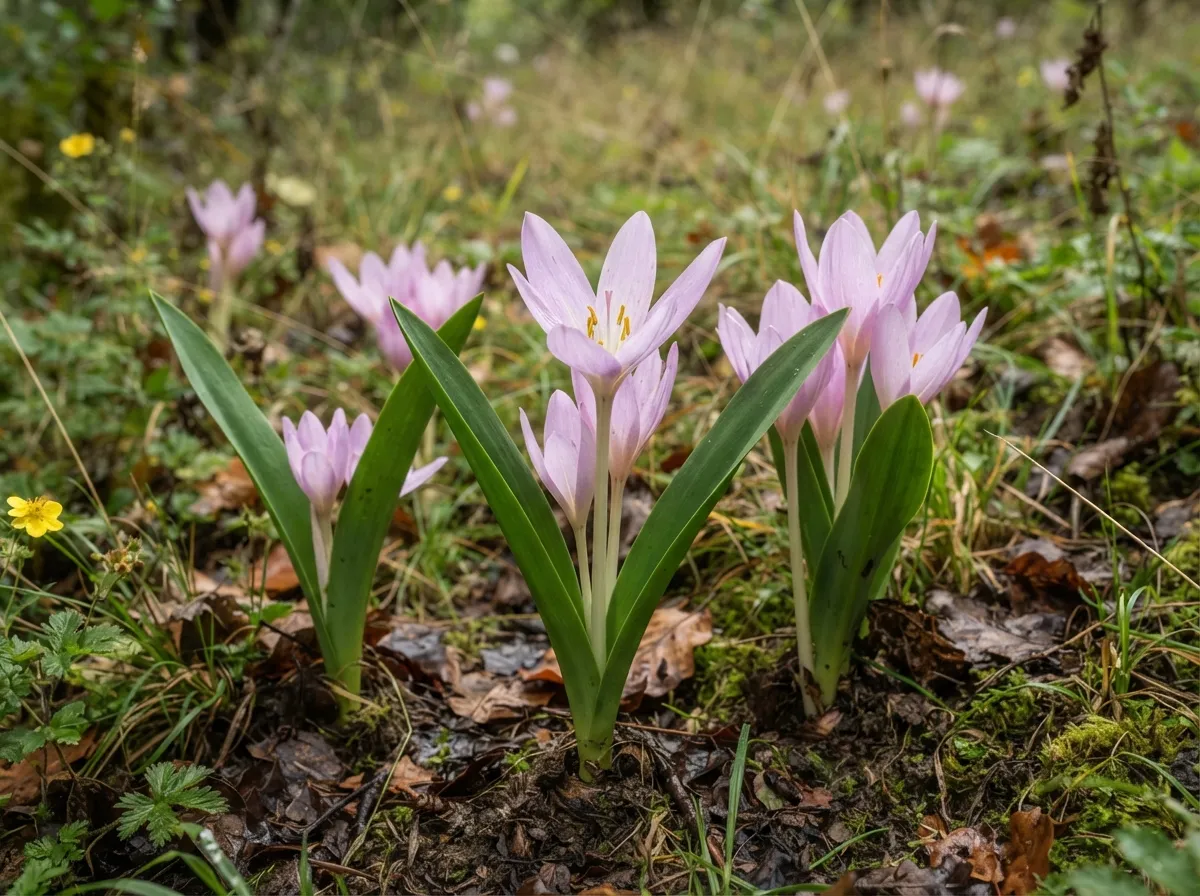
🔍 Identify it without mistakes
A lilac-pink flower that emerges alone in damp meadows in late summer without any leaves—the broad, shiny leaves only appear the following spring, alongside the seed capsule, making this plant deceptive year-round. This separation of leaf and flower over time causes the most fatal accidents, particularly when young spring leaves are mistaken for wild garlic.
- in autumn: pink-purple flower with 6 petals, no visible leaves, emerging straight from the ground
- in spring: broad, shiny, lanceolate leaves growing in a tuft, resembling wild garlic but WITHOUT any garlic smell
- green seed capsule that appears alongside the spring leaves
- the entire plant, including the bulb, is toxic in all seasons
⚠️ Not to be confused with
To tell them apart: CRUSH THE LEAF: wild garlic gives off a strong garlic smell, autumn crocus has no smell at all; wild garlic has a single leaf per stem coming from the ground, while autumn crocus leaves grow grouped in an odorless tuft
To tell them apart: saffron crocus has 3 stamens and a generally smaller flower, whereas autumn crocus has 6 stamens; in practice, you should never consume any flower resembling a wild crocus in a damp meadow
☠️ What kills
First steps : Call a poison control center immediately even if you don't have symptoms: condition worsening is delayed by several days, and the absence of initial signs is no guarantee of safety. Do not induce vomiting. Imperatively save a sample of the consumed plant (distinguishing it from wild garlic relies on smell, which is lost once cooked).
Sources (3)
No entry replaces a certain identification in the field, or medical advice. When in doubt: don't eat it. If ingestion is suspected: poison control or 112/911.