🚫 Colocynth (bitter apple)
Citrullus colocynthis · Cucurbitaceae
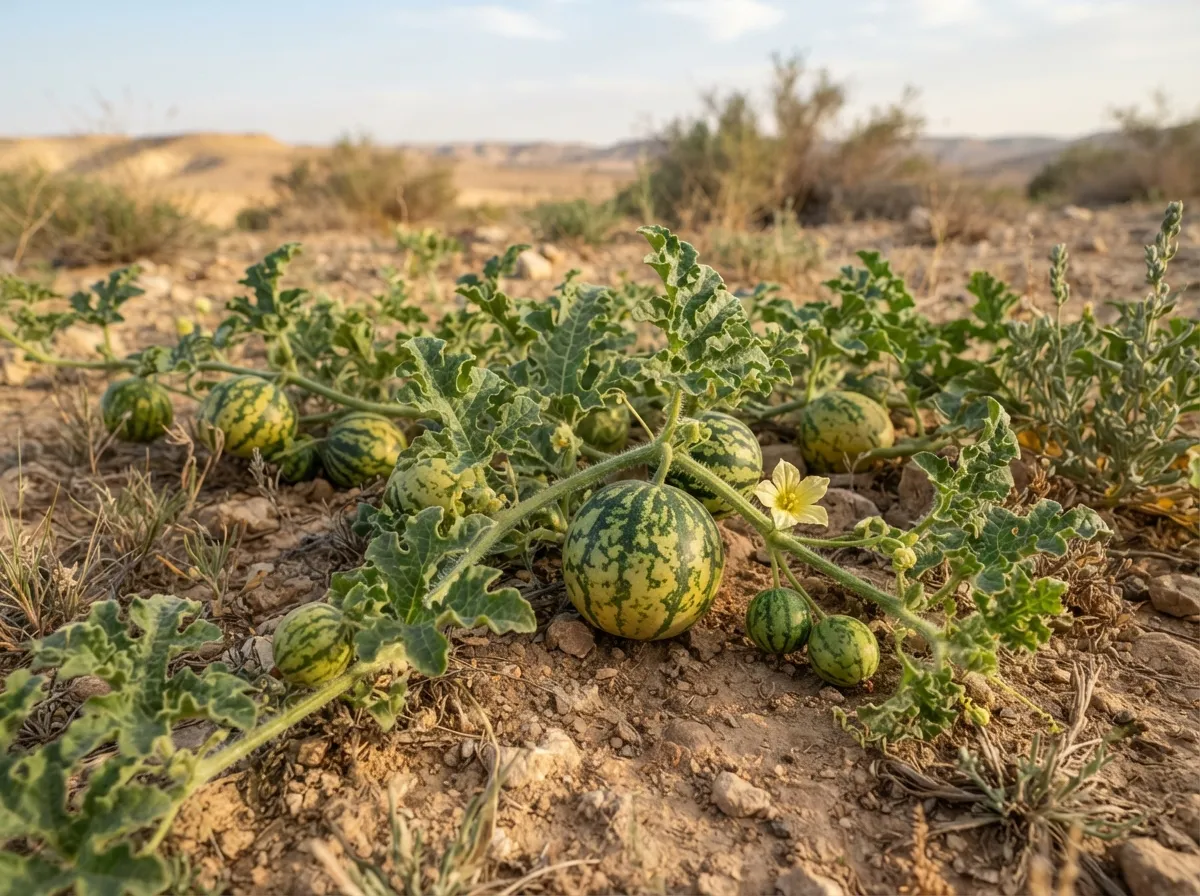
🔍 Identify it without mistakes
Trailing vine from 2.4 to 3 m long with climbing tendrils and palmate, angular leaves with 3-7 lobes — closely resembling those of a young watermelon. The solitary yellow flowers with a 5-lobed corolla precede a smooth, spherical fruit of 5 to 10 cm, green-yellow turning mottled at maturity, strongly resembling a small wild watermelon. The inner pulp, extremely bitter, immediately reveals the species from the first bite.
- trailing vine with tendrils, palmate leaves with 3-7 lobes very similar to watermelon leaves
- smooth spherical fruit of 5-10 cm, green-yellow turning mottled when mature
- extremely bitter inner pulp (almost foolproof signature of the species)
- grey seeds about 5 mm long, with a bitter, nutty taste
⚠️ Not to be confused with
To tell them apart: the resemblance of foliage and fruit is deceptively close between the two species of the same genus; the decisive and safe test is tasting a tiny amount of pulp: colocynth is immediately and intensely bitter, whereas watermelon, even wild and barely sweet, is never bitter to this extent — if in doubt, never swallow, spit out immediately
☠️ What kills
First steps : Spit out immediately if you taste an unexpected bitterness in a fruit resembling a wild watermelon. In case of ingestion, hydrate abundantly and consult a doctor or a poison control center if severe digestive symptoms appear.
💊 Healing with it
historically used as a powerful purgative in traditional medicine, and in traditional Arab veterinary medicine (sap applied to camel skin conditions); the seeds, once separated from the pulp and boiled for a long time, have been consumed since Antiquity in certain Saharan regions during famine years, and are used in the preparation of egusi in West Africa
Level of evidence : traditional use — Wikipedia — Citrullus colocynthis
⚠️ the pulp and skin of the fruit remain toxic and must never be consumed as is; only the well-cooked seed, freed from all pulp, has a documented traditional food use — do not attempt without precise knowledge of local preparation
Sources (1)
No entry replaces a certain identification in the field, or medical advice. When in doubt: don't eat it. If ingestion is suspected: poison control or 112/911.