🍄 Shaggy mane
Coprinus comatus · Agaricacées
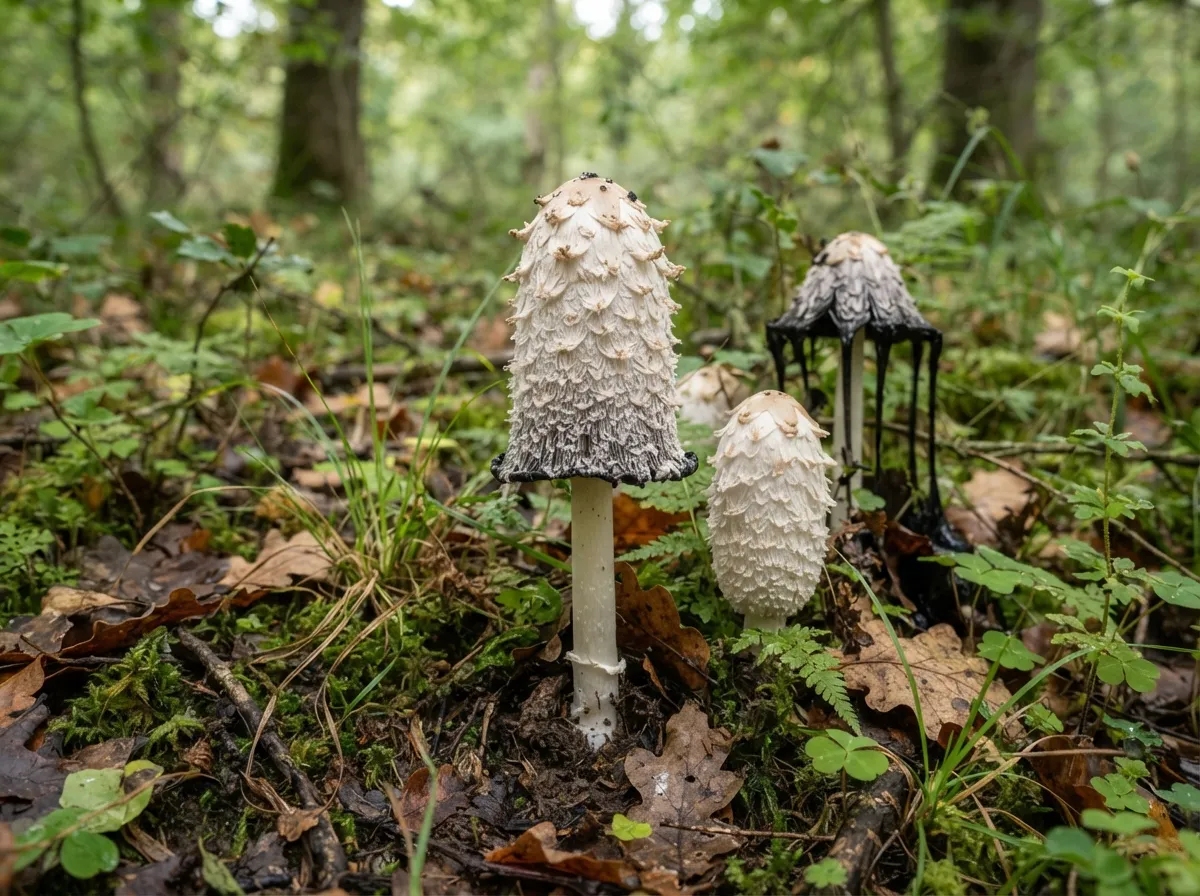
🔍 Identify it without mistakes
A cylindrical mushroom instantly recognizable by its shaggy white scales (hence its name), which liquefies from the inside out into black ink (deliquescence) as it ages — a normal process, not a sign of toxicity. Unlike its cousin the common ink cap, it causes NO issues when consumed with alcohol.
- cylindrical then conical cap, white, covered with broad, shaggy, white to brownish scales, with margins curling up and turning black (deliquescence) with age
- very crowded gills, white then pink then black (liquefying into "ink" at maturity)
- white, slender, hollow stem with a thin, movable ring
- black spore print
- often grows in clusters on lawns, embankments, pathsides, and disturbed ground
⚠️ Not to be confused with
To tell them apart: the common ink cap has a smooth to slightly scaly, greyish-brown cap, WITHOUT the shaggy white tufts of the shaggy mane; most importantly, the shaggy mane does NOT contain coprine and can be eaten with alcohol with zero risk, unlike the common ink cap which blocks the breakdown of acetaldehyde (flushing, palpitations, nausea) for 3 to 5 days after ingestion if alcohol is consumed
To tell them apart: the shaggy mane has a cylindrical, scaly cap that turns black and liquefies with age, and never has a sack-like membranous volva at the base
🍽️ Eating it
Preparation : always cook it, and QUICKLY after harvesting: deliquescence starts within a few hours and turns the mushroom into an inedible black slush; never store it for more than a day without cooking it first
No entry replaces a certain identification in the field, or medical advice. When in doubt: don't eat it. If ingestion is suspected: poison control or 112/911.