🌳 Common Dogwood
Cornus sanguinea · Cornaceae
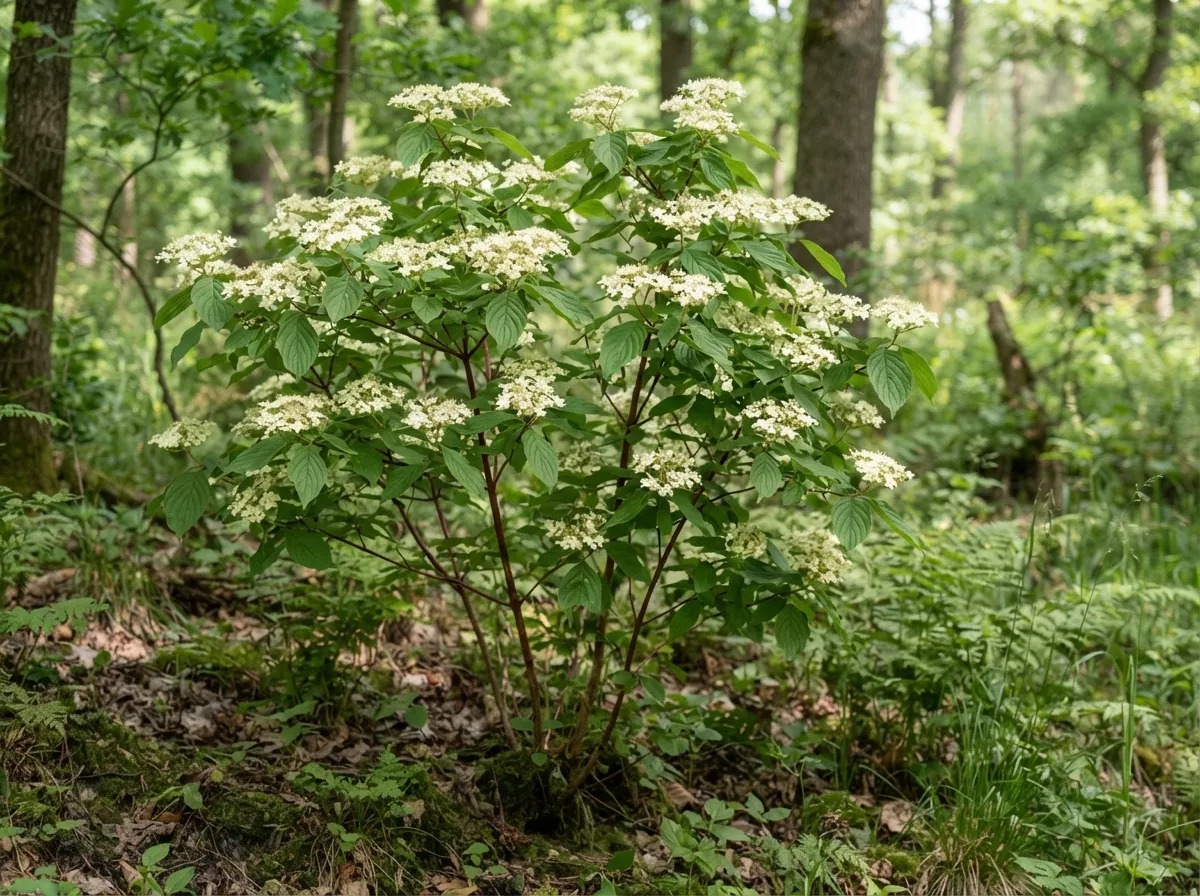
🔍 Identify it without mistakes
Hedgerow shrub with blood-red erect stems particularly visible in winter. Opposite leaves with curved veins converging towards the tip (typical pattern of dogwoods), small white flowers in flat corymbs in spring, shiny black berries in clusters in autumn — TOXIC, never consume, unlike its cousin the Cornelian cherry.
- blood-red erect stems, highly visible in winter
- opposite leaves with curved veins converging towards the tip
- shiny black berries in corymbs in autumn — TOXIC
- do not confuse with Cornelian cherry (edible red berries)
⚠️ Not to be confused with
To tell them apart: red, egg-shaped, edible berries on Cornelian cherry versus black, spherical, toxic berries on common dogwood; Cornelian cherry blooms yellow BEFORE leaves appear (February-March), common dogwood blooms white AFTER leaves appear (May-June)
To tell them apart: opposite pinnately compound leaves on elderberry versus simple leaves on dogwood; elderberry stems have soft white pith
🪓 Other bushcraft uses
- basketry: first-year twigs, red, flexible, and tough — classic raw material for rustic basketry (baskets, woven hurdles)
- arrows and sticks: hard, straight, thin wood, traditionally carved into small darts, light arrow shafts, and small stakes
- improvised skewers: the English name 'dogwood' may come from skewers ('dags') carved from this hard, thin wood to skewer meat for cooking
- navigation landmark: the bright red stems in winter, when all other vegetation is dull, make an excellent visual landmark for woodland edges
- improvised oil (historical, non-food): toxic but oil-rich berries (up to 30-35%) were pressed in Eastern Europe for lighting and soap, never for human consumption
- light tanning: bark and leaves, occasional source of tannin for quick artisanal tanning
No entry replaces a certain identification in the field, or medical advice. When in doubt: don't eat it. If ingestion is suspected: poison control or 112/911.