🍄 Fool's webcap
Cortinarius orellanus · Cortinariaceae
🔍 Identify it without mistakes
A small orange-brown forest mushroom whose toxicity, one of the most insidious in the fungal kingdom, sometimes only manifests 2 to 3 weeks after the meal — such a long delay that linking it to the mushroom you ate is often difficult, severely delaying the diagnosis of kidney failure.
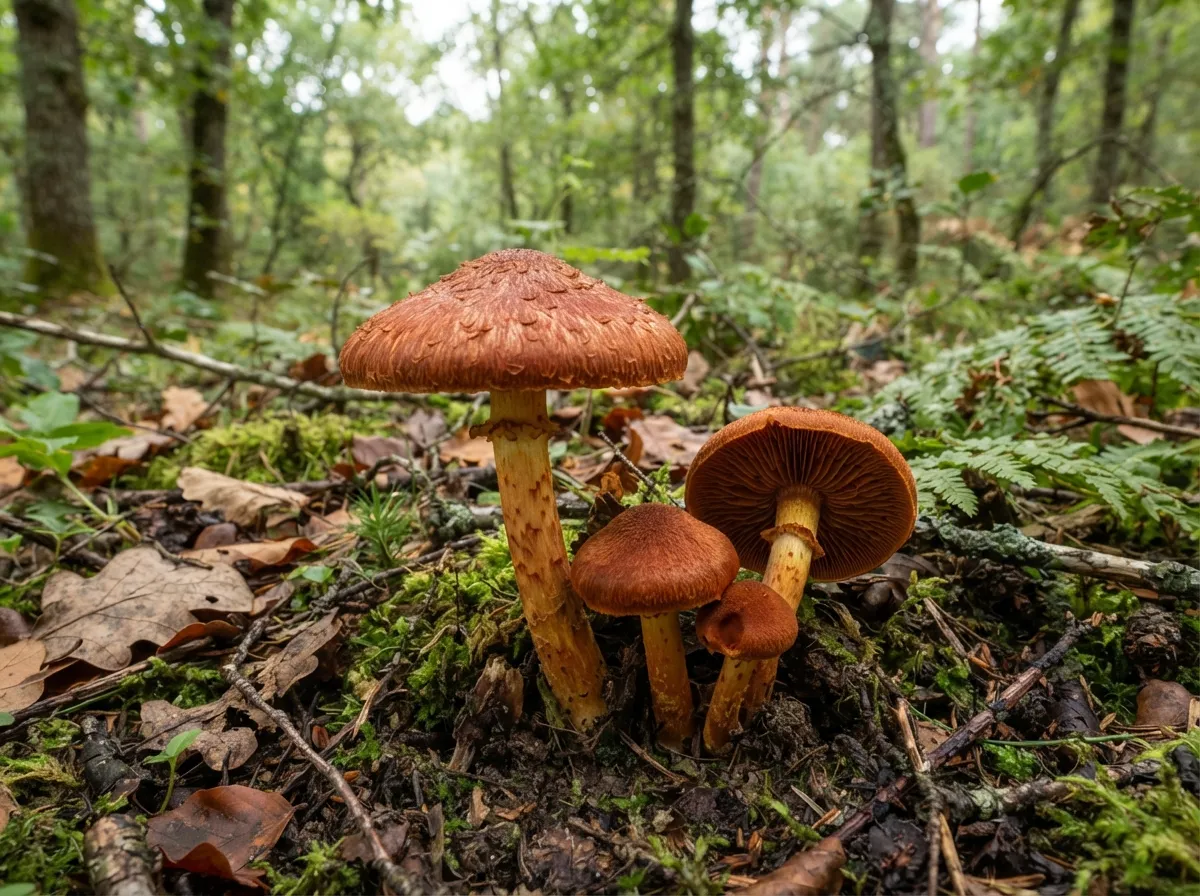
- orange-brown to reddish-brown cap, color reminiscent of annatto (natural dye), finely fibrillose surface
- orange-rust gills at maturity, attached to the stem
- cortina (fine cobweb-like veil) connecting the cap margin to the stem in young specimens, characteristic of the genus Cortinarius
- fibrillose stem, without a distinct ring or volva
⚠️ Not to be confused with
To tell them apart: chanterelles have thick, forked ridges under the cap (not true gills) and a uniform egg-yellow color, without the cobweb-like cortina characteristic of webcaps
To tell them apart: no reliable distinction without advanced mycological expertise; safety rule: no webcap should ever be eaten by an amateur, as the entire genus carries a risk
☠️ What kills
First steps : Seek emergency medical help immediately if intense thirst or lower back pain appears in the weeks following a wild mushroom harvest, even if the meal seemed harmless at the time. Call a poison control center if you have any doubt about a webcap harvest. If possible, keep a dried sample of the consumed mushrooms, which will be useful for analysis even weeks later.
Sources (4)
No entry replaces a certain identification in the field, or medical advice. When in doubt: don't eat it. If ingestion is suspected: poison control or 112/911.