🍄 Parasol Mushroom
Macrolepiota procera · Agaricaceae
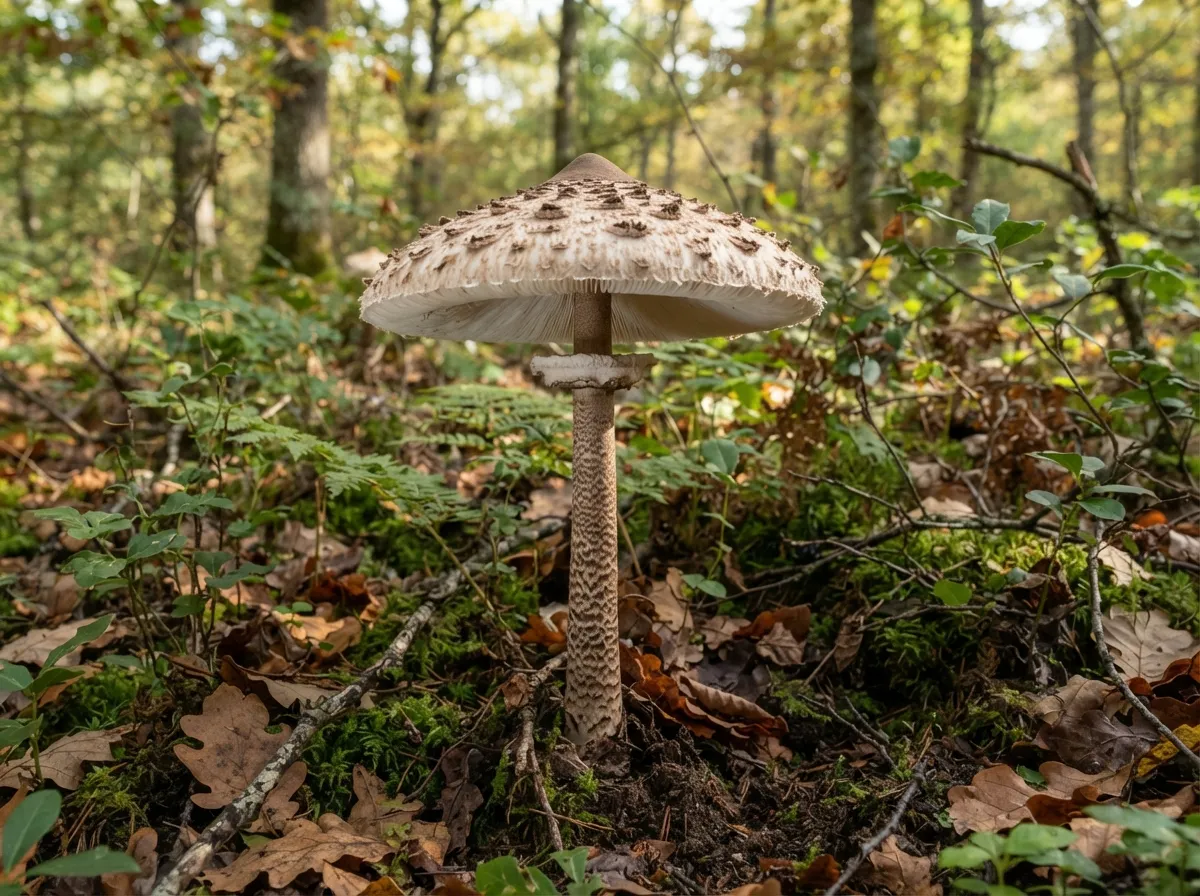
🔍 Identify it without mistakes
Also known as the parasol mushroom, it's one of Europe's largest lepiotas and a highly prized edible — provided you follow one strict safety rule: the Macrolepiota genus (large parasol mushrooms) is entirely edible, but the genus of SMALL brown lepiotas contains deadly species that look like miniature versions. Size isn't just an aesthetic detail here; it's your main safety criterion.
- cap 10-25 cm at maturity, initially ovoid then expanding like a "parasol", scaly brown on a lighter background, dark brown central umbo
- gills white, free (not touching the stem), crowded
- slender stem (10-30 cm), marbled with characteristic brown snakeskin-like patterns, swollen bulbous base
- DOUBLE and SLIDING ring that you can move freely up and down the stem — key criterion
- spore print white
- no unpleasant odor, white flesh that doesn't change color
⚠️ Not to be confused with
To tell them apart: 10 CM RULE: never pick a "lepiota" with a cap smaller than 10 cm when adult — deadly small lepiotas almost never exceed this size; also check the ring: sliding and movable on the parasol mushroom, fixed or barely visible on small lepiotas; the marbled (patterned) stem of the parasol is also absent on smaller species
To tell them apart: ABSOLUTE RULE: never pick a small lepiota with a cap under 10 cm — the edible parasol mushroom is always large, with a zigzag-patterned stem and a movable ring sliding freely along the stem, unlike toxic small lepiotas with plain stems
🍽️ Eating it
Preparation : always cooked; the whole cap breaded and pan-fried ("parasol schnitzel") is a classic dish; never eat the stem, as it's far too fibrous
Sources (3)
No entry replaces a certain identification in the field, or medical advice. When in doubt: don't eat it. If ingestion is suspected: poison control or 112/911.