🌿 Creosote Bush (gobernadora)
Larrea tridentata · Zygophyllaceae
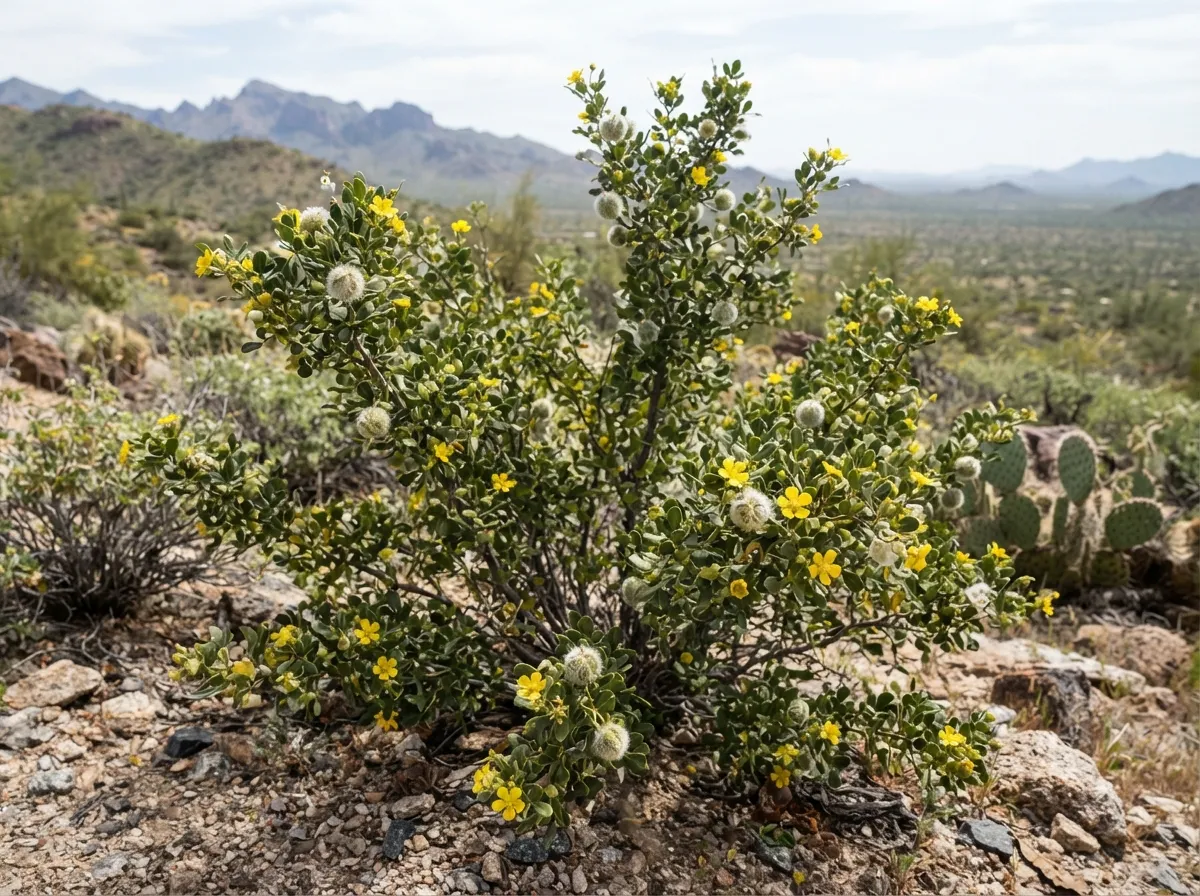
🔍 Identify it without mistakes
An evergreen shrub 1 to 3 m tall, one of the most characteristic plants of North American deserts. It features small compound leaves with two leaflets fused in a V-shape, shiny and resinous. It emits a strong, recognizable smell (similar to tar/creosote) that intensifies sharply after rain — this scent is largely responsible for giving the desert its characteristic "rain smell".
- small compound leaves with two leaflets fused in a V-shape, shiny and resinous
- strong creosote/tar odor, very pronounced after rain
- small yellow flowers followed by white fluffy fruits
- frequently forms very ancient concentric clonal colonies
⚠️ Not to be confused with
To tell them apart: both shrubs often grow side by side in the Sonoran Desert, but creosote has V-shaped fused leaflets, resinous and fragrant especially after rain, while jojoba has simple, oval, waxy, grey-green leaves with no distinct odor
💊 Healing with it
traditionally used by several North American Indigenous peoples for various ailments (chaparral), both externally and internally
Level of evidence : traditional use — Wikipedia — Larrea tridentata (citing Health Canada, FDA, Cancer Research UK)
⚠️ Health Canada and several health agencies strongly advise against consuming chaparral products due to a documented risk of liver and kidney damage; the US FDA advises against any internal use, and Cancer Research UK specifies they do not recommend creosote to treat or prevent cancer
🪓 Other bushcraft uses
- olfactory landmark of the desert: its smell after rain is so characteristic that it is often described as "the smell of the desert itself"
Sources (1)
No entry replaces a certain identification in the field, or medical advice. When in doubt: don't eat it. If ingestion is suspected: poison control or 112/911.