💧 Watercress
Nasturtium officinale · Brassicaceae
🔍 Identify it without mistakes
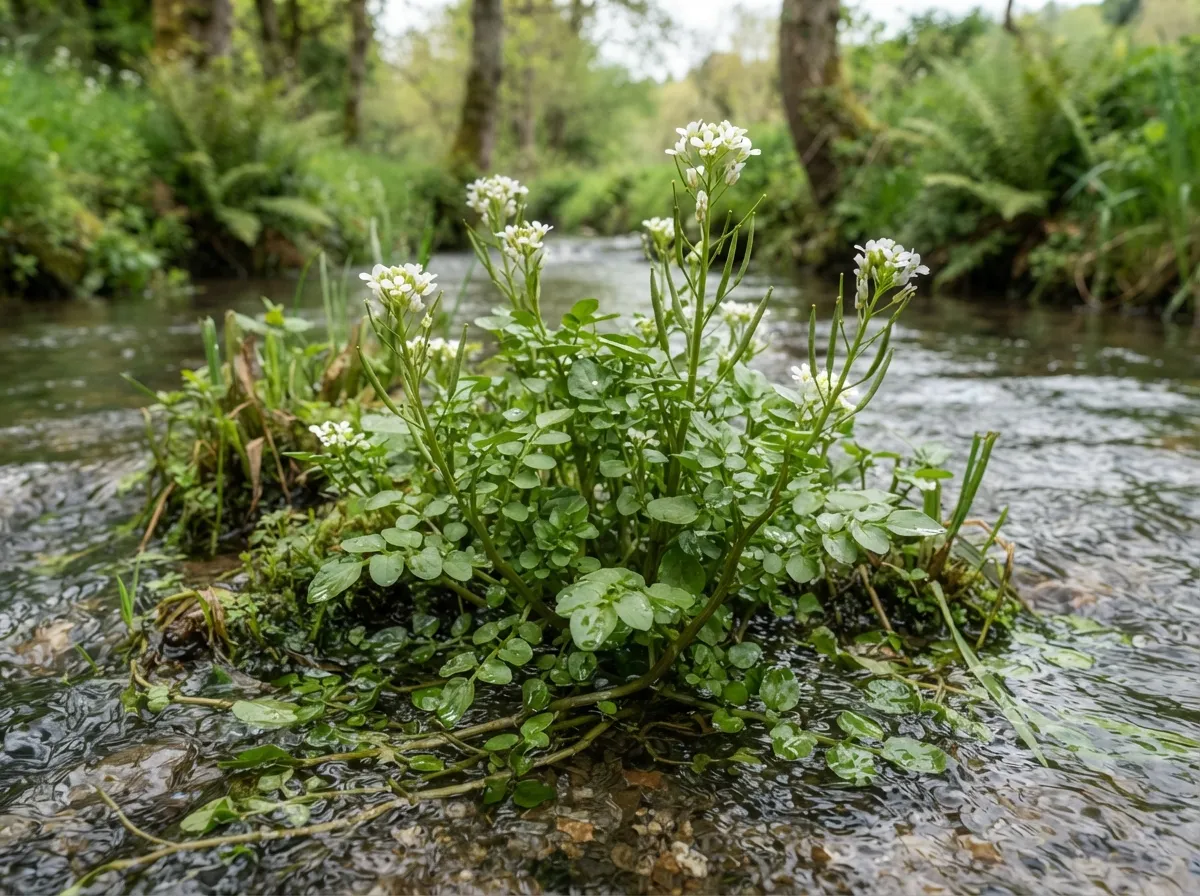
Creeping and floating aquatic plant, hollow stems often reddish that root at each node in the current, compound leaves with shiny rounded leaflets, small cross-shaped white flowers. Grows in dense mats in springs and fresh, clear streams, never in stagnant or doubtful water.
- creeping, floating or submerged hollow stems, rooting at each node
- pinnately compound leaves, 3-9 shiny rounded leaflets, the terminal one being larger
- small white flowers with 4 cross-shaped petals, growing in clusters
- always grows in direct contact with running water (spring, stream)
- immediate peppery-spicy taste when a leaf is crushed
⚠️ Not to be confused with
To tell them apart: watercress has ROUNDED leaves and a clear peppery smell; toxic Apiaceae in the same environment have deeply cut lace-like leaves and a different smell — if in doubt botanically in a ditch, refrain
To tell them apart: cuckoo flower has clearly visible purple flowers and grows in damp grass, never submerged; watercress has creeping and floating stems growing directly in the current
🍽️ Eating it
Preparation : ALWAYS cook or blanch in boiling water before eating when the origin is not guaranteed (controlled cultivation): cooking kills liver fluke larvae (Fasciola hepatica) that wild watercress can carry if it grows downstream from sheep or cattle pastures; raw only for watercress grown in controlled ponds
USDA FoodData Central, cultivated raw watercress, per 100 g
💊 Healing with it
traditionally antiscorbutic and spring depurative, rich in vitamin C and glucosinolates
Level of evidence : traditional use — FWS Ecological Risk Screening Summary; CDC — Fasciola
⚠️ DANGER: wild watercress picked in open water can harbor encysted larvae (metacercariae) of the liver fluke (Fasciola hepatica) if cattle or sheep graze upstream; the disease (fascioliasis) affects the liver and can be serious — systematically cook watercress from wild or uncertain sources
🪓 Other bushcraft uses
- cultivated in ponds fed by controlled springs (watercress farms) since the 19th century in France, specifically to avoid the liver fluke risk associated with wild foraging
Sources (4)
No entry replaces a certain identification in the field, or medical advice. When in doubt: don't eat it. If ingestion is suspected: poison control or 112/911.