🌴 Cycas
Cycas media · Cycadaceae
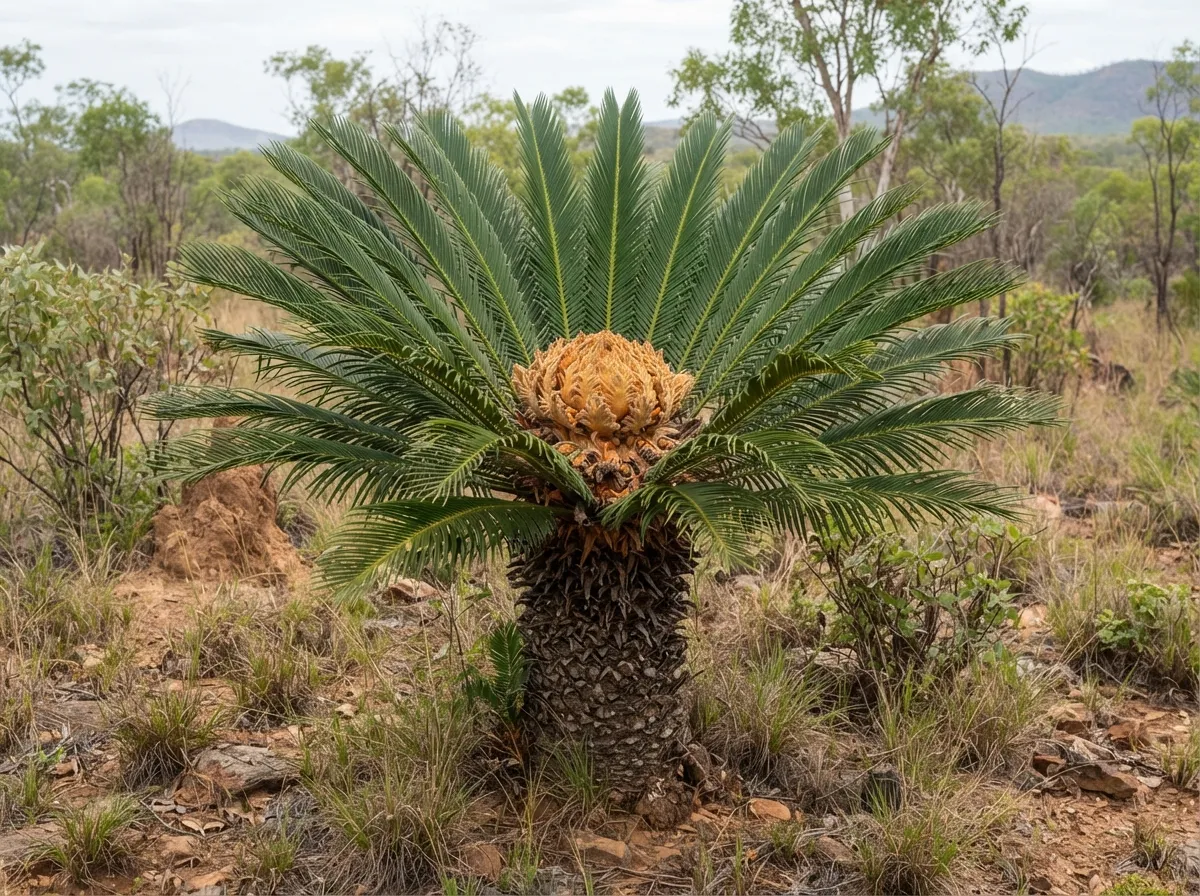
🔍 Identify it without mistakes
Woody plant resembling a small palm tree, with a thick, scaly single trunk topped by a crown of large, thick, leathery, dark green pinnate leaves. Produces orange seed cones in the leaf axils (cycads are gymnosperms, related to conifers, no real flowers).
- palm-like scaly trunk but very rigid and spiky leaves
- rapid regrowth of foliage after a bushfire
- orange seeds grouped in loose cones
⚠️ Not to be confused with
To tell them apart: a true palm tree (Metroxylon) has a tall, smooth, ringed single trunk topped by a crown of large fronds, and never produces a cone; cycas has a shorter, scaly trunk and produces a cone or a mass of orange seeds directly in the leaf axils — the presence of a cone definitely signals a cycad, never a palm tree
🍽️ Eating it
Preparation : MANDATORY and lengthy: remove the outer husk, dry the kernels, then soak them for several days in running water (continuously renewed) to eliminate water-soluble neurotoxins, then crush into a fine paste and cook under ashes. Without this prolonged soaking in running water, all parts of the plant are highly toxic
💊 Healing with it
aucun
Level of evidence : traditional use — Wikipedia - Cycas media
⚠️ all parts of the plant are toxic in the raw state (notably cycasin and BMAA), responsible for acute poisoning (vomiting, liver damage) and suspected chronic neuropathies after repeated exposure to poorly prepared seeds; never consume without the complete protocol of soaking in running water for several days followed by cooking
🪓 Other bushcraft uses
- leaves traditionally used for basketry
Sources (1)
No entry replaces a certain identification in the field, or medical advice. When in doubt: don't eat it. If ingestion is suspected: poison control or 112/911.