Skip to content

Your account

With an account, your progress (modules read, XP, badges, cards, notebook, pack, challenges) follows you on every device. Without one, it stays in this browser.

or
Toxic☠️ To avoid

🌸 Spurge-laurel / Mezereon

Daphne mezereum · Thymelaeaceae
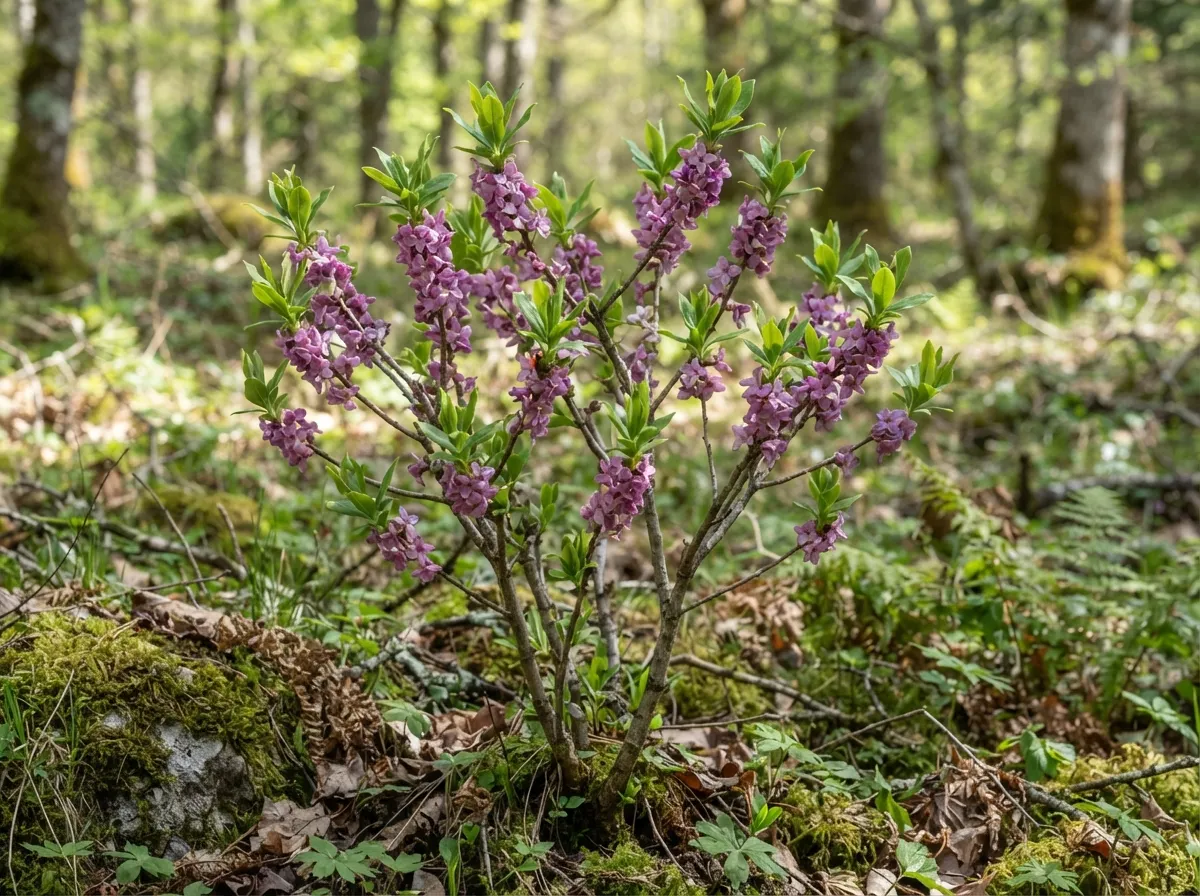
🧠 To remember it“Flowers before leaves, berries that burn” — bare wood blooming pink signals a plant you should never taste.
Spurge-laurel / Mezereon — Daphne mezereum

🔍 Identify it without mistakes

Small forest shrub remarkable for blooming with fragrant pink flowers directly on bare wood even before the leaves appear, starting in late winter. Its bright, shiny red berries produced in summer are extremely toxic and particularly attractive to children, despite their burning taste which usually limits ingestion.

  1. pink flowers with 4 petals clustered directly on bare branches, highly fragrant, starting February-March before the leaves
  2. lanceolate leaves appearing after flowering, clustered at the top of the branches
  3. bright, shiny red ovoid berries, very conspicuous, ripening in summer along the stem
  4. smooth grey bark, sparsely branched shrub
Size0.5 to 1.5 m
FloweringFebruary-April (before the leaves), berries June-August
Habitatopen understory and forest edges, often in mountains on limestone soil

⚠️ Not to be confused with

Currant or blackcurrant (berries) (Ribes spp.)none for these cultivated species

To tell them apart: daphne berries are arranged along woody branches without the leaves directly in their axils typical of a currant bush, and cause an immediate burning sensation in the mouth upon the first chew

☠️ What kills

nomDaphnetoxin and mezerein (diterpene esters), present throughout the entire plant, particularly in the bark and berries
dose letale estimeearound ten berries can be dangerous for a child; chewed bark is also highly toxic and caustic (approx., precise lethal dose not established in humans)
delaia few minutes for mouth burning, 1 to 2 h for severe digestive symptoms
symptomesimmediate and intense burning of the mouth and throat, salivation, vomiting, and sometimes bloody diarrhea; in severe cases, renal and neurological impairment
antidoteno specific antidote; symptomatic treatment and airway monitoring in case of oral edema
morts documenteessevere cases and deaths historically documented, particularly in young children who ingested several berries despite the burning

First steps : Call the poison control center immediately, even for a single chewed berry. Do not induce vomiting (caustic effect, risk of worsening lesions on the way up). Rinse the mouth with water and keep a sample of the plant.

Sources (2)

No entry replaces a certain identification in the field, or medical advice. When in doubt: don't eat it. If ingestion is suspected: poison control or 112/911.