🌴 Date palm
Phoenix dactylifera · Arecaceae
🔍 Identify it without mistakes
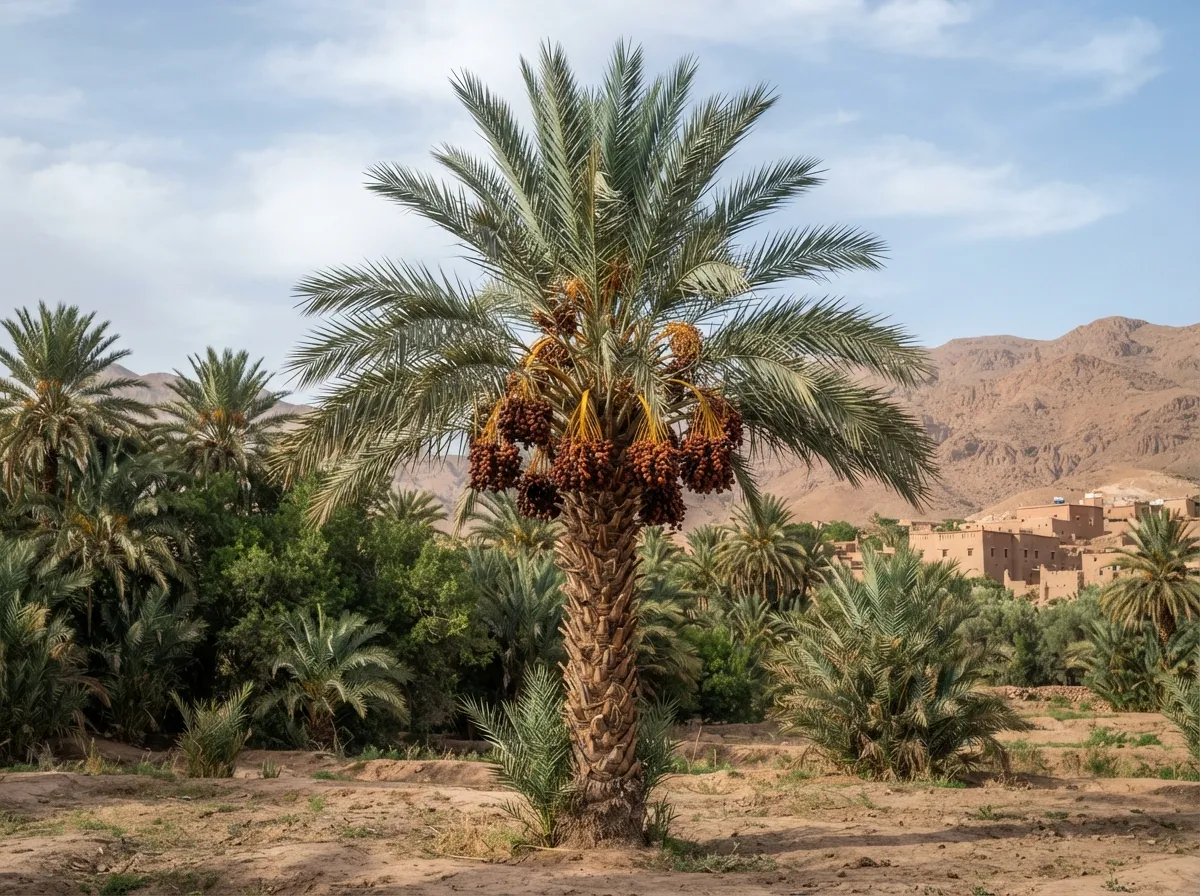
Large palm with a slender trunk marked by diamond-shaped scars from old fronds, crowned with long, rigid, greyish pinnate fronds whose leaflets sometimes end in sharp spines. Dates grow in heavy, hanging clusters of several hundred oval fruits, turning from green to yellow, then to amber-brown when ripe.
- trunk marked with regular diamond-shaped scars
- rigid grey-green fronds that can prick at the ends
- hanging clusters of dates that can weigh over 8 kg
⚠️ Not to be confused with
To tell them apart: the trunk marked with regular diamond-shaped scars and the hanging clusters of several hundred oval dates are unique to the date palm among oasis palms
🍽️ Eating it
Preparation : eaten raw, fresh or dried; can be pitted and mashed into a paste for long-term storage
USDA FoodData Central, Medjool dates, per 100 g
💊 Healing with it
traditional food to break the fast during Ramadan, rich in fast-acting sugars and potassium, useful in case of hypoglycemia or physical exhaustion
Level of evidence : traditional use — USDA FoodData Central
⚠️ very high in sugar - monitor closely if you are diabetic
🪓 Other bushcraft uses
- trunks and fronds used for construction (roofing, light framing)
- frond fibers woven into ropes and baskets
- roasted pits formerly used as a coffee substitute
Sources (1)
No entry replaces a certain identification in the field, or medical advice. When in doubt: don't eat it. If ingestion is suspected: poison control or 112/911.