⚠️ Desmarestia (acid kelp)
Desmarestia spp. · Desmarestiaceae
🔍 Identify it without mistakes
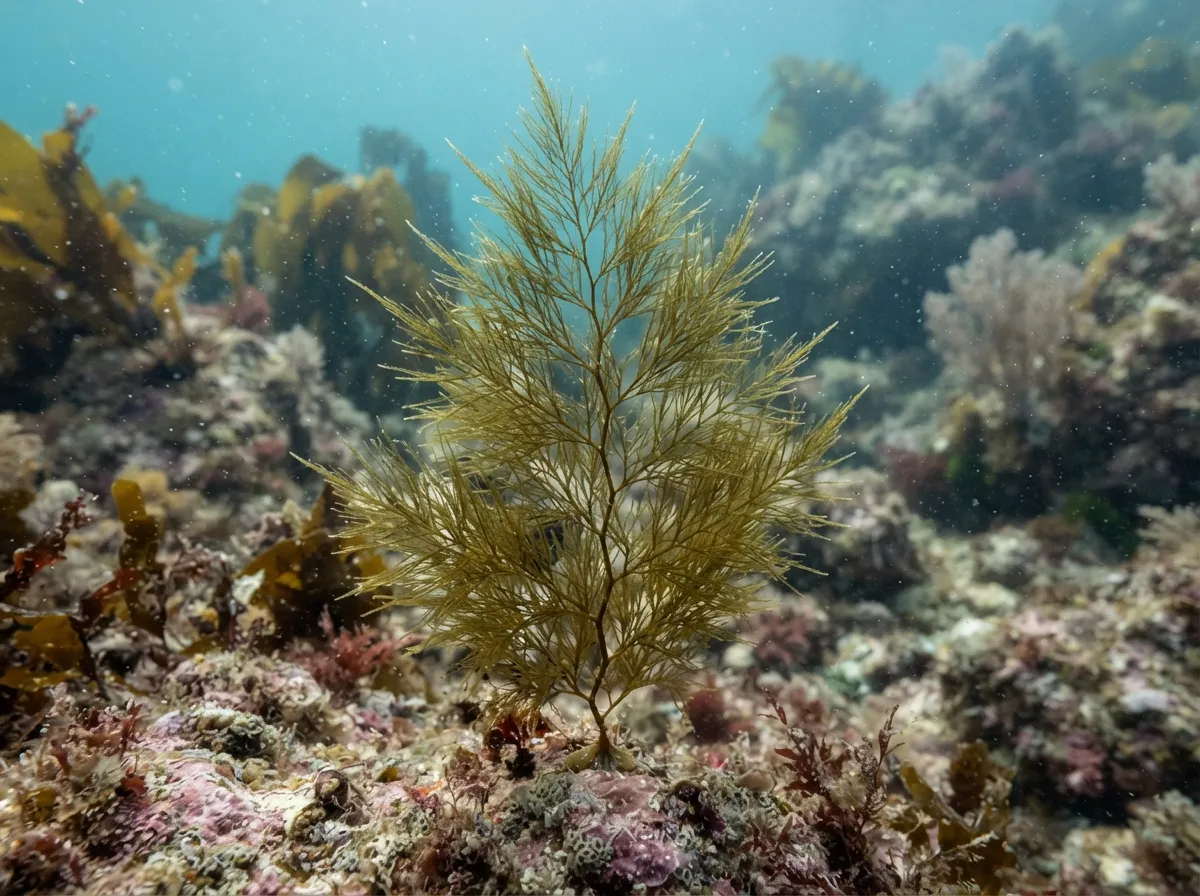
Filamentous or finely branched bushy brown alga, often olive-green to brown, distinguished from all other edible seaweeds by a unique chemical defense mechanism: it stores concentrated sulfuric acid in its cells.
- highly branched thread-like brown alga (looks like threads or a feather duster depending on the species)
- found in the lower intertidal zone, exposed to the air at low tide
- on contact with air, releases a strongly acidic liquid that damages the plant itself and neighboring seaweeds
⚠️ Not to be confused with
To tell them apart: unlike all European edible seaweeds which are non-toxic, Desmarestia is recognized by its immediate sour taste and its corrosive effect on neighboring seaweeds in a foraging basket
🍽️ Eating it
Preparation : do not consume and especially do not mix it with other seaweeds harvested in the same bag or basket - its intracellular sulfuric acid damages other species upon prolonged contact
💊 Healing with it
aucun
Level of evidence : traditional use — phycological literature (Desmarestia, acid kelp)
⚠️ ingesting large amounts of sulfuric acid can cause severe digestive distress, but the taste is so repulsive that significant accidental ingestion is unlikely; the main risk is contaminating a harvest of edible seaweeds
Sources (1)
No entry replaces a certain identification in the field, or medical advice. When in doubt: don't eat it. If ingestion is suspected: poison control or 112/911.