⚫ Velvet tamarind
Dialium guineense · Fabacées
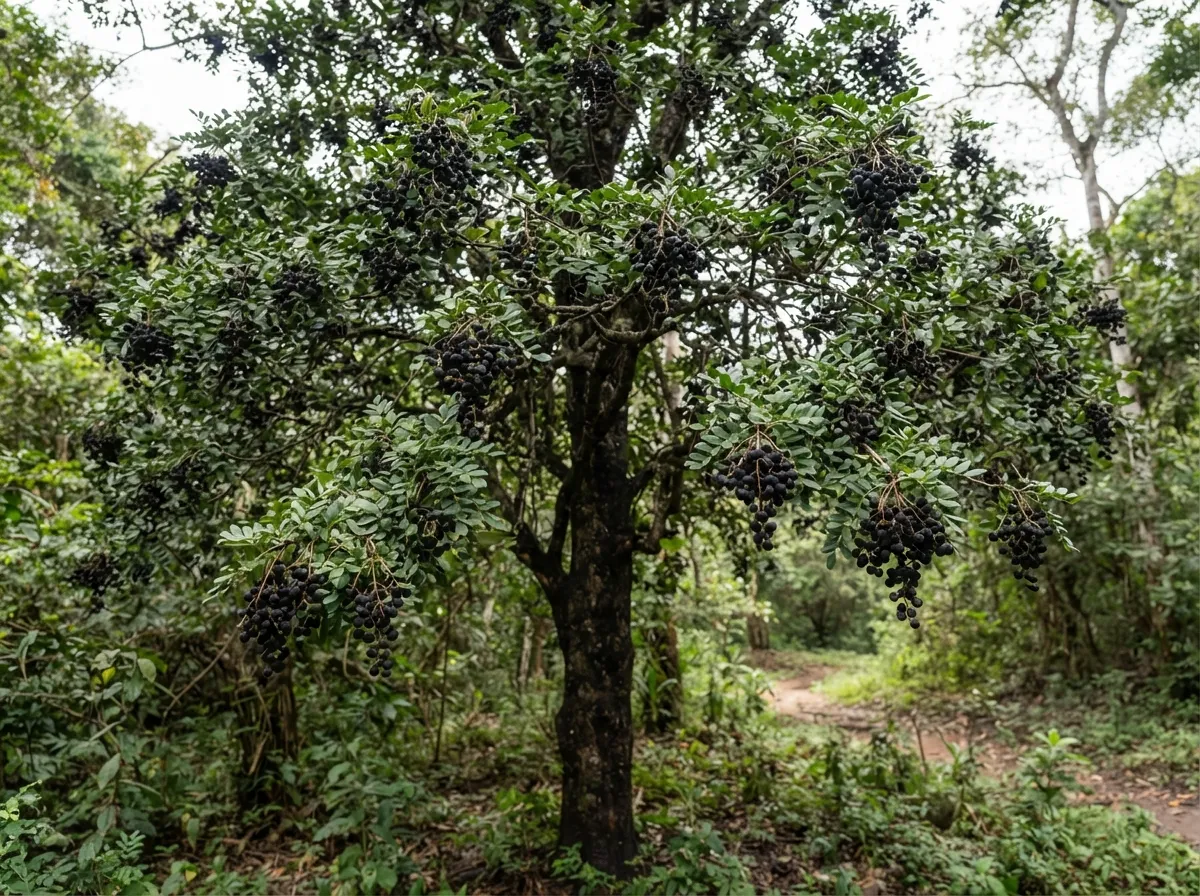
🔍 Identify it without mistakes
Large West African forest tree bearing large clusters of small, round, flattened fruits with a hard, deep black velvety shell, looking very different from the classic tamarind despite their shared common name. Each fruit contains a single shiny seed encased in a sweet, tangy orange to brown pulp.
- large canopy tree with a dense, rounded crown
- fruits in large clusters, round to oval, flattened, with a hard, velvety black shell
- a single hard, shiny seed per fruit, surrounded by dry orange to brown pulp
- smooth grey bark, dense and hard wood
⚠️ Not to be confused with
To tell them apart: the hard, velvety black shell, distinctly different from the elongated brown pod of the classic tamarind tree, makes identification simple despite the similar common name
🍽️ Eating it
Preparation : crack the hard shell between your fingers or with a stone to release the dry, sweet pulp surrounding the seed; eat it directly or grind it into powder to flavor drinks and sauces
💊 Healing with it
pulp and bark are used in traditional West African medicine for digestive disorders and as a nutritional supplement
Level of evidence : traditional use — PMC — Nutritional Characterization of Fruits from Three African Plant Species: Dialium guineense, Parkia biglobosa and Adansonia digitata
⚠️ no known toxicity
🪓 Other bushcraft uses
- dense and hard wood used in carpentry and for tool handles
- seeds processed into flour in certain local preparations
Sources (2)
No entry replaces a certain identification in the field, or medical advice. When in doubt: don't eat it. If ingestion is suspected: poison control or 112/911.