Skip to content

Your account

With an account, your progress (modules read, XP, badges, cards, notebook, pack, challenges) follows you on every device. Without one, it stays in this browser.

or
Deadly☠️ To avoid

🌸 Foxglove

Digitalis purpurea · Plantaginaceae
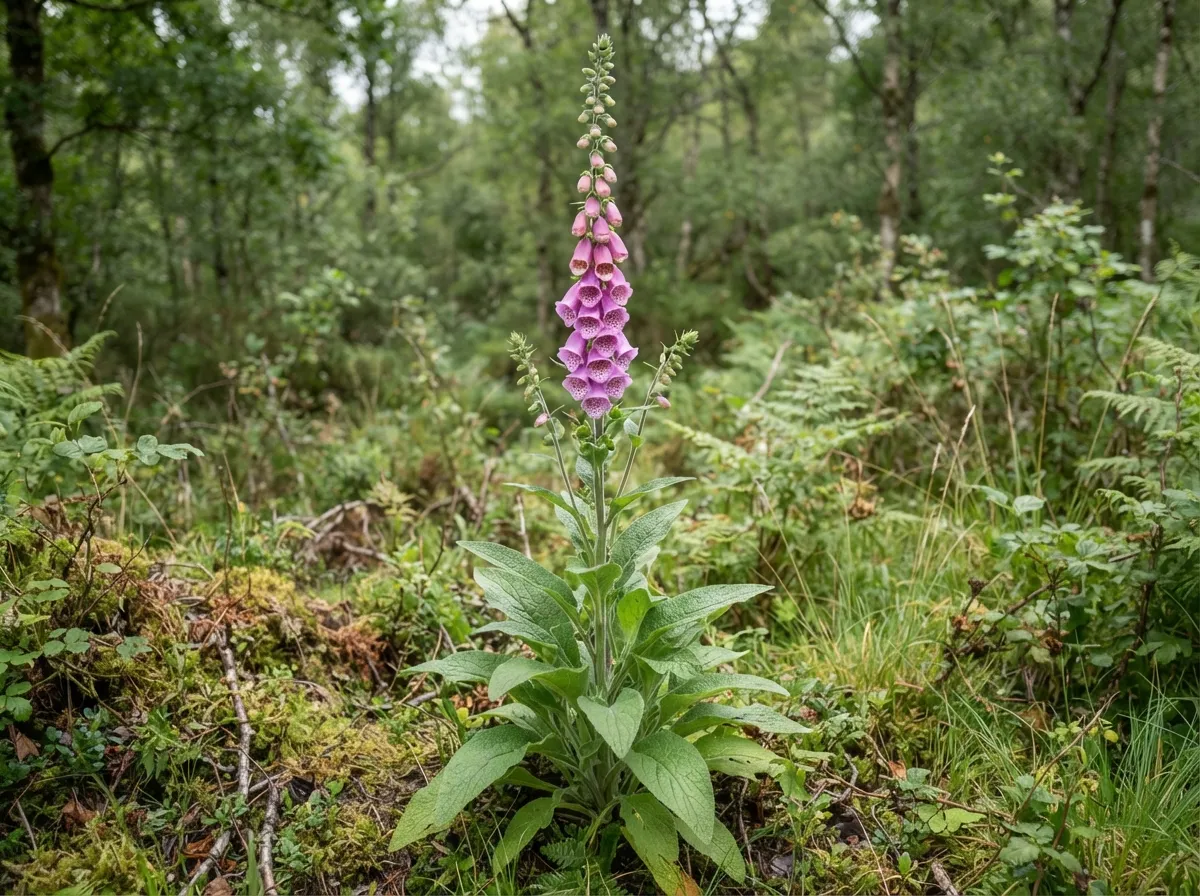
🧠 To remember it“Foxglove's bell rings a heart's knell” — the purple bell signals cardiac poison.
Foxglove — Digitalis purpurea

🔍 Identify it without mistakes

A large biennial well known for its erect floral spike covered in purple-pink bells spotted on the inside, growing along forest edges and embankments after logging. In its first year, it only forms a rosette of large leaves, velvety on the underside, often confused at ground level with other broad-leaved plants. The entire plant is cardiotoxic, even when dried.

  1. 1 to 2 m tall floral spike with tubular purple bells spotted with white and dark purple inside
  2. oval, wrinkled, hairy leaves, whitish on the underside
  3. bells open from bottom to top along the spike
  4. found along edges, clearings, and freshly cleared embankments
Size1 to 2 m when flowering
FloweringJune-September
Habitatforest edges, clear-cuts, acidic embankments, siliceous soils

⚠️ Not to be confused with

Comfrey (first-year rosette) (Symphytum officinale)low to moderate (comfrey is also toxic in high doses due to pyrrolizidine alkaloids)

To tell them apart: comfrey has leaves that run down along the stem and feel rough to the touch; the foxglove rosette is velvety and softer

Borage (Borago officinalis)none for borage

To tell them apart: confusion reported during leaf harvests for herbal tea; borage has stiff, prickly hairs and a cucumber smell, which foxglove lacks

☠️ What kills

nomCardiac glycosides (digoxin, digitoxin, and related compounds)
dose letale estimeehighly variable depending on individual sensitivity and heart condition; a few chewed leaves or a concentrated infusion can kill a child, a few grams of dried leaves are enough for a fragile adult (approx)
delai30 min to a few hours for the first digestive signs, rhythm disorders sometimes appear after several hours
symptomesnausea, vomiting, abdominal pain, blurred or yellow-green tinted vision, followed by severe cardiac rhythm disturbances (bradycardia, heart blocks, extrasystoles) that can lead to cardiac arrest
antidotethere is a specific antidote in a hospital setting (digoxin-specific Fab fragments), but it is only available in intensive care
morts documenteesyes — documented fatal poisonings, notably through leaf confusion during foraging or accidental ingestion by young children attracted to the flowers

First steps : Call poison control immediately without waiting for cardiac symptoms, which may be delayed. Do not induce vomiting. Keep a leaf or flower to help emergency services confirm the identification.

Sources (3)

No entry replaces a certain identification in the field, or medical advice. When in doubt: don't eat it. If ingestion is suspected: poison control or 112/911.