🔴 Dulse
Palmaria palmata · Palmariaceae
🔍 Identify it without mistakes
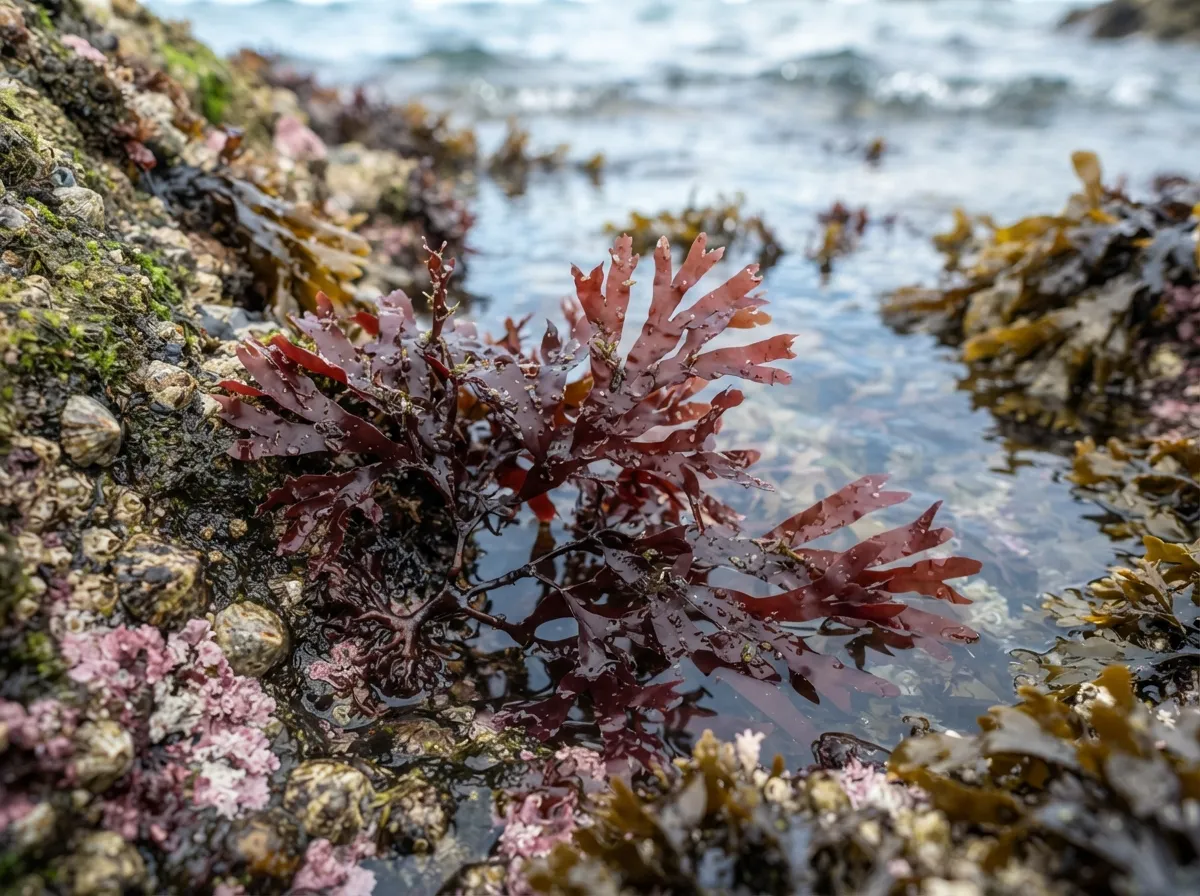
Red seaweed with a flat, flexible frond divided into irregular lobes resembling an open hand, dark pink to reddish-purple in color. Attached to rocks or growing as an epiphyte on the stipes of large brown kelps (laminaria) via a small holdfast.
- flat, purple-red frond divided into irregular hand-like lobes
- flexible and slightly rubbery texture when fresh
- often attached to the base of kelp stipes or directly to rock in the low intertidal zone
⚠️ Not to be confused with
To tell them apart: the flat, purple-red frond without a central midrib, often attached to the base of kelp, distinguishes dulse from any toxic seaweed of the North Atlantic coast
🍽️ Eating it
Preparation : can be eaten raw after rinsing, dried as a snack, fried to make crispy chips, or added to soups and breads
💊 Healing with it
traditionally consumed as a source of dietary fiber and iodine in Iceland for centuries; its harvesting and consumption were already regulated by law in Ireland as early as the 5th century
Level of evidence : traditional use — Wikipedia - Palmaria palmata
⚠️ like any seaweed, choose unpolluted harvesting water (avoid the immediate vicinity of ports, wastewater treatment plants, or industrial areas)
Sources (1)
No entry replaces a certain identification in the field, or medical advice. When in doubt: don't eat it. If ingestion is suspected: poison control or 112/911.