🌹 Dog rose
Rosa canina · Rosaceae
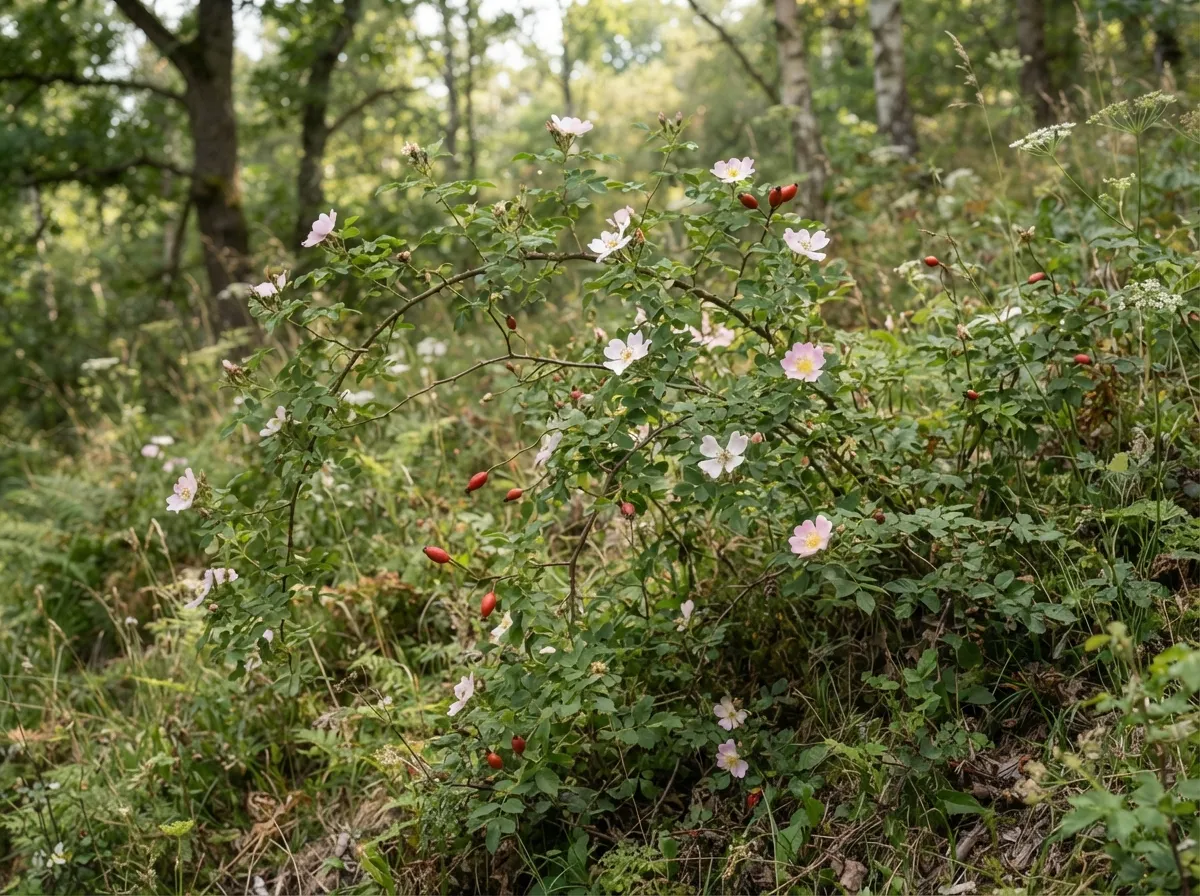
🔍 Identify it without mistakes
Thorny shrub with arched stems bearing stout prickles curved like hooks (unlike brambles which have straight or varied prickles). Leaves composed of 5-7 toothed leaflets. Flowers with 5 pale pink to white single petals, very fragrant. Ovoid bright red-orange fruit (rose hip) when ripe, retaining the sepals at its tip.
- hook-curved prickles, stout and widely spaced
- compound leaves with 5-7 toothed leaflets
- single flower with 5 pale pink petals, very fragrant
- bright red-orange ovoid rose hip (fruit), persistent sepals at the tip
- arched, bushy habit, found in hedgerows
⚠️ Not to be confused with
To tell them apart: the bright red-orange rose hip with persistent sepals is very characteristic among hedgerow fruits
To tell them apart: the dog rose has stout prickles curved into hooks, spaced further apart, and bright red-orange ovoid rose hips; the burnet rose, native to coastal dunes, has small, fine, abundant prickles mixed with bristles and round rose hips that turn black when ripe
🍽️ Eating it
Preparation : rose hips must be seeded (the internal achenes are covered in irritating hairs — the famous childhood 'itching powder') then cooked into jam, syrup, or herbal tea; never eat them raw as they are without removing the hairy seeds
USDA FoodData Central, dried rose hip, per 100 g — one of the richest known plant sources of vitamin C
💊 Healing with it
historically major antiscorbutic (vitamin C), traditionally used to support immune defenses in winter and for mild joint pain (osteoarthritis)
Level of evidence : etudes-solides for standardized rose hip powder on osteoarthritis pain (several positive randomized clinical trials); tradition for antiscorbutic use — EMA/HMPC, community monograph Rosae pseudo-fructus cum fructibus
⚠️ no major known contraindications; make sure to remove the hairy achenes thoroughly before consumption to avoid digestive irritation
🪓 Other bushcraft uses
- hairy achenes historically used as playful 'itching powder'
- classic rootstock for cultivated roses in horticulture
Sources (3)
No entry replaces a certain identification in the field, or medical advice. When in doubt: don't eat it. If ingestion is suspected: poison control or 112/911.