🌿 Ground elder (Goutweed)
Aegopodium podagraria · Apiaceae
🔍 Identify it without mistakes
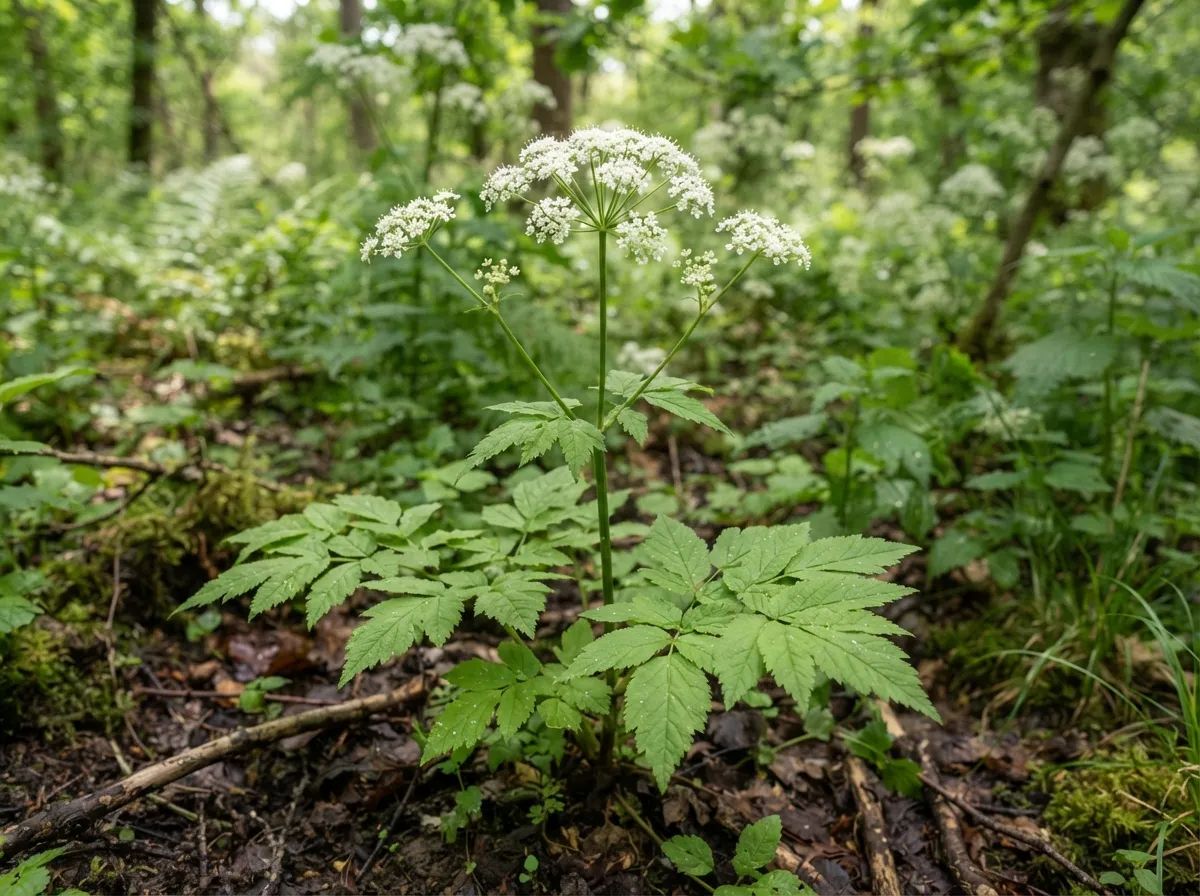
Invasive perennial plant of gardens, with leaves twice divided by three (biternate): each leaf splits into 3 groups of 3 toothed leaflets, a very recognizable layout once you've spotted it. Hollow, grooved, hairless stem. Flat white umbels typical of the Apiaceae in late spring. Characteristic carrot-parsley smell when crushed.
- leaf divided into 3 groups of 3 leaflets (biternate), a very recognizable pattern
- hollow, grooved, glaborous stem (hairless)
- flat white umbel, typical of the Apiaceae
- parsley-carrot smell when crushed
- dense and invasive garden colonies, spreading rhizome
⚠️ Not to be confused with
To tell them apart: the biternate leaf pattern in 3x3 leaflets is unique to ground elder; in the absence of a flowering umbel to confirm, any Apiaceae not identified with 100% certainty must never be harvested — this is the absolute rule for this botanical family
🍽️ Eating it
Preparation : raw and young in salads or cooked like spinach, in soup (Northern European tradition where it was a spring famine vegetable)
💊 Healing with it
vernacular name "goutweed" inherited from traditional medieval use against gout and rheumatism (external application of leaves), with little scientific backing today
Level of evidence : traditional use — ethnobotanical compilations (Fournier, PFAF)
⚠️ always confirm identification before harvesting due to the general resemblance of all young Apiaceae to one another; older leaves can be mildly laxative in large doses
🪓 Other bushcraft uses
- considered an invasive weed that is almost impossible to eradicate from a garden once its spreading rhizome takes hold — you might as well eat it
No entry replaces a certain identification in the field, or medical advice. When in doubt: don't eat it. If ingestion is suspected: poison control or 112/911.