🌿 Ephedra (Mormon tea)
Ephedra nevadensis · Éphédracées
🔍 Identify it without mistakes
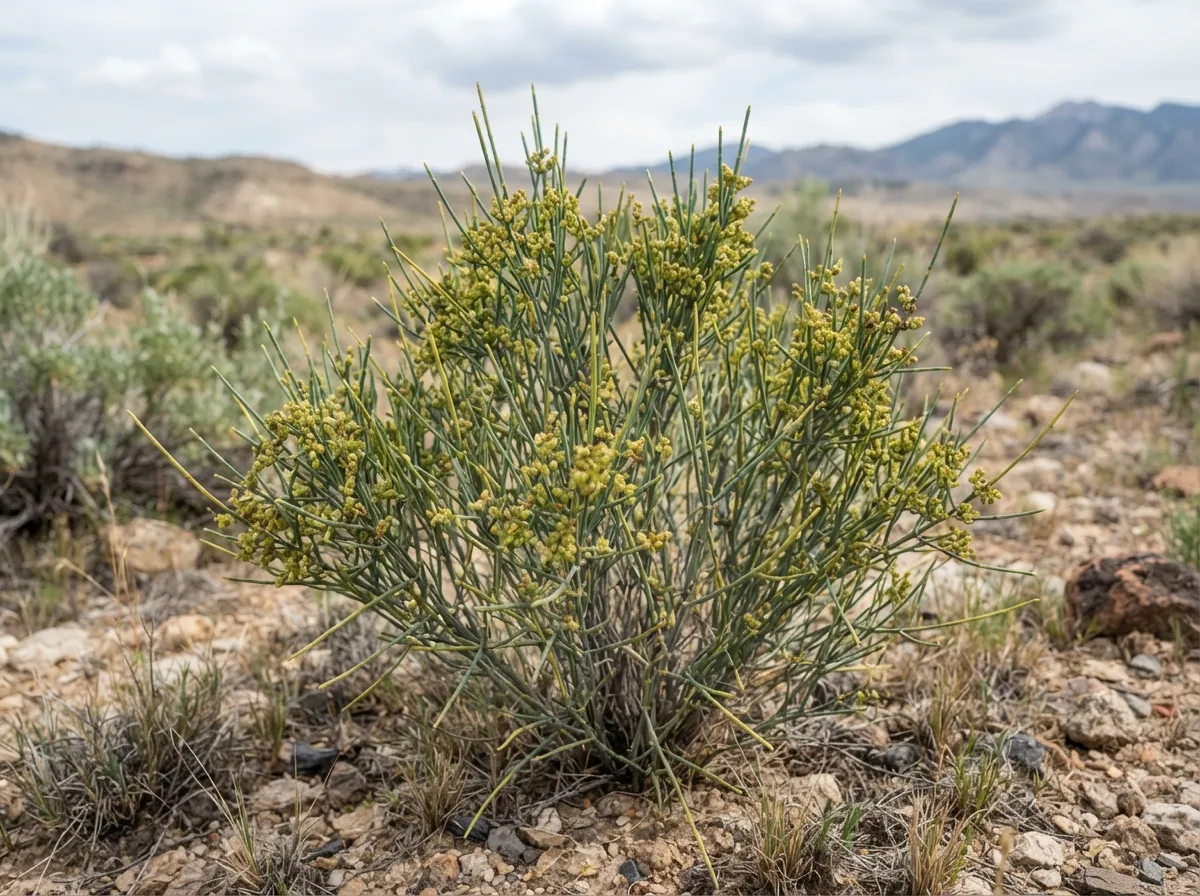
Desert shrub with green, jointed, ridged stems reminiscent of horsetails, which perform most of the photosynthesis: its leaves, reduced to small scales, fall off shortly after forming. It produces discreet cones with fleshy white to red bracts rather than true flowers, as ephedra is a gymnosperm and not a flowering plant.
- green, ridged stems jointed in segments (clearly visible nodes)
- leaves reduced to tiny, quickly deciduous scales
- discreet cones with fleshy white to red bracts (no true flowers, it is a gymnosperm)
- low, bushy shrub typical of dry, rocky desert soils
⚠️ Not to be confused with
To tell them apart: both plants share green stems jointed in segments that can be misleading at first glance, but ephedra is a woody desert shrub with stems that do not snap cleanly at each node, whereas horsetail is a non-woody plant of damp soils whose stems easily pull apart at each joint; their habitats (dry desert vs. damp soils) almost never overlap, which greatly limits any risk of real confusion
🍽️ Eating it
Preparation : dried stems steeped in hot water to make 'Mormon tea' or 'Brigham tea', a traditional herbal tea of the American Southwest
💊 Healing with it
ephedra species rich in alkaloids (ephedrine, pseudoephedrine) have documented sympathomimetic and decongestant properties; certain North American species like E. nevadensis contain very little to none at all
Level of evidence : limited studies — Wikipedia — Ephedra (plant)
⚠️ dietary supplements containing alkaloid-rich ephedra were banned in the United States in the early 2000s due to documented serious cardiovascular risks (arrhythmias, heart attacks); do not combine with prolonged or concentrated use without medical advice
🪓 Other bushcraft uses
- archaeological use documented for at least 15,000 years, with fossil remains found in Taforalt Cave in Morocco and pollen associated with Neanderthal sites
Sources (1)
No entry replaces a certain identification in the field, or medical advice. When in doubt: don't eat it. If ingestion is suspected: poison control or 112/911.