🌲 Black Spruce
Picea mariana · Pinaceae
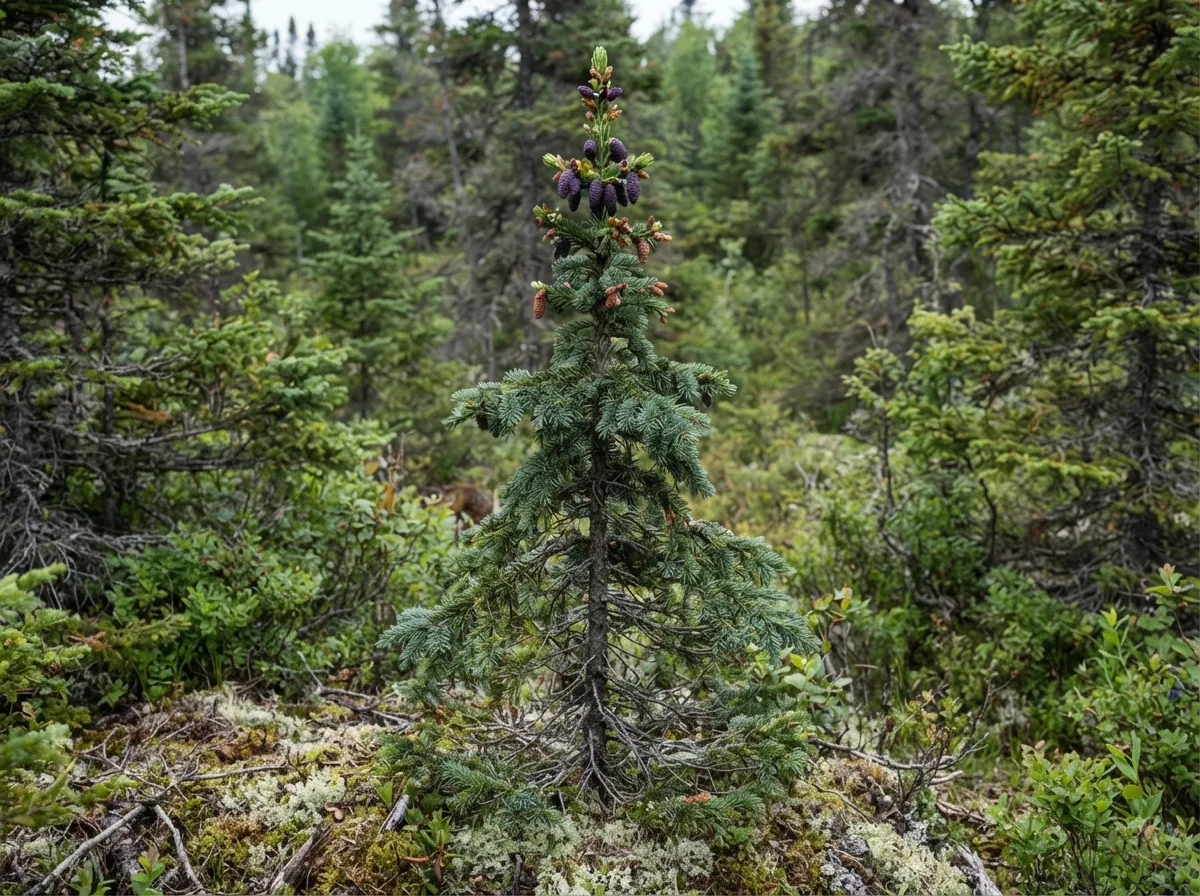
🔍 Identify it without mistakes
Slender conifer with a narrow spire-like silhouette, up to 20 m tall, short needles (under 15 mm), stiff and sharp-pointed, attached individually all around the twig (never in clusters). Small, egg-shaped cones that persist on the tree for several years. Scaly greyish to brownish bark. Dominant and foundational species of the North American taiga, resistant to extreme frost and nutrient-poor peaty soils.
- short, stiff, and sharp needles attached individually (never in clusters)
- characteristic narrow, spire-like silhouette
- small, egg-shaped cones persisting for several years
- tolerates frozen peaty soils, often forming very dense pure stands
⚠️ Not to be confused with
To tell them apart: spruce has short, stiff, and sharp needles, attached individually all around the twig (you can roll them between your fingers), and forms a large spire-shaped tree with small woody cones; Canada yew is a low, spreading shrub (rarely over 1-2 m tall), with flat, soft, non-prickly needles arranged in two flat rows, without any cones (red arils instead)
🍽️ Eating it
Preparation : infuse young shoots into a tea rich in vitamin C, or chew them directly; hardened resin gum is traditionally chewed as natural chewing gum; scrape the cambium (living layer beneath the bark) and eat it raw or dried in emergency situations
💊 Healing with it
traditionally chewed as gum to soothe sore throats and applied as a resin poultice for minor wounds (antiseptic properties of the resin)
Level of evidence : traditional use — Ethnobotany of northern First Nations (Cree, Dene), North American traditional literature
⚠️ no major known contraindications for the described traditional uses
🪓 Other bushcraft uses
- fine, flexible roots traditionally used to sew together birch bark on canoes ("watap" among Algonquian peoples)
- primary timber source for the boreal paper pulp industry
No entry replaces a certain identification in the field, or medical advice. When in doubt: don't eat it. If ingestion is suspected: poison control or 112/911.