🍁 Sugar maple
Acer saccharum · Sapindaceae
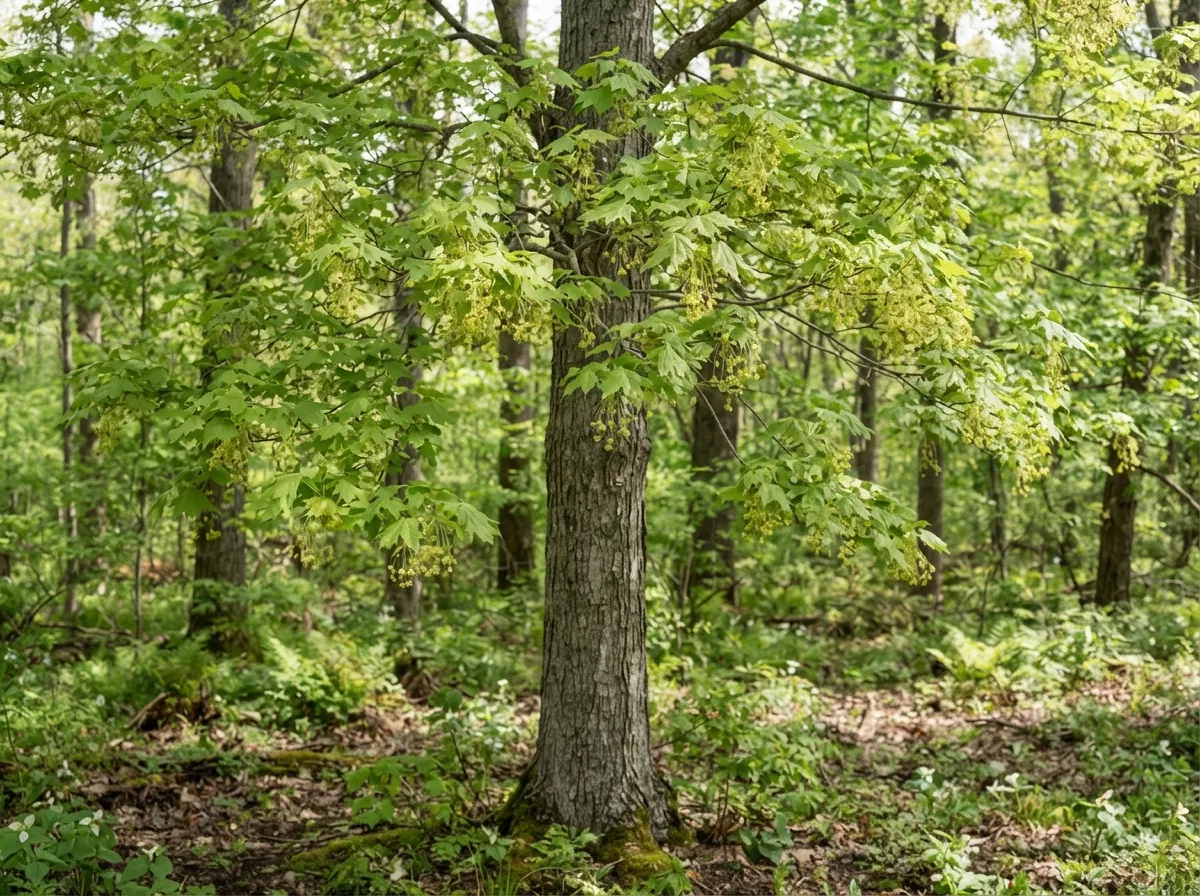
🔍 Identify it without mistakes
Large emblematic hardwood of Quebec and New England, featuring opposite leaves with 5 well-defined lobes and rounded sinuses (unlike the silver or red maple, which have sharper sinuses). Grey bark cracking into long vertical plates with age. Famous for its spring sap, the sweetest of all North American maples.
- opposite leaves with 5 lobes, rounded sinuses, margins sparingly or not toothed
- grey bark in long vertical plates on older trees
- pointed brown-maroon buds, opposite
- samaras (winged fruits) forming a very open U-shape
⚠️ Not to be confused with
To tell them apart: opposite leaves with 5 lobes and rounded sinuses, alongside clear (non-milky) sap oozing from a broken petiole, confirm the sugar maple; all North American maples yield tapable sap safely
🍽️ Eating it
Preparation : collect the sap by tapping and drink it fresh (slightly sweet, close to water) or reduce it by evaporation into syrup (it takes about 40 liters of sap for 1 liter of syrup); tap holes must be closed and spaced out so you don't weaken the tree
💊 Healing with it
bark decoction traditionally used as an expectorant and tonic; spring sap considered remineralizing after winter
Level of evidence : traditional use — Cornell Maple Program — Sugar Maple sap and syrup guidance
⚠️ no notable toxicity; tapping must remain reasonable (minimum trunk diameter, a single tap per medium-sized tree) to avoid weakening the tree over multiple seasons
🪓 Other bushcraft uses
- hardwood (hard maple) highly sought after in woodworking, flooring, and for musical instruments
- sap fermented into a traditional slightly alcoholic beverage by some native nations
Sources (3)
No entry replaces a certain identification in the field, or medical advice. When in doubt: don't eat it. If ingestion is suspected: poison control or 112/911.