🌳 Eucalyptus (Tasmanian Blue Gum)
Eucalyptus globulus · Myrtacées
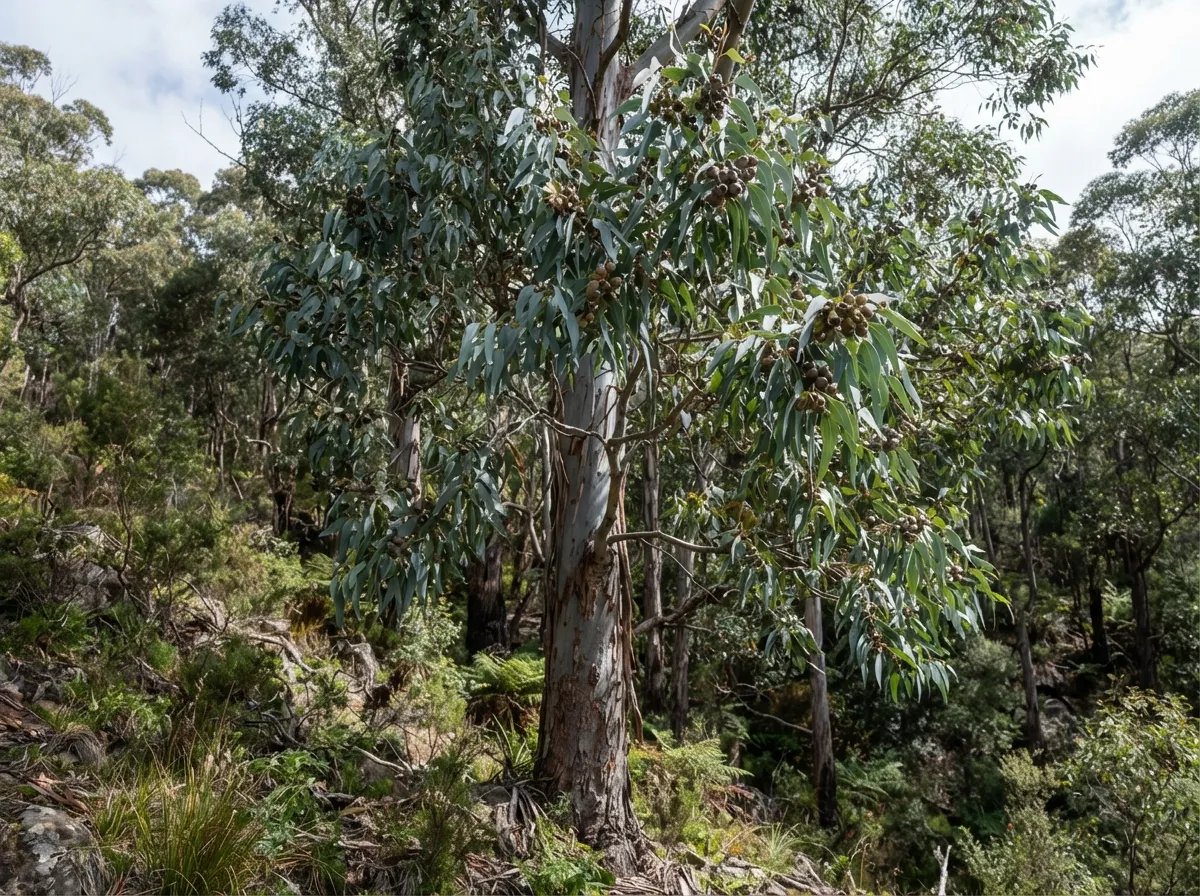
🔍 Identify it without mistakes
Fast-growing tree with smooth grey-white bark that peels off in long ribbons, revealing cream, green, and orange patches underneath. Adult leaves are sickle-shaped, alternate, blue-green, very different from the round, opposite juvenile leaves found on the same tree (heterophylly). Strong camphor/eucalyptol smell when crushed. Petal-less flowers with a woody cap that pops off to reveal a cluster of stamens.
- smooth bark peeling in long ribbons, revealing cream, green, and orange patches underneath
- sickle-shaped, alternate, blue-green adult leaves, striking contrast with round, opposite juvenile leaves on the same tree
- strong camphor/eucalyptol scent when crushing the leaves
- petal-less flowers with a woody cap that pops off to reveal a cluster of stamens
💊 Healing with it
essential oil from leaves (rich in eucalyptol/1,8-cineole) used for inhalation against coughs, colds, and respiratory conditions; traditional Aboriginal use of fresh crushed leaves inhaled or as a poultice on wounds for their antiseptic properties
Level of evidence : etudes-solides for cineole inhalation in cases of bronchitis (recognized by the German Commission E) — Commission E; aromatherapy literature
⚠️ never ingest pure essential oil, highly dangerous and even fatal to young children in very small doses (a few ml); never apply to the face of a child under 6 (risk of laryngospasm)
🪓 Other bushcraft uses
- fire: wood and dry bark ribbons, rich in highly flammable essential oil, ignite easily even after light rain — but burn very fast and hot (Australian bushfires are fueled by this exact oil)
- tinder ribbons: the bark sheds naturally in long fibrous strips you can use as tinder without any tools
- insect repellent: essential oil from crushed fresh leaves rubbed on the skin, or burned for smoke, acts as a natural mosquito repellent
- fire resilience: some species resprout vigorously from the stump or trunk after a complete burn, allowing regrowth in just a few weeks
- timber: hard and dense wood depending on the species, used for heavy construction, posts, and railway ties in Australia
- contact antiseptic: crushed fresh leaves applied directly to small wounds when no other resources are available, a documented Aboriginal usage
- recent plantation indicator: extremely fast growth (adult size reached in a few decades for some species), often a sign of productive forest management rather than primary forest
Sources (2)
No entry replaces a certain identification in the field, or medical advice. When in doubt: don't eat it. If ingestion is suspected: poison control or 112/911.