🌿 Wild fennel
Foeniculum vulgare · Apiaceae
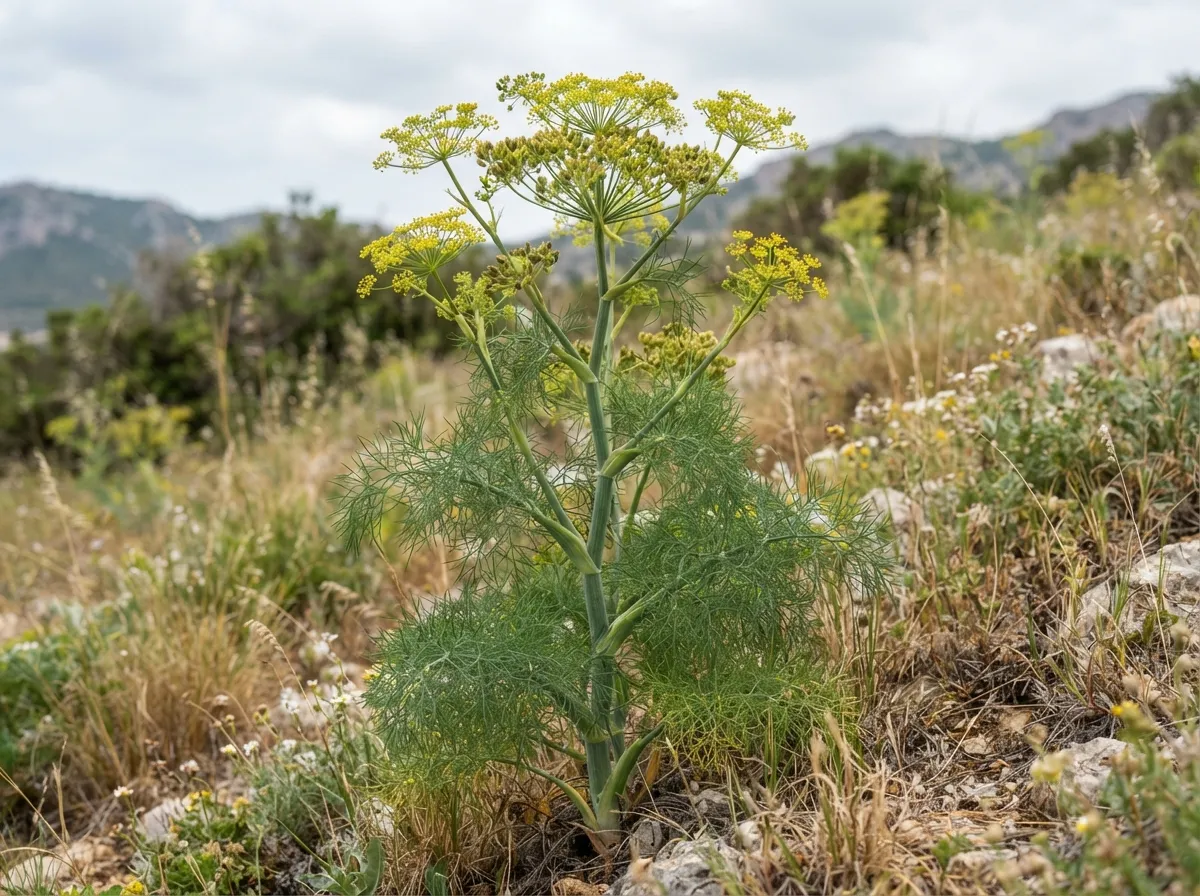
🔍 Identify it without mistakes
Aromatic perennial plant, 1 to 2.5 m tall, with highly branched, glaucous-green grooved stems and leaves finely divided into feather-like filaments. Yellow flowers in regular, flat umbels (12 to 30 rays), giving off a strong, characteristic anise smell from all parts of the plant — this is your absolute safety check against giant fennel.
- distinct anise smell when crushing the stem or leaves
- leaves finely divided into filaments
- regular flat umbel with 12-30 rays
- glaucous grooved stem, never taller than 2.5 m
⚠️ Not to be confused with
To tell them apart: giant fennel emits an unpleasant smell (close to cat urine) instead of fennel's anise scent, reaches 2 to 3 m, and its umbel is distinctly spherical (20-40 rays) rather than flat
To tell them apart: hemlock has a purple-spotted stem and a foul smell (mouse-like), unlike fennel's distinct anise scent and absence of spots
🍽️ Eating it
Preparation : fresh leaves for seasoning, dried seeds as an infusion or spice, tender base of young stems raw in salads
USDA FoodData Central, raw fennel bulb, per 100 g
💊 Healing with it
minor digestive disorders, bloating, colic (traditional carminative)
Level of evidence : traditional use — EMA/HMPC Monograph Foeniculi vulgaris fructus (well-established traditional use)
⚠️ seeds not recommended for concentrated and prolonged use in pregnant women (debated estrogen-like effect)
🪓 Other bushcraft uses
- hollow dried stems used as kindling
- flavoring in many Mediterranean liqueurs (pastis, raki)
Sources (3)
No entry replaces a certain identification in the field, or medical advice. When in doubt: don't eat it. If ingestion is suspected: poison control or 112/911.