⚠️ Giant Fennel
Ferula communis · Apiaceae
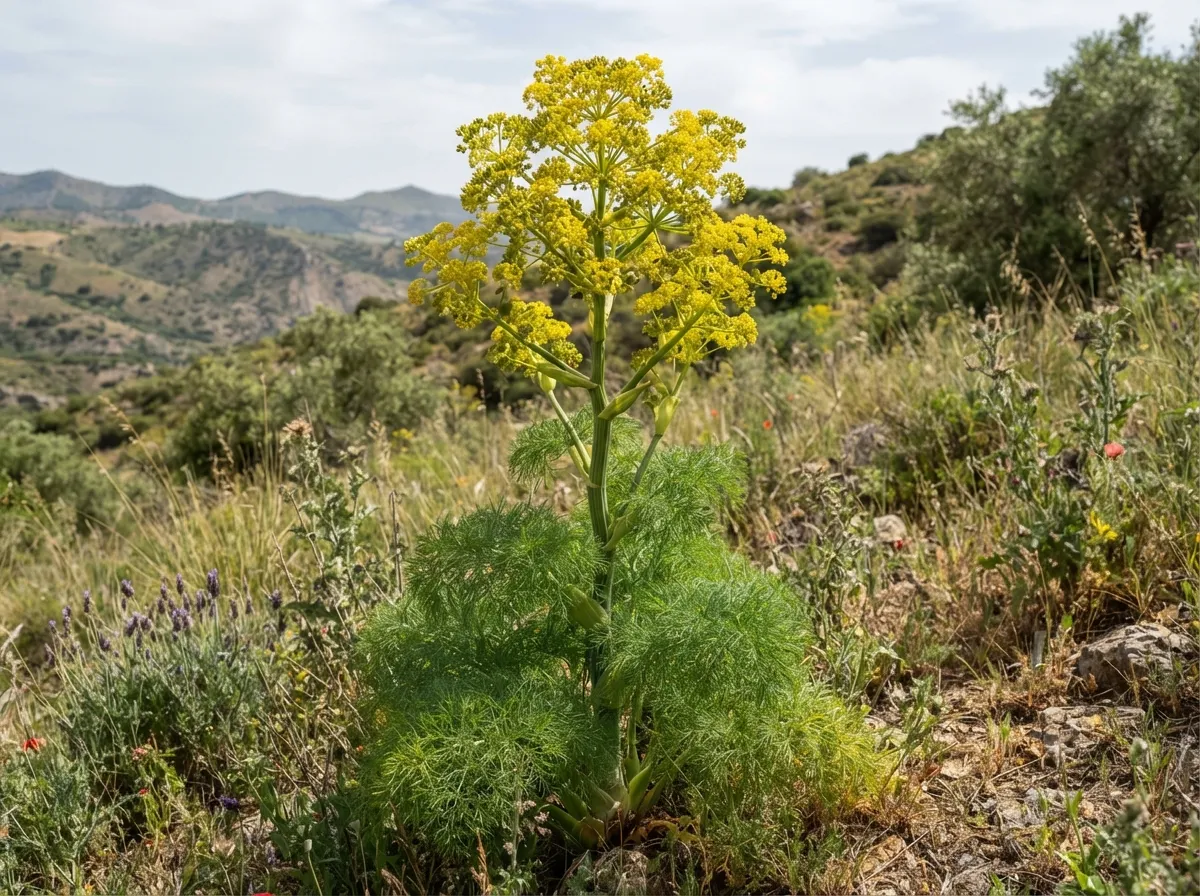
🔍 Identify it without mistakes
Large, spectacular perennial Apiaceae, 2 to 3 m tall, with thick, hollow stems and finely divided leaves resembling a giant fennel, but giving off an unpleasant smell (similar to cat urine) instead of an anise scent. Spherical yellow umbels (20 to 40 rays) that are rounder than those of fennel. The entire plant contains prenylated coumarins toxic to the liver and blood clotting.
- unpleasant smell (cat urine) and not aniseed when crushed
- impressive size, 2-3 m
- spherical umbel with 20-40 rays (rounder than that of fennel)
- thick hollow stem, traditionally often used as a walking stick
⚠️ Not to be confused with
To tell them apart: distinct aniseed smell of fennel versus unpleasant smell of giant fennel; flat umbel of fennel versus spherical umbel of giant fennel; fennel height rarely exceeds 2 m
💊 Healing with it
no safe self-use; used in North African traditional medicine strictly for external use
Level of evidence : traditional use — ToxLab VetAgro Sup — Ferula monograph; PMC toxicological study
⚠️ repeated ingestion causes blood clotting disorders (spontaneous bruising, nosebleeds, general weakness, seizures), which can lead to death without treatment; rare poisoning in humans as it requires repeated consumption, but very dangerous for livestock
🪓 Other bushcraft uses
- dried hollow stem traditionally used as a walking stick or to carry embers (fire smolders slowly inside the pith)
- resin (galbanum from related species) used in perfumery
Sources (3)
No entry replaces a certain identification in the field, or medical advice. When in doubt: don't eat it. If ingestion is suspected: poison control or 112/911.