🌟 Lesser Celandine
Ranunculus ficaria · Ranunculaceae
🔍 Identify it without mistakes
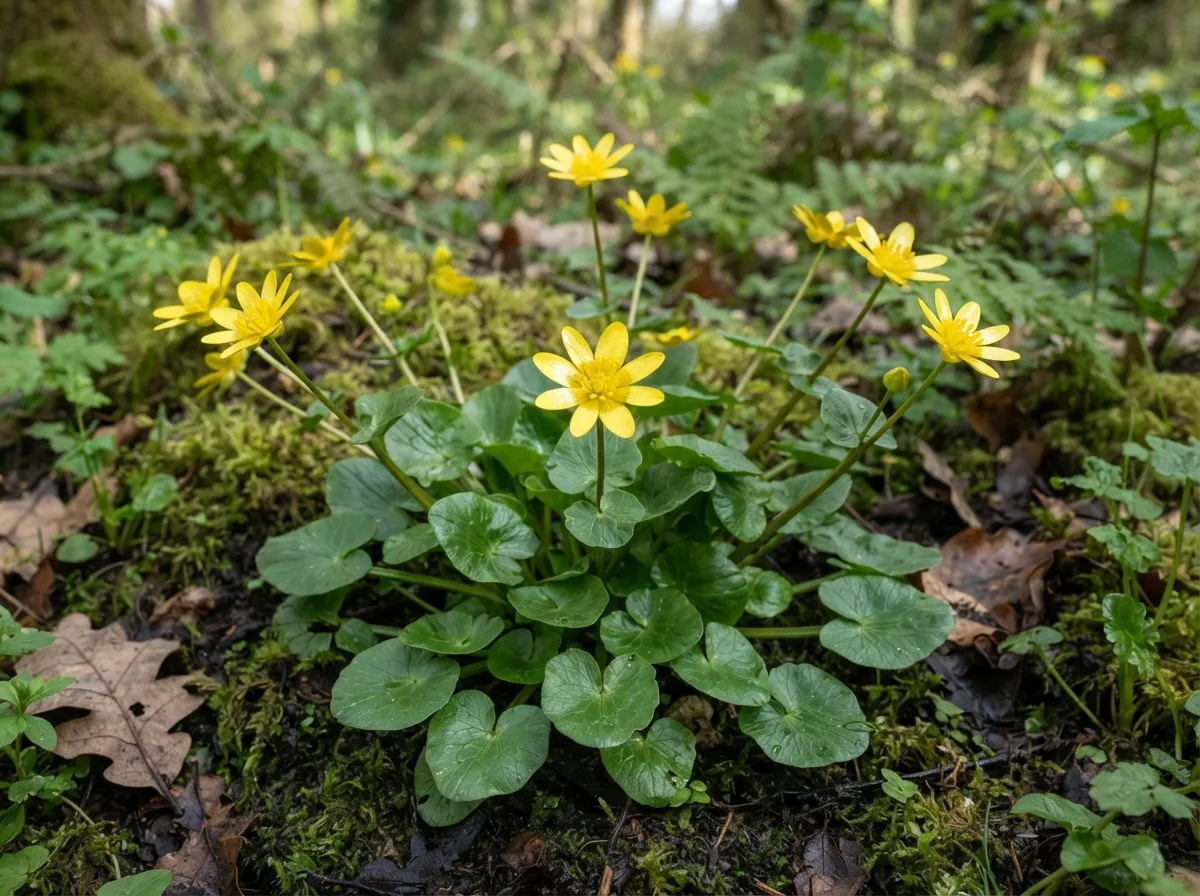
A shiny carpet of bright yellow star-shaped flowers covering damp undergrowth as early as February-March, even before the trees get their leaves. Small, fleshy, glossy heart-shaped leaves. A rare and vital feature to remember: this plant is edible ONLY at the very beginning, before flowering — it becomes toxic once in bloom.
- bright yellow glossy star-shaped flowers, 8-12 shiny petals (far more than the meadow buttercup which has 5)
- heart-shaped, fleshy, glossy leaves, often mottled with brown-green
- small rice- or fig-shaped root tubers underground (hence the French name "ficaire")
- dense and low-growing carpet, blooming as early as February in damp undergrowth
- disappears completely from the surface by May (very short-cycle plant)
⚠️ Not to be confused with
To tell them apart: lesser celandine blooms much earlier (starting in February) with 8-12 shiny petals and fleshy heart-shaped leaves; meadow buttercup blooms in summer with 5 petals and deeply lobed leaves
🍽️ Eating it
Preparation : only very young leaves harvested BEFORE flowering are edible, raw in small quantities or cooked; as soon as flower buds appear, protoanemonin levels rise sharply and the plant becomes irritating — when in doubt, always cook it, as heat destroys the toxin
🪓 Other bushcraft uses
- nicknamed "pilewort" in traditional English: its root tubers, resembling small hemorrhoids, earned the plant a traditional external use based on their shape (Doctrine of Signatures, not scientifically validated)
No entry replaces a certain identification in the field, or medical advice. When in doubt: don't eat it. If ingestion is suspected: poison control or 112/911.