🌵 Prickly Pear
Opuntia ficus-indica · Cactaceae
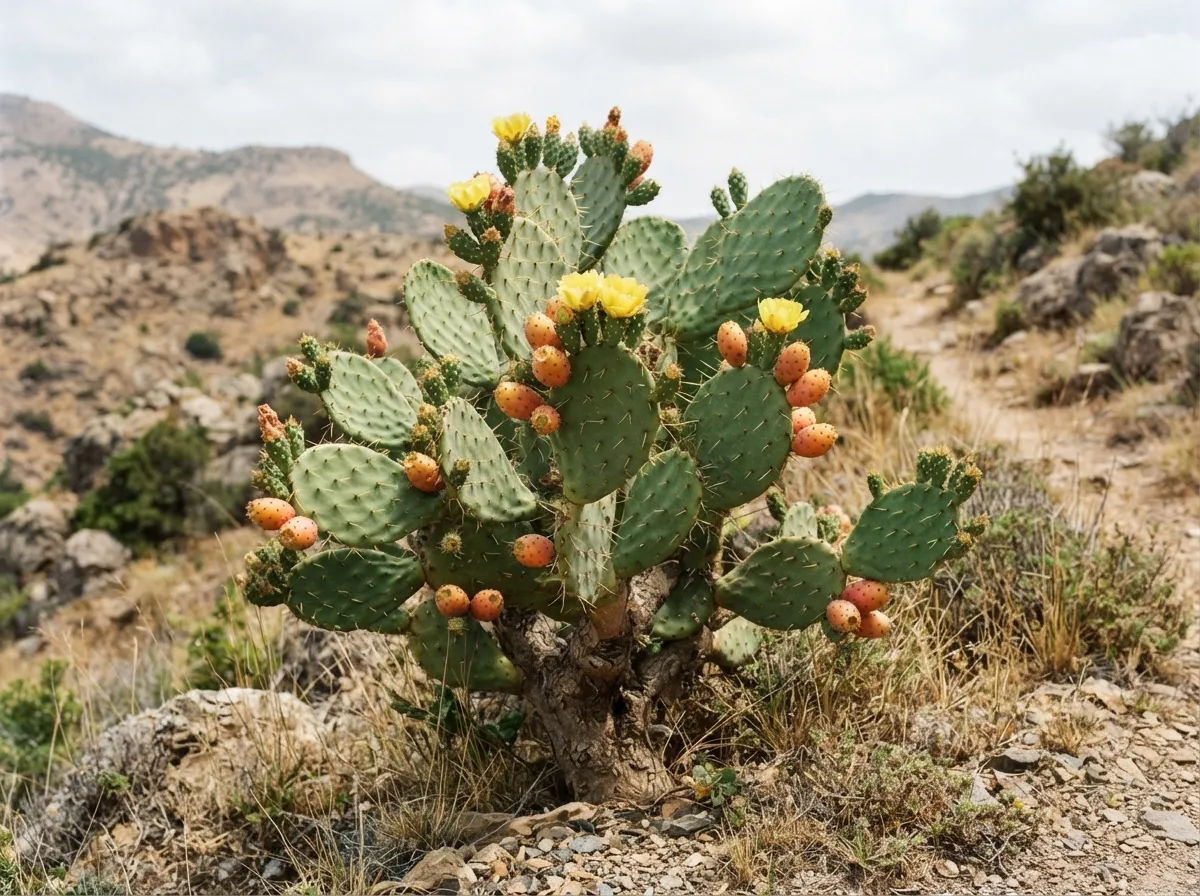
🔍 Identify it without mistakes
Cactus with flat, oval, stacked pads (cladodes), grey-green, covered in clusters of fine, irritating spines (glochids) along with a few long spines. The ovoid fruits, turning red-orange when ripe, grow on the upper edge of the pads and are also bristling with glochids.
- flat, oval pads jointed to one another
- cushions (areoles) bearing clusters of fine glochids like down - irritating to the touch
- red-orange ovoid fruits at the top of the pads
⚠️ Not to be confused with
To tell them apart: flat jointed pads covered in clusters of glochids are a structure unique to Opuntia; no toxic cactus features this architecture of stacked pads
To tell them apart: the prickly pear has flat, jointed pads, whereas the cholla has cylindrical segments that detach at the slightest contact; the micro-barbed spines of the cholla are much harder to pull out of the skin than Opuntia glochids
🍽️ Eating it
Preparation : carefully brush or singe the glochids off before any handling (they stick into your skin and are very hard to remove); peel the young pads and cut them into strips to pan-fry or boil; peel the ripe fruits (cut off both ends, slit the skin lengthwise) before eating the pulp
USDA FoodData Central, raw nopales (pads), per 100 g
💊 Healing with it
traditionally used against diabetes and cholesterol; clinical studies show a modest effect on postprandial blood sugar and blood lipids with the pads
Level of evidence : limited studies — nutritional literature and USDA
⚠️ excessive consumption can cause bloating (fiber and mucilage); completely remove glochids before consumption to avoid digestive irritation
🪓 Other bushcraft uses
- pads used as defensive hedges and windbreaks in arid zones
- mucilage used traditionally to clarify muddy water
- cladodes used as livestock fodder during dry seasons
No entry replaces a certain identification in the field, or medical advice. When in doubt: don't eat it. If ingestion is suspected: poison control or 112/911.