🌳 Sycamore fig
Ficus sycomorus · Moracées
🔍 Identify it without mistakes
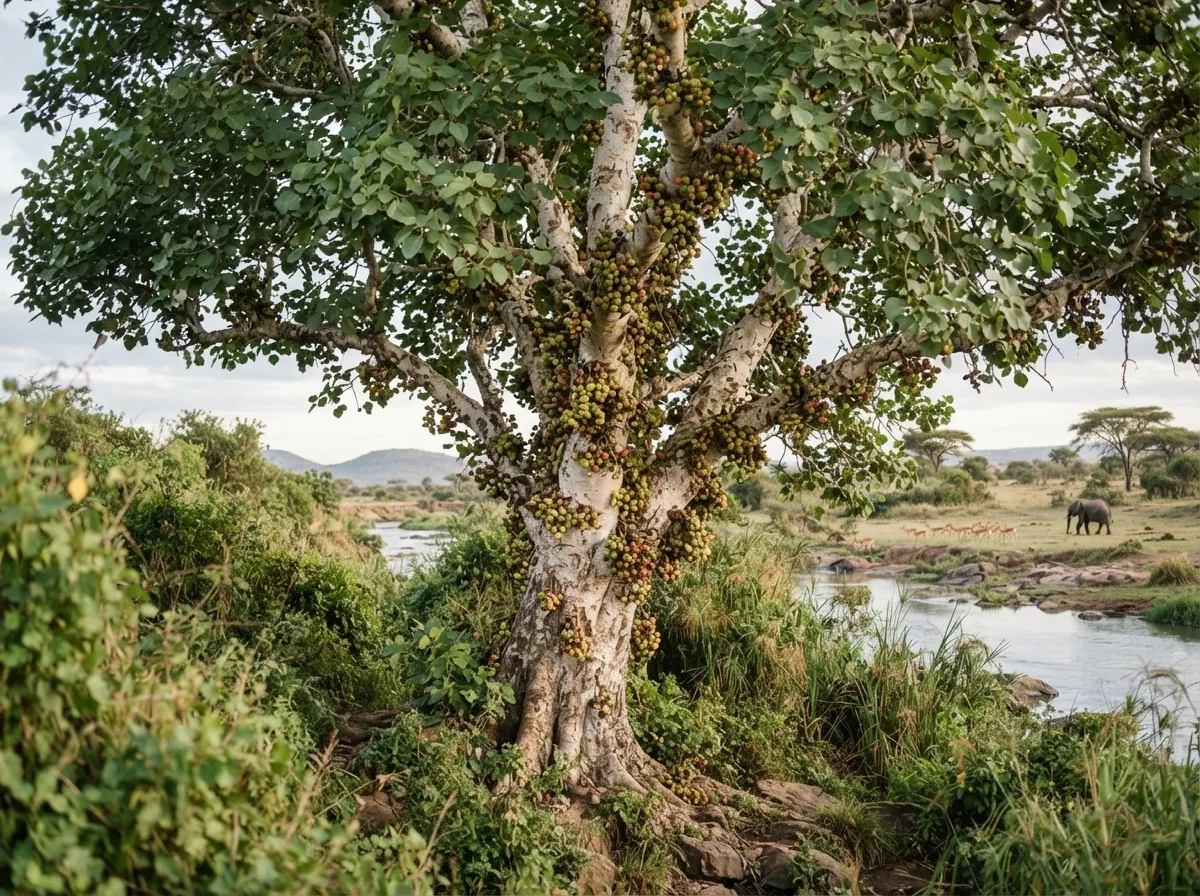
Large African fig tree with a massive, fluted, and often buttressed trunk, characterized by its smooth yellowish bark and a dense, spreading crown that makes it a landmark shade tree in the savannah. Its figs, borne directly on the trunk and large branches in dense clusters (cauliflory), ripen almost all year round.
- massive, fluted trunk, often buttressed at the base, with very recognizable smooth yellowish bark
- heart-shaped leaves, rough to the touch on both sides, with a rounded apex
- figs borne directly on the trunk and large branches in dense clusters (cauliflory), not at the tips of twigs
- broad and dense crown, often a visual landmark from afar in the savannah and near water points
⚠️ Not to be confused with
To tell them apart: the Mediterranean common fig has deeply lobed leaves and a lower bushy habit, whereas the African sycamore fig has simple, unlobed heart-shaped leaves, a massive fluted trunk, and bears its figs directly on the trunk and large branches rather than at the tips of twigs
🍽️ Eating it
Preparation : pick fully ripe figs that feel soft to the touch directly from the trunk; eat them raw, dried, or cooked locally into jam
💊 Healing with it
bark and latex used in traditional African medicine for digestive and respiratory disorders
Level of evidence : traditional use — PlantZAfrica (SANBI) — Ficus sycomorus subsp. sycomorus
⚠️ no known toxicity from the ripe fruit
🪓 Other bushcraft uses
- lightweight wood used in ancient Egypt to make sarcophagi and funerary furniture
- sacred tree in several religious and cultural traditions of East Africa, often planted near community gathering places
No entry replaces a certain identification in the field, or medical advice. When in doubt: don't eat it. If ingestion is suspected: poison control or 112/911.