🌳 Common Fig
Ficus carica · Moraceae
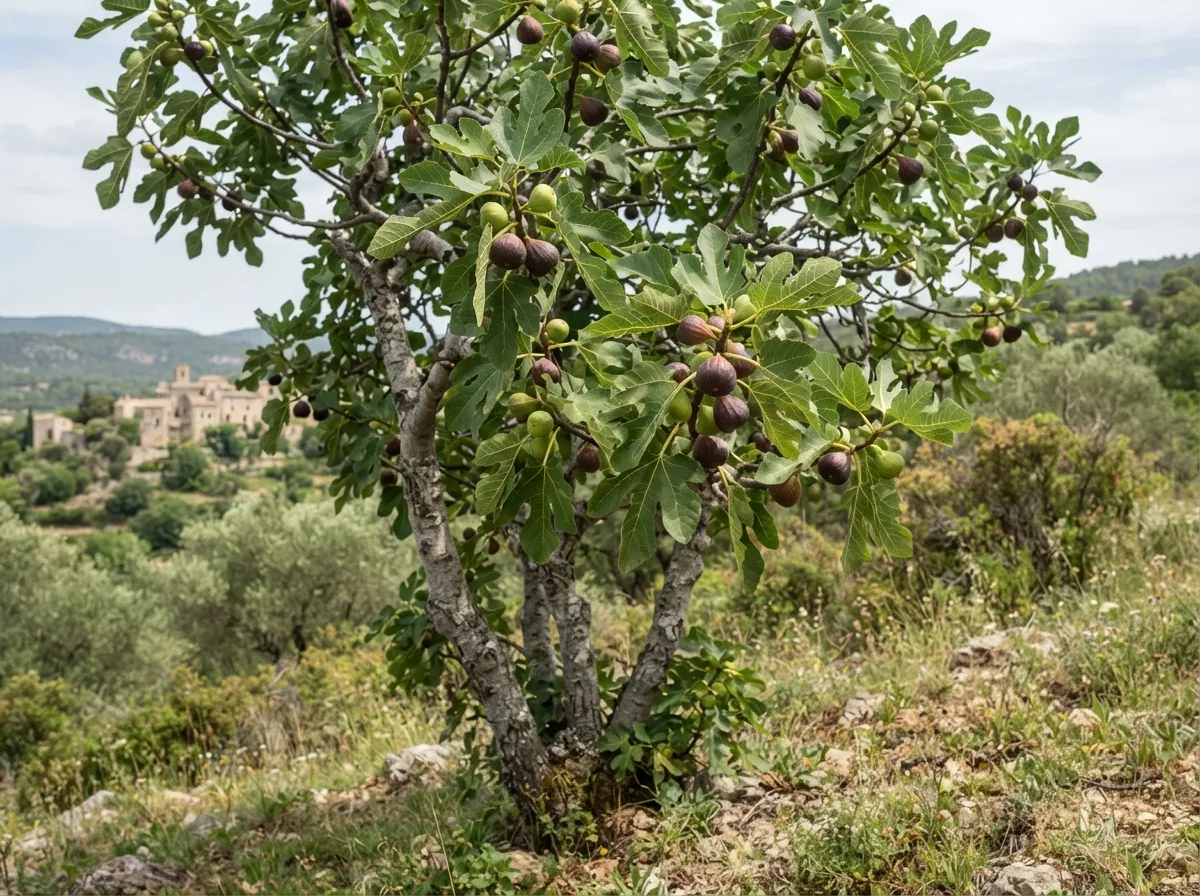
🔍 Identify it without mistakes
Small Mediterranean tree or large shrub with an often twisted, multi-stemmed trunk, large rough deeply lobed leaves (3-5 lobes), deciduous. Any damaged part (stem, leaf, green fig) leaks a milky white latex — irritating and above all photosensitizing in the sun, vital to know before harvesting.
- large rough leaves with 3-5 deep lobes, deciduous
- milky white latex flowing from any cut stem or leaf — irritating and photosensitizing
- often twisted, multi-stemmed trunk, smooth gray bark
- pear-shaped fruits (figs), green then purplish when ripe, borne directly on the branches
⚠️ Not to be confused with
To tell them apart: very large, palmately lobed, rough leaves, and white latex when breaking any branch or petiole: nothing else in the Mediterranean region combines both; just beware of the latex, photosensitizing on skin in the sun
To tell them apart: the African sycamore fig has unlobed, simple heart-shaped leaves, a massive fluted trunk with yellowish bark, and bears its figs directly on the trunk and thick branches (cauliflory), whereas the common Mediterranean fig has deeply lobed leaves and bears its figs at the ends of the branches
🍽️ Eating it
Preparation : ripe figs eaten fresh or dried; WARNING: never touch the white latex with bare hands in sunlight (delayed skin burns, photodermatitis) — wear gloves or pick at dusk
fresh fig, per 100 g, USDA FoodData Central
💊 Healing with it
latex traditionally applied to corns and warts (keratolytic effect); decoction of dried figs as a soothing gargle for coughs and sore throats
Level of evidence : traditional use — Mediterranean ethnobotanical literature
⚠️ the latex is photosensitizing: avoid any skin contact followed by sun exposure (risk of severe burns and long-lasting pigment spots)
🪓 Other bushcraft uses
- drying and preservation: sun-dried figs keep for months and concentrate their energy — a top-choice food for trail rations in a Mediterranean climate
- vegetable rennet: latex traditionally used to curdle milk when making rustic Mediterranean cheeses
- improvised protection: large leaves can be used as makeshift wrapping to carry other food, or as a fan against the heat
- small craft objects: soft, lightweight wood, easy to carve for quick bushcraft fixes
- indicator of past human presence: growing on ruins and scree often signals an ancient settlement and a nearby water source in the Mediterranean maquis
- thermal shade: dense foliage providing welcome shelter from direct Mediterranean sun
- drought resistance: fruits reliably even in very poor, dry soils, making it a dependable resource in arid Mediterranean areas
No entry replaces a certain identification in the field, or medical advice. When in doubt: don't eat it. If ingestion is suspected: poison control or 112/911.