🍋 Finger lime
Citrus australasica · Rutaceae
🔍 Identify it without mistakes
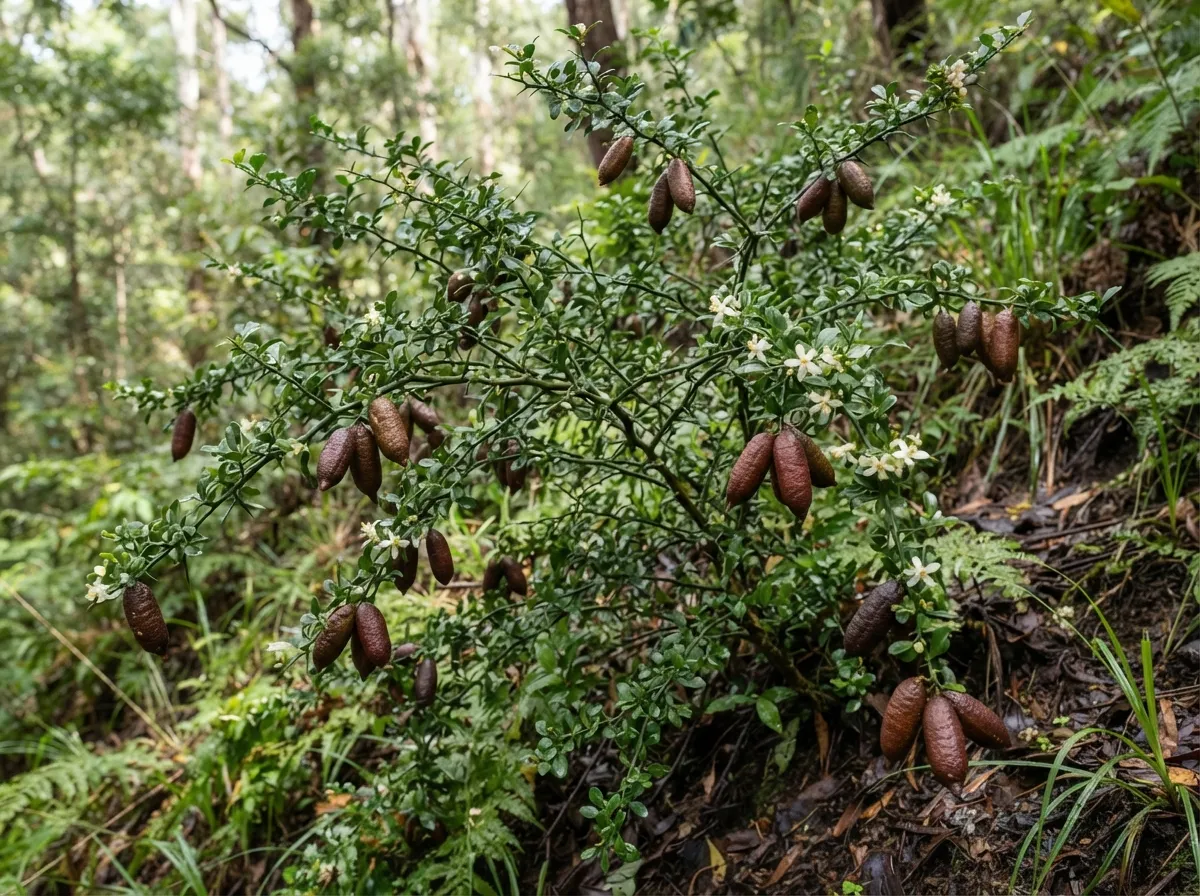
Spiny shrub or small tree growing up to 10 m, with sharp 2.5 cm thorns and alternate light green oval to lozenge-shaped leaves. The fruit, cylindrical and elongated (~8 cm), with rough and oily green-yellow to pink skin, contains pulp made of small juice pearls that burst in your mouth.
- sharp thorns up to 2.5 cm on twigs
- light green, oval to lozenge-shaped alternate leaves
- elongated cylindrical fruit (~8 cm), rough oily skin
- pulp made of loose small juice vesicles ("citrus caviar"), without standard citrus inner membranes
⚠️ Not to be confused with
To tell them apart: the finger lime has an elongated, finger-shaped cylindrical fruit while the desert lime (another native Australian citrus) produces a small round fruit the size of a marble; both are edible native citrus species with no risk of toxic confusion
🍽️ Eating it
Preparation : eat fresh by cutting the fruit in half and squeezing out the small juice vesicles ("citrus caviar"); also used in marmalades, pickle condiments, and the dried peel serves as seasoning
💊 Healing with it
traditionally used by Indigenous Australians for hydration and treating skin infections
Level of evidence : traditional use — Wikipedia — Citrus australasica
⚠️ no specific precautions known
🪓 Other bushcraft uses
- booming commercial cultivation since the 1990s, especially for gourmet dining
Sources (1)
No entry replaces a certain identification in the field, or medical advice. When in doubt: don't eat it. If ingestion is suspected: poison control or 112/911.