🍓 Wild strawberry
Fragaria vesca · Rosaceae
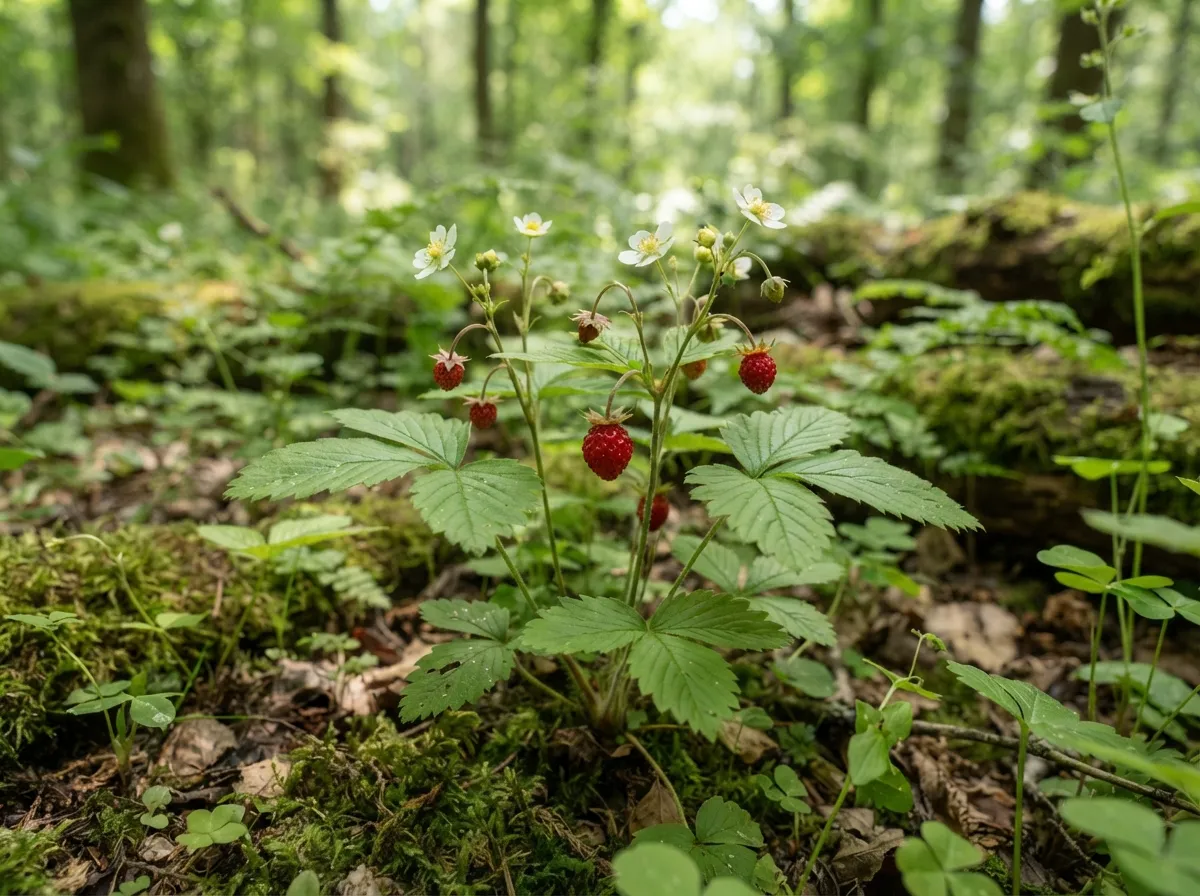
🔍 Identify it without mistakes
Small, low perennial plant, 10 to 20 cm high, forming clumps connected by thin creeping runners. Trifoliate leaves (3 toothed leaflets) on long downy petioles, growing in a rosette at ground level. White flowers with 5 petals and a yellow center, followed by a tiny, highly fragrant red strawberry; the achenes (seeds) stay on the fruit's surface rather than being pitted like in cultivated strawberries.
- downy, toothed, trifoliate leaves on long petioles
- creeping runners connecting clumps
- tiny fruit (1-1.5 cm), achenes on the surface, not sunken
- intense and sweet scent, far superior to cultivated strawberries
⚠️ Not to be confused with
To tell them apart: yellow flowers (not white) on the mock strawberry, fruit pointing upwards (not drooping) and virtually tasteless
🍽️ Eating it
Preparation : raw fruit, dried leaves as an infusion
USDA FoodData Central, raw strawberry, per 100 g — wild strawberry is even richer in aromatics for the same weight
💊 Healing with it
leaves traditionally used in herbal tea for digestion and as a mild astringent (mild diarrhea)
Level of evidence : traditional use — Traditional European herbal medicine literature
⚠️ no known major contraindications at traditional doses
No entry replaces a certain identification in the field, or medical advice. When in doubt: don't eat it. If ingestion is suspected: poison control or 112/911.