🍒 Wild Raspberry
Rubus idaeus · Rosaceae
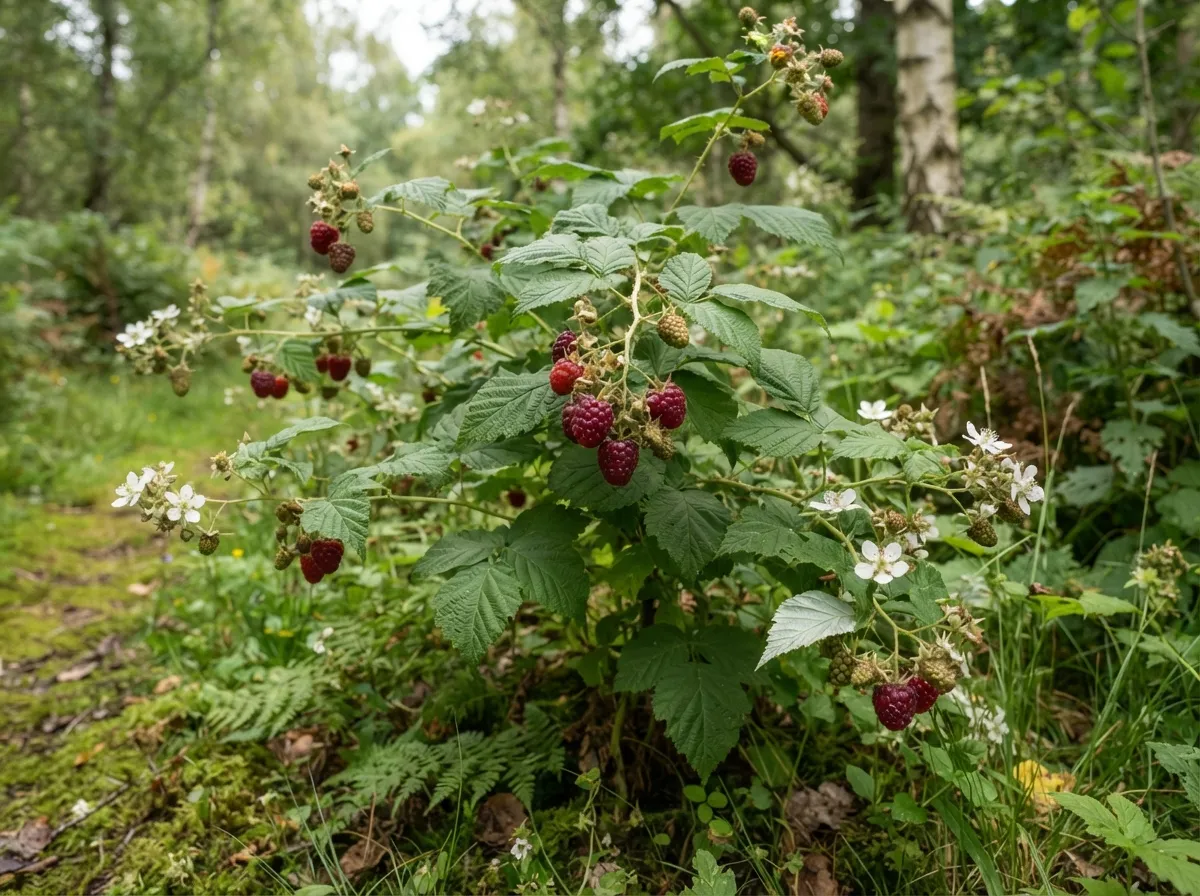
🔍 Identify it without mistakes
Shrub with erect biennial stems ("canes") covered in fine, straight, barely hooked prickles. Leaves are compound with 3-5 toothed leaflets, whitish and downy underneath. Quickly colonizes clearings, logging sites, and forest edges via suckers. Fruit consists of numerous small fused red drupes that easily separate from the white receptacle when ripe (unlike the blackberry).
- fruit separates from the white conical receptacle at maturity, leaving it behind on the plant
- underside of leaves is downy and whitish
- fine, straight prickles, barely hooked
- quickly colonizes clearings and logging sites
⚠️ Not to be confused with
To tell them apart: the blackberry does not separate from its receptacle (you eat both together) and its prickles are stouter and hooked
To tell them apart: Rubus parvifolius has smaller, rounded leaflets (often only 3) and slender, arching stems close to the ground, whereas the common raspberry forms more erect canes with more elongated leaflets
🍽️ Eating it
Preparation : raw, jam, syrup, or dried
USDA FoodData Central, raw raspberry, per 100 g
💊 Healing with it
leaf traditionally used at the end of pregnancy to prepare the uterus (uterine tonic) and against mild diarrhea (astringent)
Level of evidence : limited studies — Traditional European herbal medicine literature
⚠️ leaf use during pregnancy should only be done under the advice of a midwife or doctor, never self-medicated
🪓 Other bushcraft uses
- artisanal raspberry vinegar
- hollow stems sometimes used as small makeshift straws
No entry replaces a certain identification in the field, or medical advice. When in doubt: don't eat it. If ingestion is suspected: poison control or 112/911.