🌳 European Ash
Fraxinus excelsior · Oleaceae
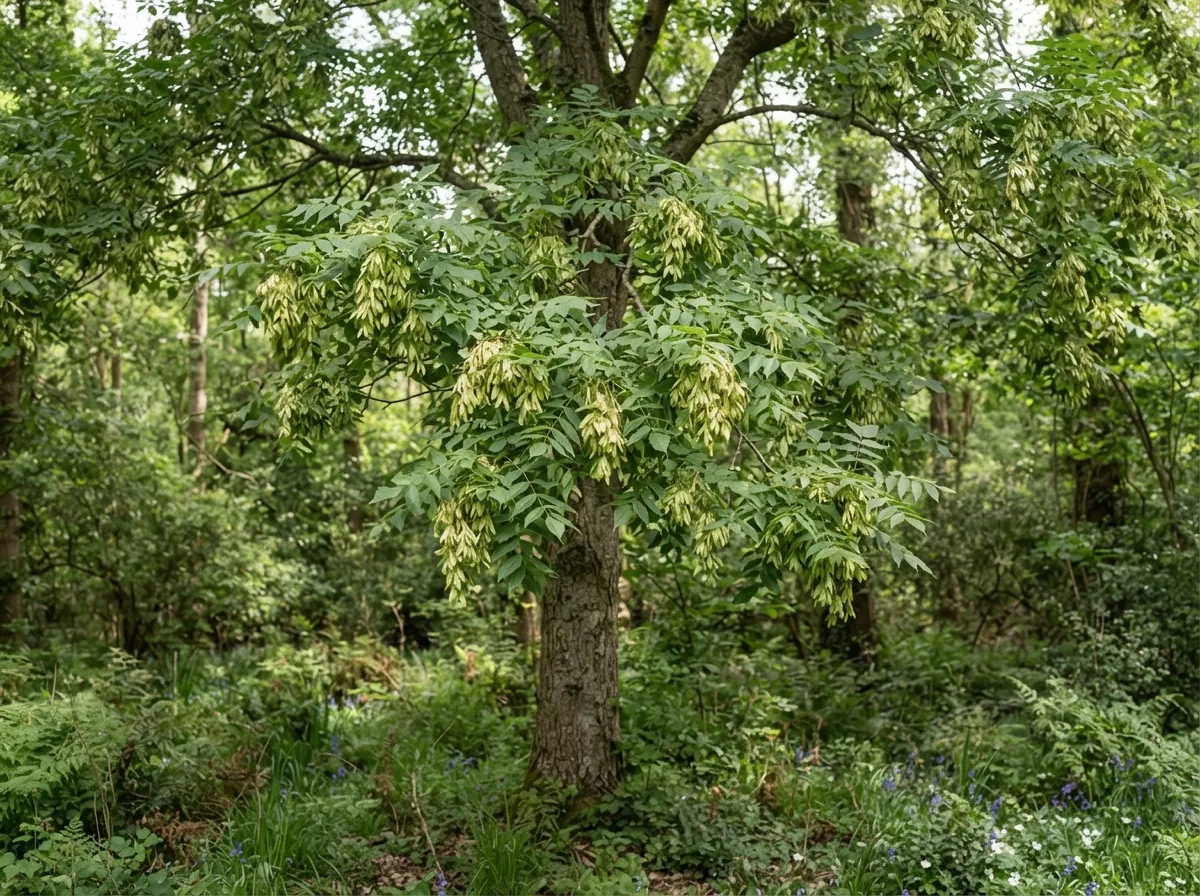
🔍 Identify it without mistakes
Large tree with opposite compound leaves consisting of 7-13 toothed leaflets. Characteristic velvety black buds make it highly recognizable in winter (unique among large European trees). Elongated, paddle-shaped fruit (samaras) hang in clusters that persist on the tree through much of the winter.
- velvety black buds in opposite arrangement — a nearly unique winter identifier in Europe
- opposite compound leaves with 7-13 toothed leaflets
- elongated paddle-shaped samaras grouped in hanging clusters
- smooth grey bark when young, developing diamond-shaped fissures with age
- often high, clear canopy with an open crown that lets light pass through
⚠️ Not to be confused with
To tell them apart: the velvety black opposite buds are unique among large European deciduous trees, even in winter without leaves
🍽️ Eating it
Preparation : mainly used for medicinal purposes (leaf) rather than food; young green fruits (samaras) are sometimes pickled in certain regional traditions, but remain poorly documented and bitter
💊 Healing with it
leaves traditionally used as a mild diuretic and to relieve minor joint pain, as part of a spring cleansing cure
Level of evidence : traditional (recognized by EMA/HMPC for traditional diuretic use) — EMA/HMPC, community monograph on Fraxini folium
⚠️ not recommended in cases of edema caused by heart or kidney failure requiring fluid restriction
🪓 Other bushcraft uses
- flexible, shock-resistant wood, historically sought after for tool handles, axe shafts, and bows (one of the best European bow woods alongside yew)
- young green samaras edible in some regional cuisines, pickled like capers
Sources (3)
No entry replaces a certain identification in the field, or medical advice. When in doubt: don't eat it. If ingestion is suspected: poison control or 112/911.