🍞 Breadfruit
Artocarpus altilis · Moraceae
🔍 Identify it without mistakes
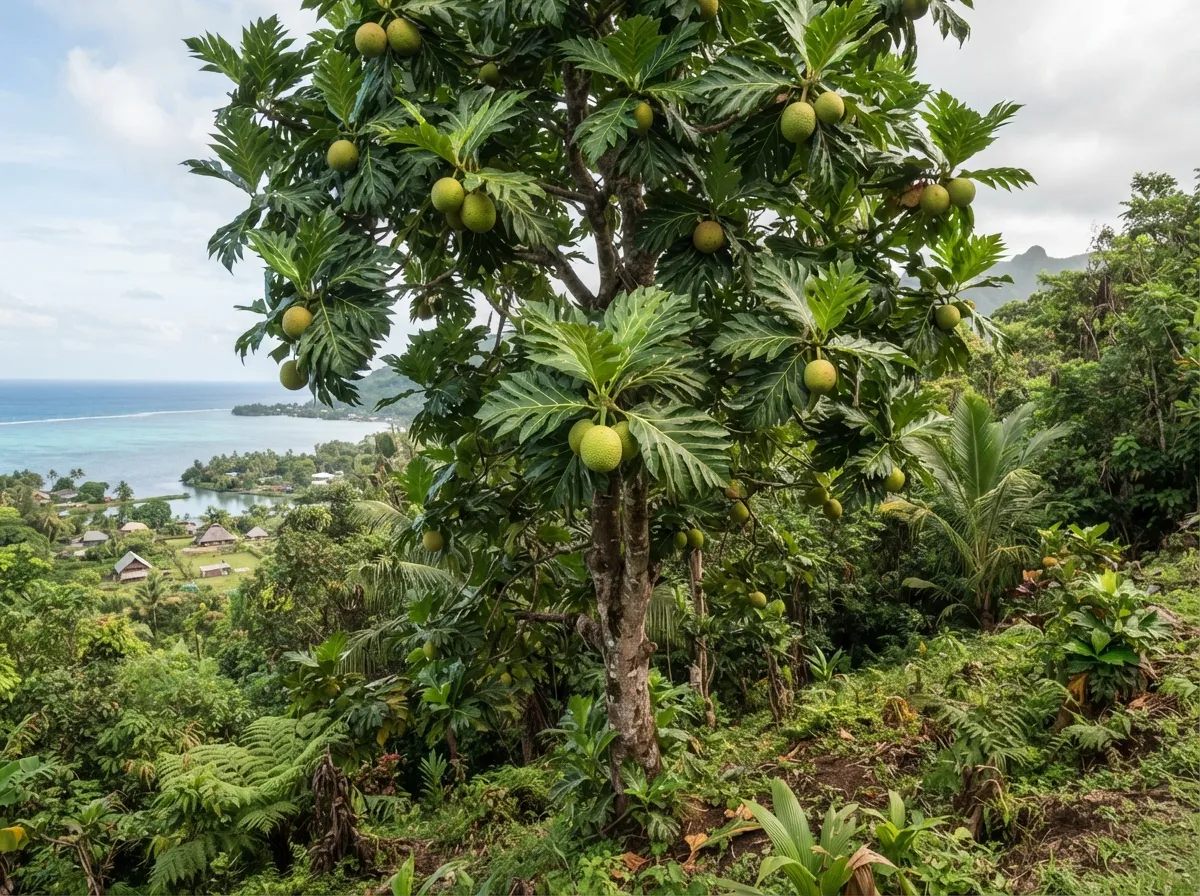
Large tree with broad, glossy, deeply lobed leaves (up to 10 lobes), and milky white latex that beads as soon as a leaf or branch is cut. The fruit, as big as a ball, with green-yellow reticulated skin, hangs directly on the trunk or large branches.
- very broad, deeply lobed, glossy leaves
- sticky white latex at the slightest cut
- spherical fruit with a hexagonal pattern skin, 1-4 kg
⚠️ Not to be confused with
To tell them apart: breadfruit leaves are broad and deeply lobed (up to 10 lobes) while jackfruit leaves are entire and smaller; breadfruit hangs at the ends of branches while jackfruit grows directly on the trunk (cauliflory)
🍽️ Eating it
Preparation : always cook: boil, roast over an open fire, or bake/steam like a potato; ripe fruit can also be eaten slightly sweet after gentle cooking; seeds are boiled or roasted like chestnuts
USDA FoodData Central, raw fruit, per 100 g
💊 Healing with it
the latex is traditionally applied to the skin for its antiseptic properties and to treat skin conditions, the bark and leaves are undergoing preliminary research for their anti-inflammatory properties
Level of evidence : traditional use — Feedipedia / Pacific ethnobotanical literature
⚠️ none known for cooked fruit
🪓 Other bushcraft uses
- latex used as glue or waterproofing sealant for canoes
- lightweight wood used in construction and carving
- leaves used as plates or wrapping
Sources (2)
No entry replaces a certain identification in the field, or medical advice. When in doubt: don't eat it. If ingestion is suspected: poison control or 112/911.